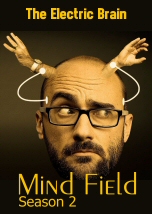
The nervous system is fundamentally electric. When we move our arm, it moves because a electric signal has been sent to the muscle that controls it. Now, because the brain is electric, we could also use electricity to record what the brain is doing or bypass it entirely, and control a body. That means that we could restore movement to people who are paralyzed, feel through an artificial hand as if it was our own, and even read people's minds. Michael Stevens explores how electricity can be used to move cockroaches, control other peoples' limbs and even read peoples' thoughts.
Exoplanets, strange worlds outside our solar system. We're discovering the cosmos is full of alien planets. Alien worlds that challenge our understanding of planetary systems. Hellishly hot worlds, violently colliding worlds, worlds getting eaten by their stars. There's much, much more out there than we had ever imagined. Exoplanets are shaking up our understanding of the universe. The cosmos is a chaotic array of the odd, the weird, and the wonderful. The more we find, the less we know.
Millions of tourists photograph the ancient monuments of Rome every year. But is there more to them than people guess? There's new evidence that these ruins were once machines, designed by Rome's emperors to connect their power with the sun. Did Roman emperors harness the power of the universe to awe and terrify the people of Rome? We uncover the last, great mysteries of the ancient world's greatest empire.
The fourth episode sees host Neil deGrasse Tyson exploring our eternal quest to end hunger and honoring Nikolai Ivanovic Vavilov, pioneer of modern plant breeding, who risked his life for a discovery that would change the history of science. Vavilov's story is marked by both the tenacity and creativity and is particularly tragic. Interwoven into Vavilov's somber narrative are warnings and treatments of science and its ethical implications, especially when science itself comes under attack from political forces.
In the fifth episode Neil deGrasse Tyson explores questions that have baffled scientists for centuries. Can we know the universe? Are our brains capable of comprehending the cosmos in all of its complexity and splendor?. We don't yet know the answers because our brain remains almost as much of a mystery to that questions as the universe itself. An abandoned orphan's dream opened the way to understanding the architecture of thought.
The 8th episode reviews Giovanni Cassini's life. His observations of Saturn and its moons would have an enduring effect on the scientific world. Neil deGrasse Tyson also narrates the mysterious untold story of the scientist who figured out how to go the Moon while fighting for his life in a WWI trench. Aleksandr Shargei changed his name to Yuri Kondratyuk out of fear for his life and wrote a manuscript on rocket motion and space colonization. This letter would end up capturing the attention of an engineer working on the Apollo program, John Houbolt, and would made the Apollo Mission possible. We will also know the saga of the twenty-year long odyssey of Cassini-Huygens spacecraft, a robotic explorer ordered to commit suicide on another world.


















Michael Stevens explores how electricity can be used to move cockroaches, control other peoples' limbs and even read peoples' thoughts.