Last Watched

"Han"  Sort by

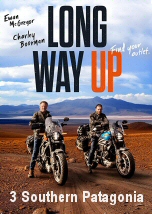
Southern Patagonia

   2020    Culture
Episode 3 continues to show the obstacles faced with charging electric bikes in remote places, but Ewan McGregor and Charley Boorman start to learn and evolve their process. The risk of cold temperatures is high but they bravely do it anyway. The duo is having a hard time of it out there but, thankfully, the scenery is absolutely stunning. Heading through Patagonia, Ewan and Charley stay at an eco-lodge in one of the world’s remotest areas with people that live off the grid.
Series: Long Way Up
Words on a Page

   2020    History
Writing itself is 5,000 years old, and for most of that time words were written by hand using a variety of tools. The Romans were able to run an empire thanks to documents written on papyrus. Scroll books could be made quite cheaply and, as a result, ancient Rome had a thriving written culture. With the fall of the Roman Empire, papyrus became more difficult to obtain. Europeans were forced to turn to a much more expensive surface on which to write: Parchment. Medieval handwritten books could cost as much as a house, they also represent a limitation on literacy and scholarship.
No such limitations were felt in China, where paper had been invented in the second century. Paper was the foundation of Chinese culture and power, and for centuries how to make it was kept secret. When the secret was out, paper mills soon sprang up across central Asia. The result was an intellectual flourishing known as the Islamic Golden Age. Muslim scholars made discoveries in biology, geology, astronomy and mathematics. By contrast, Europe was an intellectual backwater.
That changed with Gutenberg’s development of movable type printing. The letters of the Latin alphabet have very simple block-like shapes, which made it relatively simple to turn them into type pieces. When printers tried to use movable type to print Arabic texts, they found themselves hampered by the cursive nature of Arabic writing. The success of movable type printing in Europe led to a thousand-fold increase in the availability of information, which produced an explosion of ideas that led directly to the European Scientific Revolution and the Industrial Revolution that followed.
Series: The Secret History of Writing

Changing the Script

   2020    History
The written word is so important in everyday life that there can be few more radical acts than forcing an entire nation to learn a new script. Yet that is what happened in Turkey in 1928 when Mustafa Kemal decreed that the Arabic script would be replaced by the letters of the Latin alphabet. Communication with computers using human language is usually made with Latin letters. This is how most Chinese people interact with their computers and smart phones, using a Latin-based phonetic script called Pinyin. As a result, even highly educated Chinese are losing the ability to write using Chinese characters. Could what is happening in China be the future of writing everywhere?
Series: The Secret History of Writing

Exploring The Universe

   2020    Science
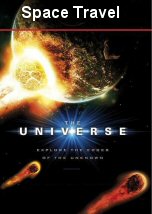
This remarkable science-history series investigates the blistering pace of human endeavour in space exploration, computing, energy, resources, Earth science and our understanding of the evolution of life itself. Across the last 50 years, humans have set a blistering pace and scientific discovery. We've crossed the boundaries of our solar system, made machines that can learn harnessed the power of the sun and built life from scratch. It's a period like no other in history, where human endeavour is changing everything: this is The Great Acceleration. As we race toward the future, we must examine the journey.
In the first episode, Dr Shalin Naik explores the ambitious space shuttle mission that began in the '70s plus the future colonization of Mars. Over the past 50 years, space has become central to everything, from communications to entertainment to climate modelling. And as private enterprise enters space exploration, our understanding of the universe will only continue to expand. We will know if we can survive on other objects - the moon, maybe Mars, maybe even some of the moons of Jupiter and Saturn. Deep space is the last and infinite frontier. That's what we do as human beings. We explore, we learn, we make discoveries, from the moment we're born to the moment we die.
Series: The Great Acceleration

Energy Revolutions

   2020    Technology
Over the last years, the world has experienced an energy revolution, driven by an urgent need to green the grid and save life on Earth as we know it. 50 years ago, a devastating oil crisis kicked off an energy revolution. The world set course to cut the costly habit of burning fossil fuels. With the urgent new threat of a changing climate, the drive to unleash the power of the sun, earth and wind has accelerated into a race for humanity's survival. Change is taken place but, is it happening fast enough to secure our future? Technologies are right here, right now, and they will enable the transition to 100% renewables, because winning the energy race means a win for the entire world.
Series: The Great Acceleration

Food Water Waste

   2020    Nature
Across the world, rising demands for food, water and materials have pushed resources to the limit. Many parts of the world have major challenges over fresh water. A lot of soils have a lot of residual pesticides and herbicides. At the same time waste is piling higher. All this demands a new wave of innovation. The challenge is to make more of the things we need without the environmental cost.
Series: The Great Acceleration
Leaving Neverland

Leaving Neverland

2019  Culture
History of the Eagles

History of the Eagles

2013  History
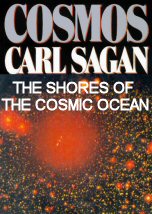
Cosmos

Cosmos

1980  Science
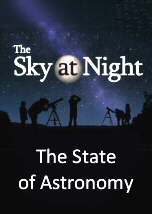
The Sky at Night

The Sky at Night

2020  Science
Natural World

Natural World

2017  Nature
Life

Life

2009  Nature
Life

Life

2009  Nature
Cooked

Cooked

2016  Culture