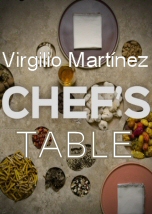
Virgilio Martínez is the chef/owner of Central, a restaurant in Lima, Peru that currently sits at number four on the World’s 50 Best Restaurants list. After a decade spent cooking in kitchens around the world, Martínez only found his true identity as a chef when he began exploring the different regions of his native Peru, from the ocean to the Andes. While some chefs are obsessed with a 'sense of place,' Martínez strives to offer his guests a sense of many places — entire ecosystems over the course of a tasting menu. Martínez always had an adventurous spirit, but growing up in Peru during the 70s and ‘80s meant that many parts of the country were closed off to him. As a teenager, he learned that pursuing a career in the kitchen would allow him the freedom to travel all over the world. The chef ended in charge of a restaurant in Madrid. This is really where Virgilio started to develop his experimental style. Martínez decided to leave Spain to go and work on opening his own restaurant in Peru. He decided to explore the idea of cooking dishes based on altitudes and ecosystems. Martínez runs Central’s kitchen with his wife, Pia León. They developed the altitude-based menu concept together. Martínez’s sister, Malena, has a science background, so he brought her on as part of the team to explore different terrains in search of ingredients that they could use at the restaurant. Virgilio remarks: 'We use 180 ingredients, and 50 percent of them are unknown.' The altitude-themed tasting menu was introduced in 2012, and the following year, Central landed at the bottom of the World’s 50 Best Restaurants list. Two years later, it soared to number four.
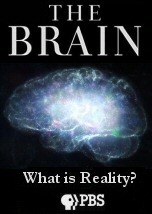
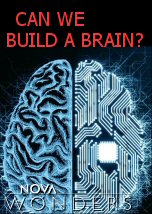
Artificially intelligent machines are taking over. They’re influencing our everyday lives in profound and often invisible ways. They can read handwriting, interpret emotions, play games, and even act as personal assistants. They are in our phones, our cars, our doctors’ offices, our banks, our web searches... the list goes on and is rapidly growing ever longer. But how does today’s A.I. actually work—and is it truly intelligent? And for that matter, what is intelligence? The world’s brightest computer programmers are trying to build brighter machines by reverse-engineering the brain and by inventing completely new kinds of computers, with exponentially greater speed and processing power. The documentary looks at how far we’ve come and where machines are headed as their software becomes ever more... cerebral. How close are we from a world in which computers take over—from diagnosing cancer to driving our cars to targeting weapons? If we place more and more of our lives under the control of these artificial brains, what are we putting at risk?
The Joker, Lex Luthor, Catwoman, Doomsday, Bane. What makes them so thrillingly watchable? So terribly wonderful? So extremely vital to our super heroes and their worlds? This feature-length documentary explores these questions across seven decades of DC Comics’ hallowed Rogues’ Gallery of infamous evildoers. Narrated by esteemed film villain Christopher Lee,examines the tortured psyches of your favorite animation, comic book, game, TV and feature film baddies – both from the past and into the future – against the backdrop of culture, history and society. Insights from famed creators and storytellers, including Zack Snyder, Guillermo del Toro, Jim Lee, Geoff Johns and Richard Donner, shine a fascinating light on those malevolent, charismatic characters who thrive in the dark.
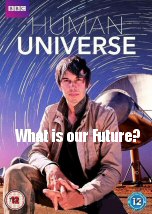
Professor Brian Cox concludes his exploration of our place in the universe by asking what next for the ape that went to space. Our future is far from certain. In Florida, Brian joins the latest efforts to protect Earth from potential catastrophic events. He joins a team of Nasa astronauts who are training for a future mission to an asteroid - should we ever discover one coming our way - under 30 feet of water in a submerged laboratory that simulates space. It is just one example of how, for our long-term survival, space exploration may well be vital. It is a view shared by Apollo 16 astronaut Charlie Duke, who tells Brian what it was like to escape the confines of the planet. It is a dream that both Nasa and now commercial companies share as they race to get humans back into deep space. But space travel, like every leap our civilisation has ever made, requires energy. Here too, scientists are hard at work attempting to safeguard our future. At the National Ignition Facility in California, Brian witnesses the world's most successful fusion experiment in action. He believes that if their mission succeeds, our civilisation will have unlocked a way to the stars that will not destroy the planet in the process. Brian concludes by returning to the top of the world in Svalbard, where he gains access to our civilisation's greatest treasure, locked away in a vault buried deep in the permafrost.
Vintage footage from the Vietnam war is presented along with narration from both war veterans and Hollywood voice talent. The documentary follows key events and their impact on both the war effort and the American public. The Beginning: The first episode looks at the early months of the Vietnam war from the escalation following the Gulf of Tonkin incident to the grim fighting of the Battle of Ia Drang where a few hundred American soldiers are pinned down by three battalions of North Vietnamese infantry. Using superior air power and reinforcements, the Americans fight the North Vietnamese to a draw.
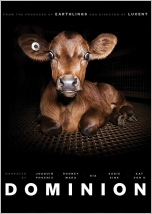
The film uses drones, hidden and handheld cameras to expose the dark underbelly of modern animal agriculture, questioning the morality and validity of humankind's dominion over the animal kingdom. While mainly focusing on animals used for food, it also explores other ways animals are exploited and abused by humans, including clothing, entertainment and research. In words of its writer & director, Chris Delforce, 'Dominion to me is the idea of one group or entity exercising control, power or authority over another, under the belief that they have the right to do so. Often this belief seems to stem from the perception of self-superiority and that might equals right. Through this film I challenge both the notion that animals are inferior, and that we as humans have the right to use and treat them as we please for our own ends – and I briefly examine how this superiority complex has and continues to complement some of humanity's darkest ideologies, asking viewers to consider the similarities between racism, sexism and speciesism.'















Martínez always had an adventurous spirit, but growing up in Peru during the 70s and ‘80s meant that many parts of the country were closed off to him. As a teenager, he learned that pursuing a career in the kitchen would allow him the freedom to travel all over the world. The chef ended in charge of a restaurant in Madrid. This is really where Virgilio started to develop his experimental style. Martínez decided to leave Spain to go and work on opening his own restaurant in Peru. He decided to explore the idea of cooking dishes based on altitudes and ecosystems. Martínez runs Central’s kitchen with his wife, Pia León. They developed the altitude-based menu concept together. Martínez’s sister, Malena, has a science background, so he brought her on as part of the team to explore different terrains in search of ingredients that they could use at the restaurant. Virgilio remarks: 'We use 180 ingredients, and 50 percent of them are unknown.' The altitude-themed tasting menu was introduced in 2012, and the following year, Central landed at the bottom of the World’s 50 Best Restaurants list. Two years later, it soared to number four.