




Last Watched

"Flu"  Sort by

The World Set Free

   2014    Nature
This episode explores the nature of the greenhouse effect (discovered by Joseph Fourier and Svante Arrhenius), and the evidence demonstrating the existence of global warming from humanity's influence. Tyson begins by describing the long-term history of the planet Venus; based on readings from the Venera series of probes to the planet, the planet had once had an ocean and an atmosphere, but due to the release of carbon dioxide from volcanic eruptions, the runaway greenhouse effect on Venus caused the surface temperatures to increase and boiled away the oceans. Tyson then notes the delicate nature of the amount of carbon dioxide in the atmosphere can influence Earth's climate due to the greenhouse effect, and that levels of carbon dioxide have been increasing since the start of the 20th century. Evidence has shown this to be from mankind's consumption of oil, coal, and gas instead of from volcanic eruptions due to the isotopic signature of the carbon dioxide. The increase in carbon dioxide has led to an increase in temperatures, in turn leading to positive feedback loops of the melting polar ice caps and dethawing of the permafrost to increase carbon dioxide levels. Tyson then notes that humans have discovered means of harvesting solar power, such as Augustin Mouchot's solar-driven motor in the 19th century, and Frank Shuman's solar-based steam generator in the 1910's. Tyson points out that in both cases, the economics and ease of using cheap coal and oil caused these inventions to be overlooked at the time. Today, solar and wind-power systems would be able to collect enough solar energy from the sun easily. Tyson then compares the motivation for switching to these cleaner forms of energy to the efforts of the Space race and emphasizes that it is not too late for humanity to correct its course.
Series: Cosmos: A Spacetime Odyssey

Free for All

   2013    Art
Part 2 examines how the freewheeling modernism that had shocked audiences in the first two decades of the century came under state control. Initially, many practitioners thought the totalitarian regimes would be good for music and the arts. What followed in Germany was a ban on music written by Jews, African-Americans and communists, while in the Soviet Union there was a prohibition on music the workers were unable to hum. After the cataclysm of the 1940s, a new generation of composers - Boulez, Stockhausen, Xenakis, Nono, Ligeti - turned their back on what they saw as the discredited music of the past and tried to reinvent it from scratch. Or, at least, from serialism, which became as much of a straitjacket as totalitarianism's strictures had been. But from this period of avant-garde experimentation, which many listeners found baffling and terrifying, came some of the most influential and radical musical innovations of the century.
Series: The Sound and the Fury

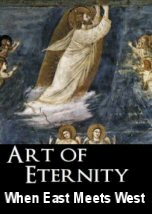
When East Meets West

   2007    Art
Andrew Graham-Dixon examines early Christian art and the reasons for its evolution during the Renaissance. He also reveals just how far modern artists have been influenced by the pre-perspective view of the world.
Series: Art of Eternity

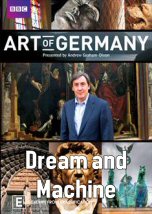
Dream and Machine

   2010    Art
Andrew Graham-Dixon continues his exploration of German art by looking at the tumultuous 19th and early 20th centuries, and how artists were at the forefront of Germany's drive to become a single nation. Andrew travels to the north and the coastal town of Griefswald, the birthplace of Caspar David Friedrich, the most influential of the German Romantics, to discover how the Baltic coast impacted his mysterious paintings of the German landscape. He also visits Berlin and explores the art of the powerful Prussian state, which would spearhead the unification of Germany in 1871. The episode ends with the outbreak of World War I and the attempts of the artists Franz Marc and Otto Dix to rationalise the catastrophic experiences of the world's first technological war, a war driven by the Prussian innovations.
Series: The Art of Germany

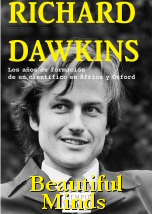
Beautiful Minds: Richard Dawkins

   2012    History
Professor Richard Dawkins explain how his unique scientific perspectives have redefined how we think about the world around us and describe his big moment or discovery. Dawkins reveals how he came to write The Selfish Gene in 1976, an explosive book which divided the scientific community and made him the most influential evolutionary biologist of his generation, and how this made him an outspoken spokesman for atheism.

Race for Absolute Zero

   2007    Technology
Focuses on the fierce rivalry that took place in the laboratories in Britain, Holland, France and Poland as they sought the ultimate extreme of cold. The program will follow the extraordinary discoveries of superconductivity and superfluidity and the attempt to produce a new form of matter that Albert Einstein predicted would exist within a few billionths of degrees above absolute zero.
Series: Absolute Zero