From the first flicker of life billions of years ago to the extraordinary diversity of animals alive today, Chris Packham embarks on an epic journey through evolution. Combining cutting-edge science, spectacular wildlife and vivid reconstructions of long-vanished creatures, he reveals how countless generations of innovation, adaptation and chance transformed simple cells into bodies capable of movement, reproduction, flight, intelligence and astonishing complexity. Along the way, familiar animals become gateways into some of the greatest mysteries in the history of life. In the first two episodes, Packham traces two remarkable evolutionary stories. In Kenya, he asks how a microscopic cell could ultimately give rise to the enormous, intelligent and highly social elephant, uncovering the crucial breakthroughs that made complex bodies, lungs, limbs and giant size possible. Then, in South Africa, the ostrich and its extraordinary egg open the door to the evolution of reproduction itself: From the origins of sex to the appearance of eggs, feathers and flight. Together, these episodes reveal that some of nature’s most spectacular creatures are the result of billions of years of unlikely experiments, lucky accidents and relentless adaptation.
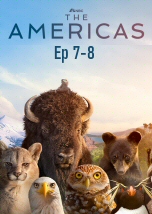
In episodes 7 and 8 of the series, the journey moves from the towering Andes to the tropical Caribbean, revealing two worlds where wildlife survives through astonishing specialization. In the Andes, spectacled bears guide their cubs down perilous cliffs, rare marvelous spatuletail hummingbirds fight and dance for mates, frogs endure freezing nights high beside retreating glaciers, torrent ducks master near-boiling mountain rivers, and thousands of flamingos gather at toxic high-altitude lakes in spectacular courtship displays. The Caribbean offers an entirely different struggle for survival. Sailfish coordinate high-speed attacks on sardine shoals, sperm whales dive into the deep around Dominica, millions of red crabs cross Cuba’s forests on their migration to the sea, and animals on isolated islands develop remarkable ways to exploit scarce resources. On Isla Jicarón, white-faced capuchins even learn to use stones as tools to crack nuts, showing how intelligence and adaptation can make the difference between survival and failure in paradise.
On 21 December 1988, Pan Am Flight 103 explodes over Lockerbie, Scotland, killing all 259 people on board and 11 residents on the ground. What follows is one of the largest and most complex terrorism investigations ever undertaken in Britain, forcing Scottish detectives and the FBI to work across borders, sift through an enormous debris field and reconstruct how a bomb was placed aboard the aircraft. Based on real events, the series follows both the painstaking search for those responsible and the devastating impact of the attack on the town of Lockerbie and on families on both sides of the Atlantic. In the first three episodes, the investigation begins amid chaos as police recover bodies and fragments of the aircraft while international pressure mounts for answers. Early clues lead investigators toward possible suspects and networks connected to the bombing, but every breakthrough raises new questions. When Scottish officers travel to the United States with potentially crucial evidence, tensions emerge between agencies, particularly over intelligence the CIA may be withholding about a possible bomb maker. The result is a gripping reconstruction of an inquiry in which forensic evidence, international politics and competing intelligence interests collide, while the families of the victims wait for the truth.









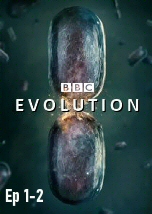


In the first two episodes, Packham traces two remarkable evolutionary stories. In Kenya, he asks how a microscopic cell could ultimately give rise to the enormous, intelligent and highly social elephant, uncovering the crucial breakthroughs that made complex bodies, lungs, limbs and giant size possible. Then, in South Africa, the ostrich and its extraordinary egg open the door to the evolution of reproduction itself: From the origins of sex to the appearance of eggs, feathers and flight. Together, these episodes reveal that some of nature’s most spectacular creatures are the result of billions of years of unlikely experiments, lucky accidents and relentless adaptation.