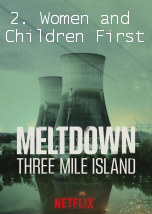
In the second episode, panic strikes the community as a full-blown catastrophe looms. Locals mobilize to confront the authorities and protest the nuclear power industry. Twenty-eight hours after the accident began, the lieutenant governor appeared at a news briefing to say that the plant's owner had assured the state that 'everything is under control'. Later that day, Scranton changed his statement, saying that the situation was 'more complex than the company first led us to believe'. There were conflicting statements about radioactivity releases. Schools were closed and residents were urged to stay indoors. Farmers were told to keep their animals under cover and on stored feed.
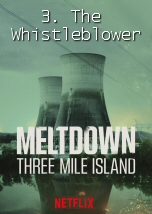
In the third episode, during cleanup at the plant, insiders claim that cost-cutting measures and intimidation tactics create a danger war force than the accident itself. Several state and federal government agencies mounted investigations into the crisis, the most prominent of which was the President's Commission on the Accident at Three Mile Island, headed by chairman John G. Kemeny. The investigation strongly criticized Babcock & Wilcox, Met Ed, Graphics processing unit, and the Nuclear Regulatory Commission for lapses in quality assurance and maintenance, inadequate operator training, lack of communication of important safety information, poor management, and complacency. Kemeny said that the procedures and that the control room were greatly inadequate for managing an accident.
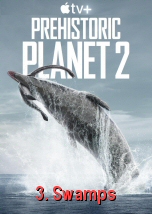
Pterosaur hatchlings take flight to leave their island sanctuary, but are targeted by several Shamosuchus. Several Austroraptor hunt garfish and contend for the best fishing spots. A male Beelzebufo attempts to attract a mate, but his endeavor is interrupted by a herd of Rapetosaurus. A male Pachycephalosaurus must put an upstart youngster in his place. Two Tyrannosaurus brothers hunt Edmontosaurus under the cover of darkness.
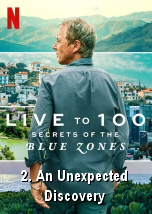
In the interesting second episode, we embark on a journey to the picturesque island of Sardinia. Here the people live in harmony with the land and with one another. Learn about this effortless lifestyle where work and play seem to be united and the result is longevity. In this episode, the documentary also explores the unexpected discovery of unusual longevity in a North American suburb. Their lifestyles, dietary habits, and sense of community contribute to the remarkable longevity observed in these regions. The importance of a plant-based diet, social connections, and positive health behaviors is highlighted, offering viewers valuable insights into leading a longer, healthier life. Join us as we uncover the unexpected secrets that may forever change the way we approach health and happiness.
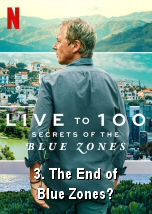
In this eye-opening film, viewers are taken on a journey to explore the secrets behind the longevity of communities like the Greek island of Ikaria and Nicoya, Costa Rica. Discover how they do it with simple foods and exercise that are fully integrated into daily life. This series prompts viewers to reflect on their own lifestyle choices and consider how they can adopt some of these lessons to live longer, healthier lives. The third installment of the series is a must-watch for anyone interested in the pursuit of a more fulfilling life and provides valuable insights into the importance of community, diet, and lifestyle factors in achieving longevity. It serves as a reminder that we can all make positive changes in our lives to enhance our well-being and potentially extend our lifespan. Don't miss the opportunity to be inspired by the wisdom of Blue Zones in this thought-provoking film.
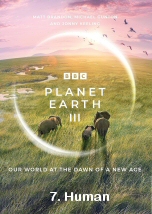
This featured episode of the documentary series takes viewers on a captivating journey around the world, showcasing the astonishing ways in which animals adapt to living alongside humans. In Sauraha, Nepal, a rhino navigates through human-inhabited areas in search of food. In Bali, long-tailed macaques have learned to trade stolen items for food, demonstrating their intelligence and adaptability. The bustling streets of New York City are home to pavement ants that thrive on human leftovers, while in India, revered cobras coexist with humans in a unique cultural relationship. Melbourne, Australia, features nocturnal frogmouths benefiting from urban lighting for hunting, and Lake Tahoe in North America sees black bears adapting to easy food sources in human settlements. The documentary also delves into the challenges faced by wildlife due to human expansion and climate change. It highlights the plight of African elephants in Kenya conflicting with farmers, the impact of overfishing on humpback whales in Vancouver Island, and the dramatic increase of desert locusts in northeastern Africa due to climate-induced conditions. The episode concludes by emphasizing the importance of reimagining our relationship with nature. It suggests a shift towards plant-based diets to reduce agricultural land use and the potential of vertical farming technologies, offering hope and solutions for a sustainable coexistence with wildlife.



















Twenty-eight hours after the accident began, the lieutenant governor appeared at a news briefing to say that the plant's owner had assured the state that 'everything is under control'. Later that day, Scranton changed his statement, saying that the situation was 'more complex than the company first led us to believe'. There were conflicting statements about radioactivity releases. Schools were closed and residents were urged to stay indoors. Farmers were told to keep their animals under cover and on stored feed.