From dinosaurs to mammoths, when our ancient ancestors encountered the fossil bones of extinct prehistoric creatures, what did they think they were? Just like us, ancient peoples were fascinated by the giant bones they found in the ground. Historian Tom Holland goes on a journey of discovery to explore the fascinating ways in which our ancestors sought to explain the remains of dinosaurs and other giant prehistoric creatures, and how bones and fossils have shaped and affected human culture. In Classical Greece, petrified bones were exhibited in temples as the remains of a long-lost race of colossal heroes. Chinese tales of dragons may well have had their origins in the great fossil beds of the Gobi desert. In the Middle Ages, Christians believed that mysterious bones found in rock were the remains of giants drowned in Noah's Flood. Tom encounters a medieval sculpture that is the first known reconstruction of a monster from a fossil, and learns about the Native Americans stories, told for generations, which contained clues that led bone hunters to some of the greatest dinosaur finds of the nineteenth century.
On a vast plateau cradled in the heart of the rocky mountain range lies two million acres of unspoiled wilderness, never farmed and never fenced. Canyons, lakes, rivers and mountains, a refuge for magnificent animals and a spiritual sanctuary for generations of Americans, all resting on the largest super volcano in North America. This is Yellowstone, America's first national park, a raw and powerful beauty that truly comes to life through immersive 3D.
A Rolling Stones documentary that focuses on the two concerts from the group's "A Bigger Bang" tour as well as historical and contemporary behind-the-scenes footage and interviews. Footage from the shows will be intercut with backstage footage, historical clips and contemporary interviews with the band. The shows were noted for their star-studded crowds, including former President Bill Clinton. Martin Scorsese's document of the Rolling Stones' electrifying live shows should provide satisfaction to audiences
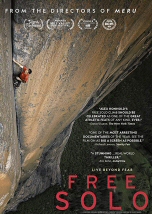
Follow Alex Honnold as he becomes the first person to ever free solo climb Yosemite's 3,000ft high El Capitan Wall. With no ropes or safety gear, he completed arguably the greatest feat in rock climbing history.
Three years in the making, Francis Whately’s film is a social and musical history of (probably) the world’s greatest music festival, as told by its principal curators, Michael and Emily Eavis, and many of the key artists who’ve appeared there between 1970 and 2019 – Billie Eilish, Thom Yorke, Florence Welch, Dua Lipa, The Levellers, Aswad, Orbital, Fatboy Slim, Linda Lewis, Noel Gallagher, Ed O’Brien, Chris Martin, Stormzy and more. Balancing the driving forces of social conscience and hedonism, Glastonbury has always been both a world apart and a barometer of the state of the nation. Looking at the hippie days, CND, the contribution of the travellers, dance music, Britpop, The Wall, the impact of television and the first black British solo headliner, this film takes viewers backstage and deep into the archive to reveal the forces that have driven this alternative nation between utopia and dystopia, the greatest night of your life and a muddy field in the middle of nowhere. This is not a chronological plod through the festival’s evolution so much as a thematic and story-driven exploration of the peaks and troughs, and the agonies and ecstasies, that have shaped Glastonbury’s 50 years and counting.
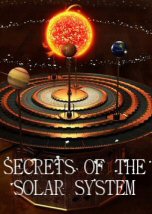
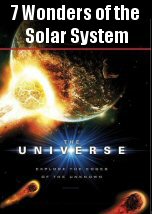
Take an exhilarating, unprecedented exploration of the seven most amazing wonders of our solar system. Our virtual tour begins with a trip to Enceladus, one of Saturn's outer moons, where icy geysers spout from its surface. Then venture to Saturn's famous rings, which contain mountain ranges that rival the Alps. Next dive into the eye of the biggest storm in the solar system--Jupiter's Great Red Spot. Soar through the Asteroid Belt, containing millions of leftover rocks from the formation of the solar system. Trek up Mount Olympus, the largest volcano, located on Mars. Have a close encounter with the searing surface of the Sun, and finish the journey by exploring our home planet Earth.












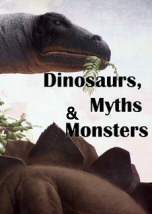






In Classical Greece, petrified bones were exhibited in temples as the remains of a long-lost race of colossal heroes. Chinese tales of dragons may well have had their origins in the great fossil beds of the Gobi desert. In the Middle Ages, Christians believed that mysterious bones found in rock were the remains of giants drowned in Noah's Flood.
Tom encounters a medieval sculpture that is the first known reconstruction of a monster from a fossil, and learns about the Native Americans stories, told for generations, which contained clues that led bone hunters to some of the greatest dinosaur finds of the nineteenth century.