







Last Watched

"AI"  Sort by

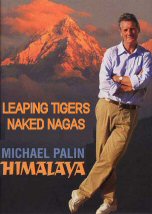
Leaping Tigers Naked Nagas

   2004    Culture
Following the Yangtze along Tiger Leaping Gorge into Yunnan in China, Palin reaches the easternmost end of the Himalayas. He gets a medical check-up before exploring medieval Lijiang with the director of the local orchestra. Heading over Myanmar to Nagaland in India he rides the steam train to Tipong Coalmine. In Assam he rides an elephant and then stays in a strange monastery.
Series: Himalaya with Michael Palin
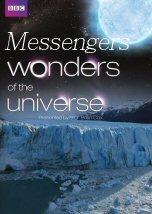

Messengers

   2011    Science
Professor Brian Cox travels from the fossils of the Burgess Shale to the sands of the oldest desert in the world to show how light holds the key to our understanding of the whole universe, including our own deepest origins. To understand how light holds the key to the story of the universe; you first have to understand its peculiar properties. Brian considers how the properties of light that lend colour to desert sands and the spectrum of a rainbow can lead to profound insights into the history and evolution of our universe. Finally, with some of the world's most fascinating fossils in hand, Brian considers how but for an apparently obscure moment in the early evolutionary history of life, all the secrets of light may have remained hidden. Because although the universe is bathed in light that carries extraordinary amounts of information about where we come from, it would have remained invisible without a crucial evolutionary development that allowed us to see. Only because of that development can we now observe, capture and contemplate the incredible wonders of the universe that we inhabit.
Series: Wonders of the Universe

Congo

   2013    Nature
The very heart of Africa is covered in dense tropical rainforest. The animals that live here find the most ingenious ways to carve out their space in a claustrophobic landscape. Danger lurks in every shadow, but some animals thrive here, from honey-stealing chimps to birds with a lineage as old as the dinosaurs, thundering elephants and kick-boxing frogs. Here in the Congo, no matter how tough the competition, you must stand up and fight for yourself and your patch.
Series: Africa with David Attenborough

The Cities

   2011    Culture
Humans are so clever they’ve built their own habitat, designed to keep wild nature out. Yet as we discover the urban environment is totally dependant on the natural world. Over the three years of filming for Human Planet, the teams have spent time with over seventy different communities in countries across the planet. Despite seeing many different ways of living, there are some aspects of family life that remain the same whether you live in a tree house in West Papua, or a brick house in Bolton. These similarities became very clear when the urban team went to film on a rubbish dump in Kenya. Here on the Kibarani dump on the outskirts of Mombasa, Ali, Ashe and their family live and survive amongst the rubbish, and even here, just like anywhere on the planet, everything stops for a nice cup of tea!
Series: Human Planet

Raging Teens

   1998    Medicine
Raging Teens follows a group of young boys and girls throughout their teenage years and captures the changes that the body undergoes through puberty. Its main focus, however, is on Beatrice and the changes she undergoes such as shopping, growing breasts, pubic hairs and her first period (her mother bought her some Chocolate Éclairs to help celebrate which must be a British thing). The boy's side covers testosterone and what changes it spurs in a lad's body such as facial hair, their voice cracking at the wrong time, and parts of the body that have until now lain dormant. You also learn that a pubic hair only grows for 6 months, which keeps it short, and is actually flat oval and not round which is why they curl.
Series: The Human Body

Gaia The Billion Pixel Camera

   2015    Technology
The Milky Way, our galaxy, is a magnificent sight in the night sky, but we know surprisingly little about it for certain. What is its shape? How many stars does it actually contain? What lies at its centre? The Gaia space telescope will answer these questions, being armed with the most advanced camera to leave our planet, and it will allow us to see our galaxy as we've never seen it before. The Sky at Night visits the factory in Chelmsford that made the astonishing sensor at the heart of the mission.
Series: The Sky at Night