





Last Watched

"Animal"  Sort by

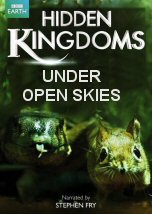
Hidden Kingdoms: Under Open Skies

   2014    Nature
Hidden Kingdoms for the first time takes the viewer into a unique and unexplored miniature world, immersing you into the action-packed lives of the planet's smaller animals. This episode is the story of two young animals forced to grow up fast. In Africa's savannah, a baby elephant shrew learns how speed is the secret to survival amongst the largest animals on Earth; and in America, a young grasshopper mouse confronts the Wild West's deadliest creatures to stake a claim of his own
Series: Hidden Kingdoms
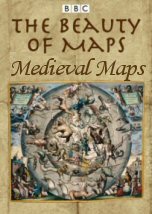
The Beauty of Maps: Medieval Maps

   2010    Art
This documentary series charting the visual appeal and historical meaning of maps. The Hereford Mappa Mundi, the largest intact Medieval wall map in the world, its ambition to picture all of human knowledge in a single image is breathtaking. The work of a team of artists, the world it portrays is overflowing with life, featuring Classical and Biblical history, contemporary buildings and events, animals and plants from across the globe, and the infamous 'monstrous races' which were believed to inhabit the remotest corners of the Earth.
Series: The Beauty of Maps

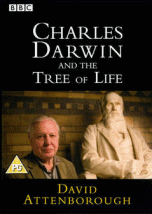
Charles Darwin and the Tree of Life

   2009    Science
David Attenborough asks three key questions: how and why did Darwin come up with his theory of evolution? Why do we think he was right? And why is it more important now than ever before? David starts his journey in Darwin's home at Down House in Kent, where Darwin worried and puzzled over the origins of life. David goes back to his roots in Leicestershire, where he hunted for fossils as a child, and where another schoolboy unearthed a significant find in the 1950s. And he revisits Cambridge University, where both he and Darwin studied, and where many years later the DNA double helix was discovered, providing the foundations for genetics. At the end of his journey in the Natural History Museum in London, David concludes that Darwin's great insight revolutionised the way in which we see the world. We now understand why there are so many different species, and why they are distributed in the way they are. But above all, Darwin has shown us that we are not set apart from the natural world, and do not have dominion over it. We are subject to its laws and processes, as are all other animals on earth to which, indeed, we are related.

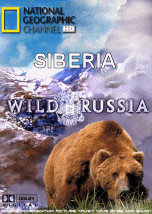
Wild Russia: Siberia

   2009    Nature
From east to west, via mountains, volcanoes, deserts, lakes and Arctic ice, this breathtaking series uses stunning cinematography to chart the dazzling natural wonders of this vast country. Accounting for around 10 per cent of the world’s dry land, Siberia is famous as a brutally cold place. Yet it is home to a diverse range of habitats and animal life – including musk deer, camels, gazelles and the extraordinary Siberian salamander, which can spend years encased in -40°C ice and still survive.
Series: Wild Russia

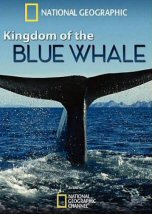
Kingdom of the Blue Whale

   2009    Nature
Blue whales are the largest animals to ever live on earth, yet they are difficult to find or track. Even some of the locations where they birth their young are great secrets. Join some of the world's eminent blue whale scientists as they embark on a revolutionary mission to identify and tag California blue whales as they migrate to a spot known as the Costa Rica Dome. This incredible voyage yields unforgettable new footage and insight into these amazing creatures' lives. Scientists use DNA analysis, recordings of whale songs, homing devices, and sea dives to shed light on the blue whale's breeding and birthing habits

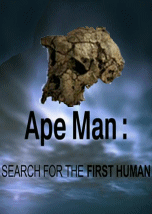
Ape Man: Search for the First Human

   2005    Science
After eight grueling years of hunting in the hot, wind-scoured desert of central Africa, an international team of researchers has uncovered one of the most sensational fossil finds in living memory: the well-preserved 7 million years old skull of a chimp-size animal, probably a male, that doesn't fit any known species. According to paleontologist Michel Brunet of the University of Poitiers in France, whose team reported the find in Nature last week, there is no way it could have been an ape of any kind. It was almost certainly a hominid — a member of a subdivision of the primate family whose only living representative is modern man.