Frequent security expos feature companies like Megvii and its facial- recognition technology. They show off cameras with A.I. that can track cars, and identify individuals by face, or just by the way they walk. In China it's been projected that over 600 million cameras will be deployed by 2020. Here, they may be used to discourage jaywalking, but they also serve to remind people that the state is watching. Matching with the most advanced artificial intelligence algorithm, they can actually use this data, real-time data, to pick up a face or pick up a action. A.I. is a technology that can be used for good and for evil. So, how do governments limit themselves in, on the one hand, using this A.I. technology and the database to maintain a safe environment for its citizens, but not to encroach on a individual's rights and privacies?
How what began as a passion for the tantalising possibilities of jetpacks became an obsession. Shot over ten years, this documentary chronicles Australian David Mayman's seemingly impossible quest to fulfil his childhood dream to build and fly the world’s first jetpack. His ambition, which nearly cost him his life and family, culminates in an attempt to make the world's first jetpack flight around the Statue of Liberty.
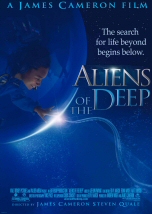
James Cameron journeys to some of the Earth's deepest, most extreme and unknown environments in search of the strange and alien creatures that live there. Joining him is a team of young NASA scientists and marine biologists who consider how these life forms represent life we may one day find in outer space not only on distant planets orbiting distant stars, but also within our own solar system. Aliens of the Deep is the result of expeditions to several hydrothermal vent sites in the Atlantic and the Pacific. These are violent volcanic regions where new planet is literally being born and where the interaction between ocean and molten rock creates plumes of super-heated, chemically-charged water that serve as oases for animals unlike anything ever discovered. Six-foot tall worms with blood-red plumes and no stomach, blind white crabs, and a biomass of shrimp capable of 'seeing' heat all compete to find just the right location in the flow of the super-heated, life-giving water or to fry.
The Speed Sisters are the first all-woman race car driving team in the Middle East. Grabbing headlines and turning heads at improvised tracks across the West Bank, these five women have sped their way into the heart of the gritty, male-dominated Palestinian street car-racing scene. Weaving together their lives on and off the track, the film takes you on a surprising journey into the drive to go further and faster than anyone thought you could.
A profound and poetic encounter with cultural and spiritual icon Ram Dass, at his home on Maui toward the end of his life. Ram Dass is one of the most important cultural figures from the 1960s and 70s, a psychedelic pioneer, former academic and clinical psychologist, author of the influent book Be Here Now, beloved spiritual teacher, and outspoken advocate for death-and-dying awareness. Ram Dass is now himself approaching the end of his journey. Since suffering a life-changing stroke twenty years ago, he has been living at his home on Maui and deepening his spiritual practice--which is centered on love and his idea of merging with his surroundings and all living things.
Various eminent scientists explain the current knowledge of Black Holes and try to answer the question, do they really exist? New discoveries are challenging everything we know about black holes -- astronomers are beginning to question if they even exist. The latest science tries to explain how they work & what they look like, despite the fact we've never actually seen one. The two great theories of Einstein's General Relativity and Quantum Mechanics don't work together to explain Black Holes which is a big problem. Other theoretical constructs such as Gravastars and Planck stars have been postulated but proving their existence is just as difficult as that of Black Holes. So where next?
























A.I. is a technology that can be used for good and for evil. So, how do governments limit themselves in, on the one hand, using this A.I. technology and the database to maintain a safe environment for its citizens, but not to encroach on a individual's rights and privacies?