




Last Watched

"Tor"  Sort by

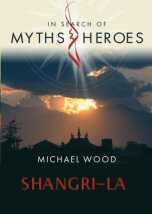
Shangri-La

   2005    History
For centuries, man has yearned for an earthly paradise, and no place better encapsulates this desire than Shangri-La - but was it ever real? The tale of an earthly paradise is among the most enduring myths in the world. From Sumerian epic to the 'islands of the blest' in Celtic literature, it has been a recurring theme through many bodies of literature and for thousands of years. Not surprisingly, then, modern people have also been drawn to the dream of a lost paradise where the ravages of time and history have been held back, where human beings live in harmony with nature, and where the wisdom of the planet is saved for future generations. In other words, to a Shangri-La.
Series: Myths and Heroes
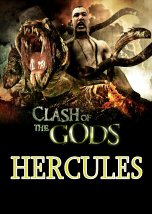
Clash of the Gods Hercules

   2009    History
The tale of the strongest superhero in Greek mythology and his quest for redemption. To atone for committing a heinous crime, Hercules embarks on a series of impossible challenges known as the 12 Labors. Hercules endures as one of history's most influential demi-Gods, but recent archaeological discoveries suggest that mythology's strongest man may have been inspired by a real person.
Series: Clash of the Gods

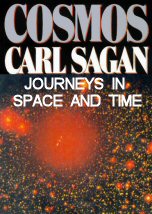
Journeys in Space and Time

   1980    Science
Ideas about time and space are explored in the changes that constellations undergo over time, the redshift and blue shift measured in interstellar objects, time dilation in Albert Einstein's theory of relativity, the designs of both Leonardo da Vinci and spacecraft that could travel near light speed, time travel and its hypothetical effects on human history, the origins of the Solar System, the history of life, and the immensity of space. In Cosmos Update, the idea of faster-than-light travel by wormholes (researched by Kip Thorne and shown in Sagan’s novel Contact) is discussed.
Series: Cosmos

The Nazis, A Warning From History. Episode 6

   1997    History
The BBC's definitive television history of the rise and fall of the Nazis. The Nazis - A Warning From History exposes the popular myths surrounding the rise and fall of the Third Reich. The series explores how the Nazis came to power, how they ruled, how they treated their occupied territories and, above all, how a cultured nation could be responsible for such acts of inhumanity. How could a political party as fundamentally evil and overtly racist as the Nazis come to power? This remains one of the most enigmatic questions of the last century. Acclaimed historian Laurence Rees examines what led a cultured nation at the heart of Europe to commit the atrocities it did. In so doing, he exposes popular myths and encourages understanding of the real forces that led to one of the darkest chapters in modern history. Was it simply the hypnotic power of Hitler's rhetoric? Did the Gestapo really impose themselves by terror on an unwilling population? Through interviews with witnesses and perpetrators, along with archive film and records, this six-part series unveils a more chilling reality.
Series: The Nazis, A Warning From History

Spiral of Terror

   2005    History
This episode looks at the battle for Moscow and considers why more civilians died in this war than any other in history.
Series: War of the Century

Romans

   2013    History
Dr Michael Scott examines the vital role played by the Romans in the preservation of Greek drama and in the history of theatre. He explores how the Romans absorbed Greek theatre and adapted it to their own, very Roman, ends and looks at how this famous empire provides one of the crucial connections between our modern drama and the great plays of the ancient Greeks.
Series: Ancient Greece
One Strange Rock

One Strange Rock

2018  Science
Leaving Neverland

Leaving Neverland

2019  Culture
The Story of Maths

The Story of Maths

2008  Science
The Human Body

The Human Body

1998  Medicine
Tiger

Tiger

2020  History