A Chapter of forgotten history. The first permanent European settlement in the United States was founded in 1565–two generations before the settlements in Jamestown and Plymouth–not by English Protestants, but by the Spanish and a melting pot of people they brought with them from Africa, Italy, Germany, Ireland and even converted Jews, who integrated almost immediately with the indigenous tribes. The film uncovers one story of America’s past that never made it into textbooks. Follow some of America’s leading archaeologists, maritime scientists, and historians as they share the story of Florida’s earliest settlers. It’s a story that has taken more than 450 years to reveal.
From dinosaurs to mammoths, when our ancient ancestors encountered the fossil bones of extinct prehistoric creatures, what did they think they were? Just like us, ancient peoples were fascinated by the giant bones they found in the ground. Historian Tom Holland goes on a journey of discovery to explore the fascinating ways in which our ancestors sought to explain the remains of dinosaurs and other giant prehistoric creatures, and how bones and fossils have shaped and affected human culture. In Classical Greece, petrified bones were exhibited in temples as the remains of a long-lost race of colossal heroes. Chinese tales of dragons may well have had their origins in the great fossil beds of the Gobi desert. In the Middle Ages, Christians believed that mysterious bones found in rock were the remains of giants drowned in Noah's Flood. Tom encounters a medieval sculpture that is the first known reconstruction of a monster from a fossil, and learns about the Native Americans stories, told for generations, which contained clues that led bone hunters to some of the greatest dinosaur finds of the nineteenth century.
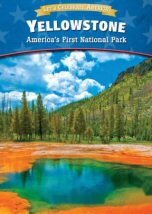
On a vast plateau cradled in the heart of the rocky mountain range lies two million acres of unspoiled wilderness, never farmed and never fenced. Canyons, lakes, rivers and mountains, a refuge for magnificent animals and a spiritual sanctuary for generations of Americans, all resting on the largest super volcano in North America. This is Yellowstone, America's first national park, a raw and powerful beauty that truly comes to life through immersive 3D.
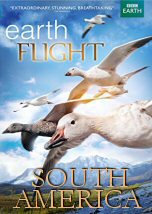
The documentary series gives a bird's-eye view of South America, as condors soar along the Andes, scarlet macaws explore the heart of the Amazon and hummingbirds and vultures see the continent's greatest sights. It is a journey that includes Machu Picchu, the Nasca Lines and the cities of Rio de Janeiro and Santiago. In Patagonia, giant petrels shadow killer whales as they hunt seals by stranding their huge bodies on the beach. At Iguassu Falls, dusky swifts dive through the cascades to huddle in communal roosts while hummingbirds bathe below. In a secret Andean location, condors soar in flocks over 40-strong and scavenge on casualties from herds of fighting guanacos. Elsewhere, a mother condor gently pushes her youngster to the edge of a 200-metre cliff, as flight school begins. Deep in the Amazon, macaws seek medicinal clay. They are joined by a host of secretive jungle animals, including spider monkeys and tapirs, all after the same remedy. In Peru, condors soar over fighting sea lions waiting for causalities and on a mass exodus north, birds converge on the Panama Canal. In Costa Rica, black vultures descend on turtles as they lay their eggs in the sand and pick off the eggs that ping-pong through the air.
The title of Ava DuVernay's extraordinary and galvanizing documentary refers to the 13th Amendment to the Constitution, which reads 'Neither slavery nor involuntary servitude, except as a punishment for crime whereof the party shall have been duly convicted, shall exist within the United States.' The progression from that second qualifying clause to the horrors of mass criminalization and the sprawling American prison industry is laid out by DuVernay with bracing lucidity. With a potent mixture of archival footage and testimony from a dazzling array of activists, politicians, historians, and formerly incarcerated women and men, DuVernay creates a work of grand historical synthesis.
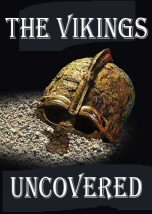
Dan Snow uncovers the lost Vikings in America with space archaeologist Dr Sarah Parcak. Sarah uses satellites 383 miles above the earth to spot ruins as small as 30cm buried beneath the surface. As Sarah searches for Viking sites from Britain to America, Dan explores how they voyaged thousands of miles when most ships never left the shoreline. He also tracks their expansion west, first as raiders and then as settlers and traders throughout Britain and beyond to Iceland and Greenland. In North America they excavate what could be the most westerly Viking settlement ever discovered.















The film uncovers one story of America’s past that never made it into textbooks. Follow some of America’s leading archaeologists, maritime scientists, and historians as they share the story of Florida’s earliest settlers. It’s a story that has taken more than 450 years to reveal.