The cosmos, with its billions of galaxies and countless stars, isn't the only one. We share our lives with another universe: The world of the small, of the viruses, of the bacteria. We call this strange hidden kingdom the Microcosmos. We share our world with the microcosmos. Will we coexist in an uneasy peace, or will it destroy us? In 2020, A tiny virus caused a global pandemic, COVID-19. This pandemic makes people see the world completely differently, because there was an invisible universe, pretty much ignored for the most part. Very, very tiny things have a huge impact on our lives. The microcosmos is complex, while some parts kill us, others keep us alive. The microcosmos is responsible for the very oxygen that we breathe and the soil on which we live. And it will influence our future as we venture out into space.
They're the cooling corpses of stars like our sun, but new research proves white dwarfs are one of the driving forces of our universe. And they can tell us literally about the nature of the cosmos itself. Have scientists finally discovered how these small stars could be such massive galactic players?
Supermassive black holes are the engines that power our universe and one of the major players in the evolution of galaxies. They're in fact the driving force at the heart of nearly every galaxy in the cosmos. Now, a new mystery has emerged about the oldest supermassive black holes. We see supermassive black holes in the very early universe. And we don't understand how they grew so large so quickly. We have clues about their formation but, can we solve the mystery of this supermassive growth spurt?
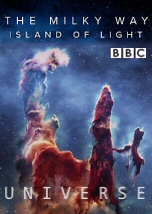
Professor Brian Cox continues his epic exploration of the cosmos by looking at the faint band of light that sweeps across the night sky - our own galaxy, the Milky Way. The Sun is just one of almost 400 billion stars that form this vast, majestic disk of light, our own home in the universe. Thanks to a cutting-edge space we’re finally able to reveal the Milky Way’s dramatic history and predict its cataclysmic future. Our galaxy started out a fraction of the size it is today, and Gaia telescope has revealed how it grew over the eons. Beautifully rendered VFX based on the very latest Gaia data has uncovered the remarkable story of our galaxy’s evolution. As our young galaxy encountered rival galaxies, it experienced a series of violent growth spurts and intense periods of cataclysmic change while battling to survive. Each time our galaxy feeds, a new era of star formation begins, fuelled by incoming torrents of fresh gas and energy. And there is another collision to come. Another, larger galaxy is coming our way. Andromeda is heading straight for us at a quarter of a million miles per hour. The Milky Way’s long-term fate is in the balance.
In the captivating second part of “Our Universe”, chapters 4 to 6 are presented together in an unmissable journey through the cosmos and life on Earth. These episodes delve deep into the elements that formed our world, the essential role of water, and the unseen forces that shape our lives. They offer an enthralling exploration of our place in the Universe. Dive in to experience this profound story of existence, from stardust to soulmates. In the fourth chapter, we uncover how the elements essential to life were forged in the hearts of stars. Following a green sea turtle’s quest across the ocean for these elements, this episode reminds us that life is built from the remnants of ancient stars. The fifth chapter takes us back to the miraculous arrival of water on Earth, exploring how this vital substance transformed a barren landscape into a thriving blue planet. In the final chapter we witness gravity’s grand influence on life, following two king penguins as their journey of attraction and survival unfolds against the cosmic force that binds us all.



















In 2020, A tiny virus caused a global pandemic, COVID-19. This pandemic makes people see the world completely differently, because there was an invisible universe, pretty much ignored for the most part. Very, very tiny things have a huge impact on our lives. The microcosmos is complex, while some parts kill us, others keep us alive. The microcosmos is responsible for the very oxygen that we breathe and the soil on which we live. And it will influence our future as we venture out into space.