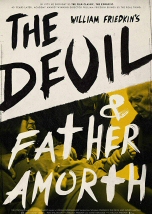
Years after he changed the landscape of filmmaking with The Exorcist, filmaker and writer William Friedkin moves from fiction to fact with this documentary. What began as a brief conversation between Friedkin and Father Gabrielle Amorth - the head Exorcist for the Diocese of Rome for over 30 years - as two professionals who knew of each other's work, soon transformed into an once-in-a-lifetime opportunity, as Amorth agreed Friedkin could film an exorcism ceremony. It would be the ninth exorcism for a painfully afflicted woman, and it would be filmed by Friedkin alone, with no other crew allowed, no light other than the natural light in the room and a small digital camera-and-mic unit that could capture the ritual and its revelations. Combining the startling and singular footage from Cristina's exorcism with interviews from priests and psychologists, neurosurgeons and non-believers, Friedkin guides us on a journey into the twilight world between the boundaries of what we know and what we don't.
It lasted only one day on a small piece of land, but the impact the Battle of Waterloo had on history is massive and far-reaching. This is the definitive account of the fight that ended Napoleon's rule as emperor and altered the destinies of France, Europe, and the world. Based on testimonies of those involved, we reveal the tactical decisions and human dramas that transpired on both sides of the battle to give you an unprecedented look of one of history's most epic conflicts.
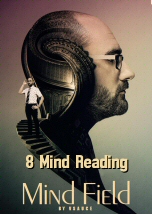
Mind reading might sound like pseudoscientific, but its scientific counterpart, thought identification, is very much a real thing. It's based in neuroimaging and machine learning, and what's really cool is that experiments in mind reading aren't just about spying on what someone is thinking. They're about figuring out what thoughts are even made of. When you think of something, what does that mental picture actually look like? What resolution is it in? How high fidelity is a memory, and how do they change over time? In this episode, we are going to look at how
reading people's minds can help us answer these questions.
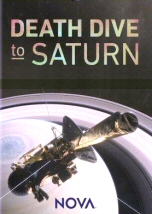
Almost everything we know today about the beautiful giant ringed planet comes from Cassini, the NASA mission that launched in 1997 and arrived at Saturn in 2004. Since then, the space probe has been beaming home miraculous images and scientific data, revealing countless wonders about the planet, its rings and 62 moons - including some that could harbor life. When the mission approached its final days, it attempted one last set of daring maneuvers - diving between the innermost ring and the top of Saturn's atmosphere. Aiming to skim less than 2000 miles above the cloud tops, no spacecraft has ever gone so close to Saturn, and hopes were high for incredible observations that could solve major mysteries about the planet's core. But such a daring maneuver comes with many risks and is no slam dunk. In fact, slamming into rocks in the rings is a real possibility. Join NASA engineers for the tense and triumphant moments as they find out if their bold re-programming has worked, and discover the wonders that Cassini has revealed over the years.
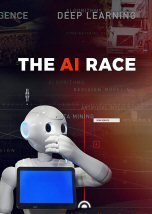
Explore how Artificial Intelligence will change your job as new research shows how much of what you do could be done by robots. From truckers to lawyers & doctors, we bring affected workers face to face with AI experts. How can we prepare for the coming changes to the world economy? We are on the precipice of another technological transformation. The last industrial revolution turned society upside down. It ultimately delivered greater prosperity and many more jobs, as well as the eight hour day and weekends.
But the transition was at times shocking and violent. The question is, can we do better this time? We don't realize that the future is not inevitable. The future is the result of the decisions we make today. These technologies are morally neutral, they can be used for good or for bad.
There's immense good things they can do, they can eliminate many disease,
they can help eliminate poverty, they can tackle climate change. Equally, the technology can be used for lots of bad. It can be used to increase inequality,it can be used to transform warfare. It can be used to make our lives much worse. We get to make those choices.
At an extraordinary moment in the history of one of the world’s oldest and most controversial drugs, Dr Javid Abdelmoneim investigates the very latest medical and scientific research into the effects of cannabis on the brain and the body, to find out whether it will help or harm patients. Javid meets the young epilepsy patient responsible for changing the law around medicinal cannabis in the UK and sees the remarkable effects it has on his condition. He visits a medicinal cannabis farm in Denmark to learn how a company known for growing the recreational drug are now producing medicinal cannabis to be exported all over Europe. He travels to Israel, to find out why they have been using cannabis as a medicine for over 20 years and meets the scientists studying the safety and effectiveness of cannabis in treating pain. And he meets the so-called godfather of cannabis, who at 88 years old is still an active research scientist and considered the world’s leading cannabis expert.









Combining the startling and singular footage from Cristina's exorcism with interviews from priests and psychologists, neurosurgeons and non-believers, Friedkin guides us on a journey into the twilight world between the boundaries of what we know and what we don't.