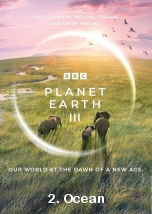
This second episode is a captivating exploration of the ocean's wonders and mysteries. It reveals how a significant part of our planet remains unexplored, primarily due to its vast water coverage. The film emphasizes the extraordinary discoveries awaiting every journey below the water's surface, with over a thousand new species identified annually. Home to 80% of all animal life on Earth, the ocean's diverse habitats host a range of surprising behaviors and life-and-death struggles, often hidden beneath a serene exterior. The shallow tropical seas, appearing as paradises, are actually arenas of intense survival battles. Predatory lionfish, with their patient hunting tactics, and clown frogfish, using a unique fishing rod-like dorsal fin as a lure, demonstrate the ocean's complex food web. The documentary also explores the kelp forests off the North American coast, revealing their role as nurseries for young horn sharks. Amidst these underwater forests lurk giant sea bass, wolf-eels, and various sharks like houndsharks and broadnose sevengills, posing significant threats to the smaller inhabitants. The episode takes viewers to the twilight and midnight zones of the ocean, unveiling alien-like creatures such as the siphonophore, glass squid, and gulper eel, adapted to the extreme conditions of deep waters. The journey concludes with the moving story of the pearl octopus, whose devotion to her eggs in the challenging deep-sea environment is both heartwarming and heartbreaking. This episode is not only a showcase of the ocean's diverse inhabitants but also a reminder of the urgent need to understand and protect this vast, mysterious, and vital part of our planet.
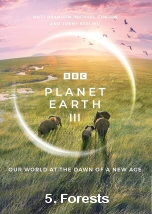
Journey to secret worlds where lives are wrapped in unexpected of ways. The fifth episode of the series takes viewers into the fascinating world of forests, revealing their hidden complexities and the intricate relationships within. Initially perceived as tranquil, forests are in fact bustling with life and intricate ecological interactions. The episode showcases various species, each with its unique lifestyle and survival strategies. Highlights include the Oriental pied hornbills in Borneo, whose extraordinary nesting rituals and partner dynamics are captivating. The Amazon rainforest is explored, introducing the peculiar treehoppers and their unique communication methods, vital for survival amidst numerous predators like ants and assassin bugs. The episode also delves into the intelligent and cooperative hunting techniques of dholes in the forests of India. The narrative takes a turn to China, focusing on the visually stunning courtship displays of Temminck's tragopans and golden pheasants. In the temperate rainforests of Western Canada, the rare spirit bear and its unique relationship with its habitat are examined. The episode concludes with an insightful look at the impact of human activity on forests and their inhabitants, particularly focusing on chimpanzees in Uganda, whose survival is increasingly intertwined with human expansion.
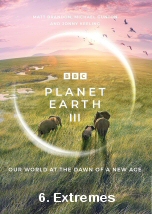
Explore the breathtaking extremes of our planet in this captivating episode. Journey through the vast Hang Son Doong cave in Vietnam, the largest on Earth. Witness the resilience of life in harsh conditions, marvel at the adaptation strategies of species like the blind cave fish and the enduring Arctic wolf pack. In the Arctic, observe the strategic hunt of wolves preying on musk oxen, a dance as old as the Ice Age. In the French Alps, the struggle for mating among common frogs unfolds, showcasing the urgency and challenges faced by cold-blooded animals. Witness the social dynamics of Barbary macaques in the cedar forests of the Atlas Mountains, where survival hinges on social bonds. The forests of Mexico, home to millions of monarch butterflies that huddle for warmth, illustrates the fragility and beauty of nature. Discover how fire shapes ecosystems in South Africa's fynbos and Northern Australia, crucial for the survival of species like the golden-shouldered parrot. The documentary poignantly addresses the impact of changing climates and human intervention on wildlife, from the endangered elephants of Amboseli, Kenya, to the secretive snow leopards of the Gobi Desert. This episode offers a profound glimpse into the extraordinary adaptations and challenges faced by wildlife across the globe, reminding us of the delicate balance and beauty of life on Earth.
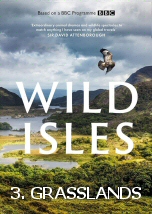
David Attenborough explores Britain and Ireland’s grasslands, revealing the creatures that create them and the extraordinary stories they hide. From the coastal flower meadows in the Scottish Outer Hebrides to the rich open landscapes in the mountains of southern Ireland, we enter surprising and dramatic worlds. In southern England, we meet an extraordinary bee that lives in chalk grassland, one of our rarest habitats, laying her eggs in empty snail shells. Meanwhile, in the colourful machair of the Hebrides, ringed plovers and lapwings strive to rear their families of tiny fluffy chicks and to save them for marauding gulls. We travel back in time to explore the vast wild grasslands once found throughout our isles, before meeting herds of semi-wild horses, where males battle fiercely for the females. Today, they are helping to turn some of this land back to wilderness. And in our precious remaining pockets of flower-rich meadow, a remarkable conservation success story plays out. Once extinct in our isles, England now has the largest known populations of large blue butterflies. Their survival relies on a game of deception with red ants, which are tricked into adopting the butterfly’s unassuming but predatory caterpillars. Our story then journeys to the mountains. Each morning in early spring, feisty male black grouse battle for prime position on their frozen breeding grounds. Their sole mission is to impress a female. Meanwhile, on south-facing scree slopes, dozens of adders emerge from hibernation to perform a surprisingly delicate courtship routine. The episode concludes with a mighty battle in the wild mountains of County Kerry. This is the scene of an epic and spectacular rut between the largest land mammals in Britain and Ireland, red deer. The grasslands of Britain and Ireland are under threat. We have lost 97 per cent of our species-rich meadows in the last century, as modern agriculture replaces these precious habitats. This episode shows just how important different types of grassland are to the species which call these islands home.
Sir David Attenborough explores the surprisingly vibrant seas that surround the British Isles. The vast watery wilderness around us is over three times the size of our land mass, and yet to many, our oceans remain a mystery. Full of colour and teeming with life, the seas of Britain and Ireland are crucially important to a range of wildlife. This episode goes beneath the waves to uncover the thriving habitats that exist along our 22,000-mile coastline. In winter, clear evidence of the ocean’s abundance can be seen on a beach in Norfolk. Thousands of grey seals congregate on the shoreline to give birth. Britain and Ireland are home to 40 per cent of the world’s grey seals, and the number being born on our shore rises every year. Once the newly born pups are weaned, the females are ready to breed again, and heavyweight males enter violent, bloody fights to win a stretch of beach, and the females along with it. Beyond the beach, the vibrant shallows contain several important habitats. Rich beds of seagrass are nurseries for a range of animals, while also acting as very important carbon storage areas. They are also home to one of the strangest fish in our waters, the seahorse. We follow a male and female as they perform a balletic mating dance in the water, delicately entwining their tails. The stakes are high, as these animals mate for life. In a touching piece to camera, Sir David bids a fledging Manx shearwater chick farewell as it embarks on a 6,000-mile journey across the oceans to South America. There is no better example of how important the British Isles and its abundant seas are to the survival of wildlife worldwide.
In the captivating second part of “Our Universe”, chapters 4 to 6 are presented together in an unmissable journey through the cosmos and life on Earth. These episodes delve deep into the elements that formed our world, the essential role of water, and the unseen forces that shape our lives. They offer an enthralling exploration of our place in the Universe. Dive in to experience this profound story of existence, from stardust to soulmates. In the fourth chapter, we uncover how the elements essential to life were forged in the hearts of stars. Following a green sea turtle’s quest across the ocean for these elements, this episode reminds us that life is built from the remnants of ancient stars. The fifth chapter takes us back to the miraculous arrival of water on Earth, exploring how this vital substance transformed a barren landscape into a thriving blue planet. In the final chapter we witness gravity’s grand influence on life, following two king penguins as their journey of attraction and survival unfolds against the cosmic force that binds us all.














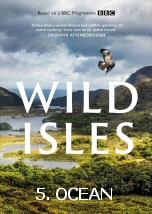










The shallow tropical seas, appearing as paradises, are actually arenas of intense survival battles. Predatory lionfish, with their patient hunting tactics, and clown frogfish, using a unique fishing rod-like dorsal fin as a lure, demonstrate the ocean's complex food web. The documentary also explores the kelp forests off the North American coast, revealing their role as nurseries for young horn sharks. Amidst these underwater forests lurk giant sea bass, wolf-eels, and various sharks like houndsharks and broadnose sevengills, posing significant threats to the smaller inhabitants. The episode takes viewers to the twilight and midnight zones of the ocean, unveiling alien-like creatures such as the siphonophore, glass squid, and gulper eel, adapted to the extreme conditions of deep waters. The journey concludes with the moving story of the pearl octopus, whose devotion to her eggs in the challenging deep-sea environment is both heartwarming and heartbreaking.
This episode is not only a showcase of the ocean's diverse inhabitants but also a reminder of the urgent need to understand and protect this vast, mysterious, and vital part of our planet.