Last Watched

"Travel"  Sort by

First Celts

   2015    History
The Celts - one of the world's most mysterious ancient people. In Britain and Ireland, we are never far from our Celtic past but in this series Prof. Alice Roberts and archaeologist Neil Oliver travel much further afield, discovering the origins and beliefs of these Iron Age people in artefacts and human remains right across Europe, from Turkey to Portugal. What emerges is not a wild people on the western fringes of Europe, but a highly sophisticated tribal culture that influenced vast areas of the ancient world - and even Rome". Rich with vivid drama reconstruction, we recreate this pivotal time and meet some of our most famous ancient leaders - from Queen Boudicca to Julius Caesar - and relive the battles they fought for the heart and soul of Europe. Alice and Neil discover that these key battles between the Celts and the Romans over the best part of 500 years constituted a fight for two very different forms of civilisation - a fight that came to define the world we live in today. In the first episode, we see the origins of the Celts in the Alps of central Europe and relive the moment of first contact with the Romans in a pitched battle just north of Rome - a battle that the Celts won and that left the imperial city devastated.
Series: The Celts: Blood, Iron, and Sacrifice
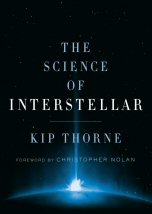
The Science of Interstellar

   2014    Art
In The Science of Interstellar, Kip Thorne, the physicist who assisted Nolan on the scientific aspects of Interstellar, shows us that the movie's jaw-dropping events and stunning, never-before-attempted visuals are grounded in real science. Thorne shares his experiences working as the science adviser on the film and then moves on to the science itself. In chapters on wormholes, black holes, interstellar travel, and much more, Thorne's scientific insights-many of them triggered during the actual scripting and shooting of Interstellar-describe the physical laws that govern our universe and the truly astounding phenomena that those laws make possible.

How to Stay Young The Body

   2016    Medicine
Angela Rippon and Dr Chris van Tulleken travel the world in search of the latest science that could help us all stay young and healthy for longer. They investigate the best ways to help both our bodies and brains age better. Up first is the body, and Angela travels to Germany to join a groundbreaking study which reveals the exercise that holds off ageing the most. Chris visits America to find out about the unexpected diet that can add years to our lives. And in Ecuador we meet a seventeen-year-old who looks like a child to discover how scientists hope he may hold the key to preventing the diseases of ageing.
Series: How to Stay Young

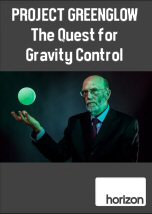
Project Greenglow The Quest for Gravity Control

   2016    Science
For centuries, the precise workings of gravity have confounded the greatest scientific minds - from Newton to Faraday and Einstein - and the idea of controlling gravity has been seen as little more than a fanciful dream. Yet in the mid 1990s, UK defence manufacturer BAE Systems began a ground-breaking project code-named Greenglow. Nasa was simultaneously running its own Breakthrough Propulsion Physics Project". It was concerned with potential space applications of new physics, including concepts like 'faster-than-light travel' and 'warp drives'. Looking into the past and projecting into the future, Horizon explores science's long-standing obsession with the idea of gravity control. It looks at recent breakthroughs in the search for loopholes in conventional physics and examines how the groundwork carried out by Project Greenglow has helped change our understanding of the universe. Gravity control may sound like science fiction, but the research that began with Project Greenglow is very much ongoing, and the dream of flying cars and journeys to the stars no longer seems quite so distant.

Colours of Life

   2015    Science
Earth is the most colourful place we know of. But the colours we see are far more complex and fascinating than they appear. In this series, Dr Helen Czerski uncovers what colour is, how it works, and how it has written the story of our planet - from the colours that transformed a dull ball of rock into a vivid jewel to the colours that life has used to survive and thrive". But the story doesn't end there - there are also the colours that we can't see, the ones that lie beyond the rainbow. Each one has a fascinating story to tell. Early Earth was a canvas for the vast new palette of the colours of life, with the diversity of human skin tones telling the story of how humanity spread and ultimately conquered the planet. Dr Helen Czerski explores the true masters of colour - which are often the smallest and most elusive - travelling to the mountains of Tennessee to witness the colourful mating display of fireflies, and revealing the marine creatures that can change the colour of their skin in order to hide from the world.
Series: Colour The Spectrum of Science

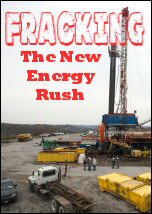
Fracking The New Energy Rush

   2013    Technology
Iain Stewart investigates a new and controversial energy rush for the natural gas found deep underground. Getting it out of the ground involves hydraulic fracturing - or fracking. We travel to America to find to find out what it is, why it is a potential game changer and what we can learn from the US experience". Sometimes, this is right under the places people live in. He meets some of the people who have become rich from fracking as well as the communities worried about the risks. Director Jeff Wilkinson