






Last Watched

"family"  Sort by

Ronaldo

   2015    Culture
Follow the life and career of Portuguese footballer Cristiano Ronaldo, who currently plays for Spanish club Real Madrid and the Portugal national team, through a series of interviews with Ronaldo himself as well as friends and family. Directed by Anthony Wonke and executive-produced by Asif Kapadia, Ronaldo was shot over the course of 14 months with the film-makers gaining access to Ronaldo's private life and inner circle of friends, family and team-mates. The film was shot in Madeira, Lisbon, and Madrid, where he currently resides as a squad member of Real Madrid.

Michael Jackson Journey from Motown to Off the Wall

   2016    Art
A look at the life of Michael Jackson from his early days at Motown Records to the release of his hit 1979 album, Off the Wall. One morning, a television set broke down in a living room in Gary, Indiana, leaving a large family of children with nothing to do, so they started singing. Soon the family was singing at talent shows and winning trophies. Their first four recorded songs would top the charts, and launch the career of one of the greatest entertainers the world has ever known. Journey from Motown to Off the Wall allows audiences to travel with Michael as he gets his start at Motown, strikes a new path with CBS records, and forges a relationship with legendary producer Quincy Jones. An illuminated portrait emerges of how an earnest, passionate, hard-working boy would become the "King of Pop".

The Great Melt

   2009    Nature
Every year, around the world, seasonal changes transform entire landscapes and draw in millions of creatures as these great events unfold. This fantastic series combines the epic scale of Planet Earth and the intimate, emotional stories of charismatic animals as they struggle to survive. Using state of the art technology, these programmes capture the Earth's most dramatic and epic wildlife spectacles and the intimate stories of the animals caught up in them.
The Great Melt: The summer melt of Arctic ice, opening up nearly three million square miles of ocean and land, provides opportunities for millions of animals, including beluga whales, families of Arctic foxes, vast colonies of seabirds, and the fabled Arctic unicorn, the narwhal. For polar bears, however, it is the toughest time of year. Why? How will they survive? A mother polar bear and her cub make their first journey together onto the sea ice. They are looking for ringed seals, their favourite prey. It is a serious business but the cub just wants to play. The melting ice makes it harder for them to hunt and threatens their survival. In a unique aerial sequence, the migration of narwhal with their distinctive unicorn-like tusks is filmed for the first time. The whales' journey is risky as they travel along giant cracks in the ice. If the ice were to close above them, they would drown. Hundreds of beluga whales gather in the river shallows. They rub themselves on smooth pebbles in one of the most bizarre summer spectacles. Guillemot chicks take their first flights from precipitous sea cliff nests to the sea 300 metres below. They attempt to glide to safety but many miss their target. Their loss is a bonus for the hungry Arctic fox family waiting below. As the melt comes to an end the bears gather, waiting for the sea to freeze again. Two 400kg males square up to each other to spar.
Series: Nature Great Events

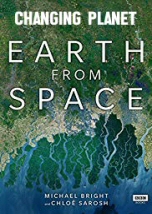
Changing Planet

   2019    Nature    HD
At a time when the Earth’s surface is changing faster than ever in human history, watch cities grow, forest disappear and glaciers melt.
In the ever-growing grey of cities one man is feeding thousands of parakeets; in Sumatra a female orang-utan and her daughter face life in a forest under threat; while in Tanzania local people use satellites to replant a forest, securing the future for a family of chimpanzees. This is our home as we’ve never seen it before.
Series: Earth from Space

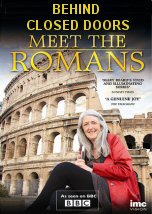
Behind Closed Doors

   2012    History
In this final episode, Mary Beard delves even deeper into ordinary Roman life by going behind the closed doors of their homes. She meets an extraordinary cast of characters - drunken housewives, teenage brides, bullied children and runaway slaves - and paints a more dynamic, lusty picture of Roman family life. Mary uncovers their preserved beds, furniture and cradles, tries on Roman wedding rings and meets some eccentric wives like Glyconis, praised by her husband for liking a drink or two, and Allia Potestas, who lived in a Roman menage a trois. Mary explores Roman parenting, childbirth and children, including Sulpicius Maximus, an 11-year-old schoolboy who was worked to death by his pushy parents, and Geminia Mater, a 5-year-old tomboy. Finally, Mary paints a more nuanced picture of Roman slavery and asks why if it was such a brutal institution did many Romans choose to be buried with their servants - living cheek by jowl in death, as in life
Series: Meet the Romans

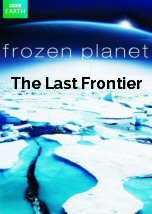
Frozen Planet: The Last Frontier

   2011    Culture
The documentary series reveals the extraordinary riches and wonders of the Polar Regions that have kept people visiting them for thousands of years. Today, their survival relies on a combination of ancient wisdom and cutting-edge science. Most Arctic people live in Siberia, either in cities like Norilsk - the coldest city on earth - or out on the tundra, where tribes like the Dogan survive by herding reindeer, using them to drag their homes behind them. On the coast, traditional people still hunt walrus from open boats - it is dangerous work, but one big walrus will feed a family for weeks. Settlers are drawn to the Arctic by its abundant minerals; the Danish Armed Forces maintain their claim to Greenland's mineral wealth with an epic dog sled patrol, covering 2,000 miles through the winter. Above, the spectacular northern lights can disrupt power supplies so scientists monitor it constantly, firing rockets into it to release a cloud of glowing smoke 100 kilometres high. In contrast, Antarctica is so remote and cold that it was only a century ago that the first people explored the continent. Captain Scott's hut still stands as a memorial to these men. Science is now the only significant human activity allowed; robot submarines are sent deep beneath the ice in search of new life-forms, which may also be found in a labyrinth of ice caves high up on an active volcano. Above, colossal balloons are launched into the purest air on earth to detect cosmic rays. At the South Pole there is a research base designed to withstand the world's most extreme winters. Cut off from the outside world for six months, the base is totally self-sufficient, even boasting a greenhouse.
Series: Frozen Planet
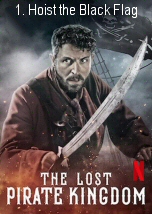
The Lost Pirate Kingdom

The Lost Pirate Kingdom

2021  History
Life on Our Planet

Life on Our Planet

2023  Science
The Art of Germany

The Art of Germany

2010  Art
The Art Mysteries

The Art Mysteries

2020  Art
Untold

Untold

2021  Culture
Reel Rock

Reel Rock

2014  Culture