



Last Watched

"Art"  Sort by

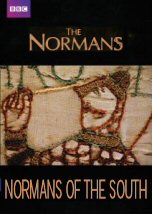
The Normans: Normans of the South

   2010    History
Professor Robert Bartlett explores the impact of the Normans on southern Europe and the Middle East. The Normans spread south in the 11th century, winning control of southern Italy and the island of Sicily. There they created their most prosperous kingdom, where Christianity and Islam co-existed in relative harmony and mutual tolerance. It became a great centre of medieval culture and learning. But events in the Middle East provoked the more aggressive side of the Norman character. In 1095, the Normans enthusiastically answered the Pope's call for holy war against Islam and joined the first crusade. They lay siege to Jerusalem and eventually helped win back the holy city from the muslims. This bloody conquest left a deep rift between Christianity and Islam which is still being felt to this day.
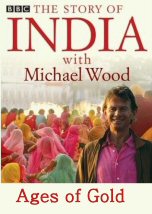
The Story of India: Ages of Gold

   2007    History
Presenter Michael Wood seeks out the achievements of the country’s golden age, discovering how India discovered zero, calculated the circumference of the Earth and wrote the world’s first sex guide, the Kama Sutra. In the south, he visits the giant temple of Tanjore and sees traditional bronze casters, working as their ancestors did 1,000 years ago.
Series: The Story of India

The Story of India: The Meeting of Two Oceans

   2007    History
Michael Wood charts the coming of Islam to the subcontinent and one of the greatest ages of world civilisation: the Mughals. He visits Sufi shrines in Old Delhi, desert fortresses in Rajasthan and the cities of Lahore and Agra, where he offers a new theory on the design of the Taj Mahal. He also looks at the life of Akbar, a Muslim emperor who decreed that no one religion could hold the ultimate truth, but whose dream of unity ended in civil war.
Series: The Story of India

The Story of India: Freedom

   2007    History
This episode examines the British Raj and India’s struggle for freedom. Wood reveals how in South India a global corporation came to control much of the subcontinent, and explores the magical culture of Lucknow, discovering the enigmatic Briton who helped found the freedom movement. He traces the Amritsar massacre, the rise of Gandhi and Nehru, and the events that led to the Partition of India in 1947.
Series: The Story of India

Is Time Travel Possible

   2011    Science
Einstein's world-shaking Theory of Relativity says that time travel is perfectly possible -- if you're going forward in time. Finding a way to travel backwards requires breaking the speed of light, which so far seems impossible. But now, strange-but-true phenomena such as quantum nonlocality (where particles instantly teleport across vast distances) may give us a way to make the dream of traveling back and forth through time a reality. Step into a time machine and rewrite history, bring loved ones back to life, control our destinies. But if succeed, what are the consequences of such freedom? Will we get trapped in a plethora of paradoxes and multiple universes that will destroy the fabric of the universe?
Series: Through the Wormhole

How Did We Get... Here

   2011    Science
Everywhere we look in the most hospitable of environments and in the most extreme we find life. On Earth, life exists everywhere we look. Yet we have only ever found life on our planet. How did the stuff of stars come together to create life as we know it? What do we really mean by 'life'? And will unlocking this mystery help us find life elsewhere?
Series: Through the Wormhole