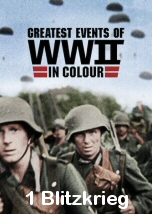
This illuminating ten-part series tells the story of World War ll through the ten most pivotal turning points in the conflict. Gripping story-telling illustrated with exquisitely restored and colourised archived films and supported by a global cast of stellar historians bring this crucially important era in history to life. In the first chapter, Britain and France declare war when Hitler invades Poland. In May 1940 the Germans attack Holland and Belgium as a decoy. As the Wehrmacht comes through the Ardennes and the Luftwaffe strikes in force, French leaders are caught like rabbits in headlights. The Germans are on a drug called Pervitin, which beats off fatigue, and reach the Atlantic coast. There is a danger that the Germans will encircle the Allies and cut them off from the sea. But Hitler issues his Halt Order and some 340,000 Allies are evacuated.
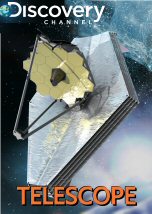
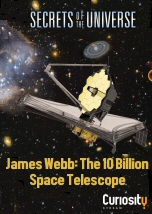
The James Webb Space Telescope, a flagship observatory developed by NASA, the European Space Agency, and the Canadian Space Agency, is the largest space telescope ever built, with a deployable mirror measuring 21.3 feet (6.5 meters) in diameter and four scientific instruments to observe the universe in infrared wavelengths. The mission will study the formation of galaxies, stars, and planets. JWST was launched December 25, 2021 on an Ariane 5 ECA rocket. This is the story of the James Webb Space Telescope, told by the people who have devoted their lives to it. It is the world’s most advanced and most expensive telescope, and building it has been fraught with challenges. But it will all be worth it if the mission is successful.
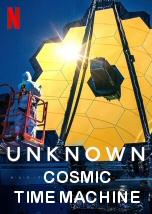
Space exploration as we’ve never seen it before, taking us behind the scenes of how NASA creates and sends the James Webb Space Telescope into space. Follows a team of engineers and scientists in an ambitious mission to launch the telescope and take the next giant leap in the understanding of the universe.
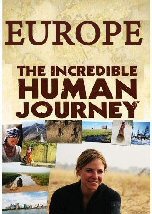
When our species first arrived in Europe, the peak of the Ice Age was approaching and the continent was already crawling with a rival: stronger, at home in the cold and even (contrary to their popular image) brainier than us. So how did the European pioneers survive first the Neanderthals and then the deep freeze as they pushed across the continent? Alice Roberts reconstructs the head of the 'first European' to come face to face with one of our ancestors; she discovers how art became crucial for survival in the face of Neanderthal competition; and what happened to change the skin colour of these European pioneers from black to white.
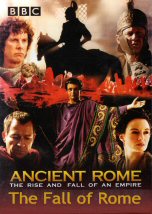
In AD 410, the Goth hordes sacked the city. This event symbolised Rome's collapse. Within 70 years, the western empire - what we think of as Ancient Rome - was abandoned. But it should never have happened at all.
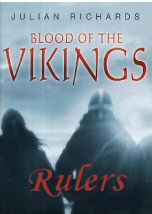
Julian Richards recalls how, after years of raiding, England's resistance was so weakened that, in the early 11th century, the Vikings were finally able to seize the throne. In other parts of the British Isles however, they gained and maintained power by integration.






In the first chapter, Britain and France declare war when Hitler invades Poland. In May 1940 the Germans attack Holland and Belgium as a decoy. As the Wehrmacht comes through the Ardennes and the Luftwaffe strikes in force, French leaders are caught like rabbits in headlights. The Germans are on a drug called Pervitin, which beats off fatigue, and reach the Atlantic coast. There is a danger that the Germans will encircle the Allies and cut them off from the sea. But Hitler issues his Halt Order and some 340,000 Allies are evacuated.