The final episode of the series ponders the fate of planet Earth. Neil deGrasse Tyson opens with a reflection on science and those who help us understand it: 'We all feel the weight of the shadows on our future, but in another time, every bit as ominous as our own, there were those who could see a way through the darkness to find a star to steer by.' The young Carl Sagan and Neil Tyson first discovered their passion for science at the NY World's Fairs of the past. We visit the dazzling Pavilions of the 2039 NY World's Fair, where problems we currently think intractable have been plausibly solved through public commitment and scientific imagination. And our baby is a woman now, with a baby of her own and a future bright with possibilities.
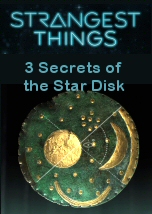
An ancient bronze disk adorned with gold may contain the oldest images of the cosmos ever discovered; using new research and the latest tech, experts investigate if this artefact could be the work of a prehistoric astrologer. Is it just a decorative disc or is there some hidden meaning? A strange 11,000-year-old deer skull can have links to a British Atlantis.
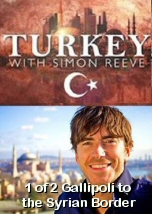
Travel writer Simon Reeve embarks upon two long-distance journeys across Turkey, exploring this dramatic and beautiful country that now finds itself at the centre of world events. In this programme, he visits Istanbul and the beaches and crystal clear waters of the Aegean Sea, before ending up at the war-torn border with Syria. In the region thought to have been the origin of the first vineyards, Simon meets a producer now trying to sell wine in a Muslim country with an increasingly conservative government. In Istanbul, he meets some of the people shaping modern Turkey, from loyal supporters of the nation's controversial and authoritarian president to the master builder constructing one of the world's largest mosques and the notorious billionaire cashing in on a Turkish property boom. Along Turkey's famous Turquoise Coast, Simon has a taste of luxury at the country's most expensive hotel, but discovers an industry on its knees as war in Syria and deadly terror attacks keep millions of holidaymakers away.
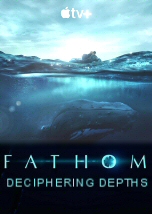
Fathom is a visual and aural wonder of a documentary that follows researchers working to finally decode the communication of humpback whales. Dr. Ellen Garland and Dr. Michelle Fournet embark on parallel journeys on opposite sides of the world, as they seek to better understand whale culture and communication. The film uniquely reveals a deep commitment and reverence to the scientific process and the universal human need to seek answers about the world around us. From hypothesis to groundbreaking experiences in the field, 'Fathom' showcases the passion, curiosity, collaboration, perseverance and work it takes for leading scientists to make scientific discoveries.
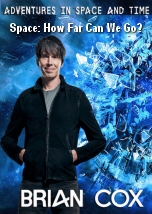
Professor Brian Cox tackles some of the most challenging and intriguing questions facing science. He looks back on a decade of discovery and towards the next space frontier. Brian believes we are at the start of a new age of space travel, where space flight is on the verge of becoming routine. In this episode, he explores the latest science and takes a new look at his old films and asks: how far can we go in our exploration of the cosmos?
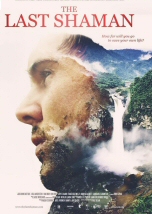
The Last Shaman
James is an all American boy whose promising life is brought to a halt by acute depression. Turning his back on the most progressive western treatments and medicines, James discovers ayahuasca in search of healing in the Peruvian jungle. Over the course of 10 months venturing from Shaman to Shaman, James finds friendship, answers and a kind of redemption hidden deep in the Peruvian amazon. (Click CC for subtitles)




The young Carl Sagan and Neil Tyson first discovered their passion for science at the NY World's Fairs of the past. We visit the dazzling Pavilions of the 2039 NY World's Fair, where problems we currently think intractable have been plausibly solved through public commitment and scientific imagination. And our baby is a woman now, with a baby of her own and a future bright with possibilities.