Wonder Woman is the most popular female comic-book superhero of all time. Aside from Superman and Batman, no other comic-book character has lasted as long. Like every other superhero, Wonder Woman has a secret identity. Unlike every other superhero, she also has a secret history. The history of her creation seven decades ago has been hidden away—until now. A riveting work of historical detection revealing that the origins of one of the world's most iconic superheroes hides within it a fascinating family story-and a crucial history of twentieth-century feminism. Take a look at the very unconventional lives of the man and women who created this iconic pop culture figure.
Superman is really the all-father of superheroes. He is the Odin from which all else springs forward. Without Superman, there's no Marvel or DC, no billion-dollar blockbusters. His logo is one of the three most recognizable symbols on the planet, and it stands shoulder to shoulder with the crucifix and the Jewish star. Superman became a worldwide phenomenon and was created by two working-class kids from Cleveland, Jerry Siegel and Joe Shuster. Superman is for justice and it's kind of ironic that there was a great injustice done to his creators. Siegel and Shuster lost everything, and just like Superman, they demanded justice. They fought for years to receive proper credit and compensation.
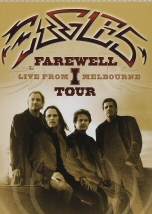
Thirty songs over two and a half hours, with fine performances, great sound, and good visual direction: it's all here on this series. At one point, the veteran band seemed unlikely to even make it to the new millennium, but here they are, mostly intact, with a string of hits dating back more than three decades. The majority of them are performed here, from the earliest ('Take It Easy,' 'Desperado,' 'Peaceful Easy Feeling') through 'Hotel California' and 'Life in the Fast Lane' and right up to 'Love Will Keep Us Alive'.
How does a chef trained in the finest kitchens of France translate his haute cuisine to fast food? Ludo’s obsession with a perfectly cooked bird can be traced back to France, where he learned to roast chicken. His love for the American classic was solidified in 1996 when he arrived in LA and ate at KFC for the first time. “It was the same sensation,” he’s said, the crunchy skin and juicy flesh, and the gap between his two worlds was bridged. In this episode we learn how a Frenchman became famous for a truly American dish.
A bistro is typically defined by its modesty – they are relatively small, affordable and humble. The bistro has become rather ubiquitous these days but despite its many incarnations, at its core, a bistro is a place where every man can eat, and eat well. With Petit Trois, Ludo Lefebvre has brought the spirit of the bistro to Los Angeles. In this episode, Ludo brings us back to Paris to introduce us to some of the people and places that first inspired him to begin a culinary career.
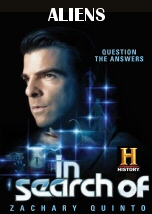
Quinto sets out to discover whether aliens exist and what evidence we have to prove it. He meets with several who say they have encountered extra-terrestrial life–a man who has been abducted by aliens several times since childhood; a man who claims to have extracted an alien implant; and a woman who shows Zachary what it feels like to be abducted into a spacecraft. Zachary also meets with the world's leading scientists at SETI in Green Banks, West Virginia. There, utilizing the world's largest telescope, they show him the methods they employ to communicate with potential other-worldly visitors and what this research has taught them about a mysterious radio signal they picked up 3 billion light years away.








A riveting work of historical detection revealing that the origins of one of the world's most iconic superheroes hides within it a fascinating family story-and a crucial history of twentieth-century feminism. Take a look at the very unconventional lives of the man and women who created this iconic pop culture figure.