

Last Watched

"Art"  Sort by

Night Will Fall

   2014    History
Researchers discover film footage from World War II that turns out to be a lost documentary shot by Alfred Hitchcock and Sidney Bernstein in 1945 about German concentration camps liberated by allied troops. When Allied forces liberated the Nazi concentration camps in 1944-45, their terrible discoveries were recorded by army and newsreel cameramen, revealing for the first time the full horror of what had happened. Making use of British, Soviet and American footage, the Ministry of Information’s Sidney Bernstein (later founder of Granada Television) aimed to create a documentary that would provide lasting, undeniable evidence of the Nazis’ unspeakable crimes. He commissioned a wealth of British talent, including editor Stewart McAllister, writer and future cabinet minister Richard Crossman – and, as treatment advisor, his friend Alfred Hitchcock. Yet, despite initial support from the British and US Governments, the film was shelved, and only now, 70 years on, has it been restored and completed by Imperial War Museums. This eloquent, lucid documentary by André Singer (executive producer of the award-winning The Act of Killing) tells the extraordinary story of the filming of the camps and the fate of Bernstein’s project, using original archive footage and eyewitness testimonies.
Pink Floyd: P. U. L. S. E. Live at Earls Court (II)

   2006    Art    HD
P.U.L.S.E is a Pink Floyd concert video taken from the 20 October 1994 concert at Earls Court, London. PULSE records the great psychedelic band Pink Floyd rocking out like only they can. Renowned for their hallucinatory special effects and lighting schemes, Pink Floyd goes all out at this spectacular (and very long) concert. Twenty-one of their classics are performed, including classic rock radio staples 'Dark Side of The Moon' and 'Wish You were Here". There was considerable delay in the release of the video edition of Pulse. The cause of the delays was reputed to be the continued modifications and additions to produce a high-quality release. The previous planned release date of 22 September 2005 for the two-disc DVD set was changed to 10 July 2006 for the UK and Europe, and 11 July 2006 everywhere else.
Series: P.U.L.S.E

Who is in Control

   2015    Medicine
‘Who Is in Control?’ explores the great deception that greets us each morning when we awake: it feels as though we are in conscious control of our lives but the truth is that we are not. Instead almost every action, every decision, every belief that we hold is driven by parts of the brain that we have no access to.
Series: The Brain with David Eagleman

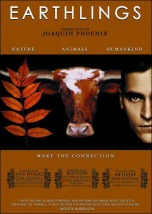
Earthlings

   2005    Nature
A feature length documentary about humanity's absolute dependence on animals (for pets, food, clothing, entertainment, and scientific research) but also illustrates our complete disrespect for these so-called 'non-human providers'. With an in-depth study into pet stores, puppy mills and animals shelters, as well as factory farms, the leather and fur trades, sports and entertainment industries, and finally the medical and scientific profession, the film uses hidden cameras and never before seen footage to chronicle the day-to-day practices of some of the largest industries in the world, all of which rely entirely on animals for profit. Powerful, informative and thought-provoking, EARTHLINGS is by far the most comprehensive documentary ever produced on the correlation between nature, animals, and human economic interests. There are many worthy animal rights films available, but this one transcends the setting.

Who Will We Be

   2015    Medicine
In ‘Who will we be?’ Dr. David Eagleman journeys into the future, and asks what’s next for the human brain, and for our species. We stand at a major turning point, one where we might take control of our own development. We face a future of uncharted possibilities in which our relationship with our own body, our relationship with the world, the very basic nature of who we are is set to be transformed. For thousands of generations, humans have lived the same life cycle over and over. We are born, we control a fragile body, we experience a limited reality, and we die. But science and technology are giving us tools to transcend that evolutionary story. Our brains don't have to remain as we have inherited them. We are capable of extending our reality, of inhabiting new bodies, and possibly shedding our physical forms altogether. And we are discovering the tools to shape our own destiny. Who we become is up to us.
Series: The Brain with David Eagleman

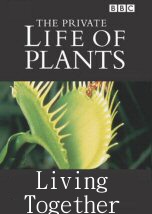
The Private Life of Plants Living Together

   1995    Nature
The fifth programme explores the alliances formed between the animal and plant worlds. Attenborough dives into Australia's Great Barrier Reef and contrasts the nocturnal feeding of coral, on microscopic creatures, with its daytime diet of algae. Some acacias are protected by ants, which will defend their refuge from any predator. Besides accommodation, the guards are rewarded with nectar and, from certain species, protein for their larvae as well. Fungi feed on plants but can also provide essential nutriment to saplings (Mycorrhiza). The connection is never broken throughout a tree's life and a quarter of the sugars and starches produced in its leaves is channelled back to its fungal partners. Meanwhile, fungi that feed on dead wood leave a hollow trunk, which also benefits the tree. Orchids enjoy a similar affiliation. Lichens are the product of a relationship between fungi and a photosynthetic associate, usually algae. They are extremely slow-growing, and a graveyard is the perfect location to discover their exact longevity. Mistletoe is a hemiparasite that obtains its moisture from a host tree, while using own leaves to manufacture food. Its seeds are deposited on another by the mistletoe tyrannulet, following digestion of the fruit. The dodder (Cuscuta) is also parasitic, generally favouring nettles, and siphons its nourishment through periodic 'plugs' along its stem. The rafflesia has no stem or leaves and only emerges from its host in order to bloom — and it produces the largest single flower: one metre across.
Series: The Private Life of Plants
Ancient Apocalypse

Ancient Apocalypse

2024  History
Prehistoric Planet

Prehistoric Planet

2022  Science
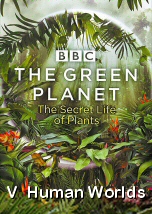
The Green Planet

The Green Planet

2022  Nature
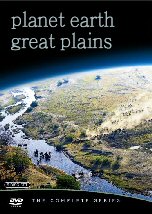
Planet Earth

Planet Earth

2007  Nature
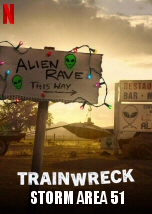
Trainwreck

Trainwreck

2025  Culture
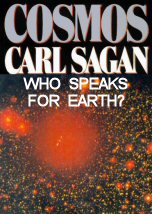
Cosmos

Cosmos

1980  Culture