

Last Watched

"Flu"  Sort by

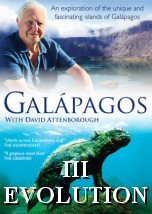
Evolution

   2013    Nature    3D    HD
No two islands in the Galapagos are the same. The imperceptible drift of a continental plate keeps each island biologically isolated. David Attenborough explores this evolutionary crucible, encountering tortoises that weigh up to half a tonne, finches that use tools and lizards that communicate using press-ups; for Darwin, this was all evidence for his theory of evolution. We see the final footage of the world famous tortoise fondly known as Lonesome George, the last survivor of his species. David Attenborough was the last person to have ever filmed with him. Darwin’s famous visit had a downside – the arrival of man. David investigates the impact we’ve had in these islands, as our influence is a double-edged sword. We’ve disrupted the natural balance but he also believes Darwin would be thrilled with the advances we have made in science. We’re also now uncovering evidence that evolution is more rapid than Darwin could ever have imagined. Whatever wonders the Galapagos Islands hold today, they are only a hint of what awaits them in the future.
Series: Galapagos with David Attenborough
Zeitgeist Addendum

   2008    Culture
Zeitgeist Addendum attempts to locate the root causes of this pervasive social corruption, while offering a solution. This solution is not based on politics, morality, laws, or any other 'establishment' notions of human affairs, but rather on a modern, non-superstitious based understanding of what we are and how we align with nature, to which we are a part. The work advocates a new social system which is updated to present day knowledge, highly influenced by the life long work of Jacque Fresco and The Venus Project.
Series: Zeitgeist

The Southwest Islands

   2017    Nature
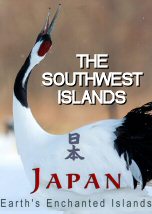
In the far south west of Japan, there is a chain of islands stretching towards the tropics - a place where all life is influenced by the power of the sea, and where volcanoes and typhoons are forces to be reckoned with. The journey begins at an island at the top of the chain and travels south, revealing unexpected stories of isolation, unique wildlife and unsolved mysteries.
Series: Japan Earth Enchanted Islands

The Day Pictures Were Born

   2006    Art
Dr Nigel Spivey explores how art influences life by tracing the development of the image from cave paintings to our modern obsession with images. Dr. Spivey begins his investigation by travelling to the Cave of Altamira near the town of Santillana del Mar in Cantabria, Spain, where in 1879 a young girls exclamation of 'Papa, look, oxen!' to her father, local amateur archaeologist Marcelino Sanz de Sautuola, is explained to have meant that Maria had just become the first modern human to set eyes on the first gallery of prehistoric paintings ever to be discovered.
Series: How Art Made the World

Blue Planet II Coral Reefs

   2017    Nature
Corals build themselves homes of limestone in the warm, clear, shallow seas of the tropics. Their reefs occupy less than one tenth of one per cent of the ocean floor, yet they are home to a quarter of all known marine species. The broad-club cuttlefish has found its place by using a hypnotic display that apparently mesmerizes its prey, causing it to let down its defences. On the Great Barrier Reef a remarkable grouper uses sign language, dubbed the headstand signal, to reach out to an entirely different creature, a reef octopus, to flush small fish out of their hiding holes and into the groupers waiting mouth.
Series: Blue Planet II

Unlocking the Code

   2011    Medicine
Dr Adam Rutherford shows how decoding the genome has led us to begin to understand the very process by which our DNA makes us different; how it makes each one of us on earth unique and influences who we are and the traits we have. He reveals how, as we try and understand the relationship between who we are and our genes, we stand at the beginning of the most exciting scientific journey of all time.
Series: The Gene Code