
Last Watched

"War "  Sort by

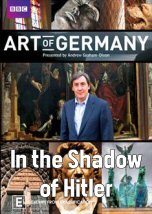
In the Shadow of Hitler

   2010    Art
There is a tendency to deny German culture the equal reverence of Italy or Spain, and this enlightening new series provides a wonderful opportunity to explore a great, yet often neglected, artistic tradition whose influence has been just as profound. Andrew Graham-Dixon concludes his exploration of German art by investigating the dark and difficult times of the 20th century. Dominating the landscape is the figure of Adolf Hitler, failed artist, would-be architect and obsessed with the aesthetics of his 1,000-year Reich". In a series of extraordinary building projects and exhibitions, Hitler waged a propaganda war against every form of modern art as a prelude to unleashing total war on the whole of Europe. After the war the shadow of the Third Reich persisted, Germany remained divided and traumatised. How would artists deal with a past that everybody wanted to forget? Journeying through the work of Otto Dix and George Grosz and the age of the Bauhaus to the post-war painters Georg Baselitz, Hilla Becher and the conceptual artist Joseph Beuys is a long and strange journey, but the signs that art has a place at the heart of the new reunited Germany are clearly visible.
Series: The Art of Germany
Which Universe Are We In

   2015    Science
Imagine a world where infinite copies of you are playing out every storyline of your life. It sounds like a plot stolen straight from Hollywood, but far from it. This is the multiverse. Until very recently the whole idea of the multiverse was dismissed as a fantasy, but now this strangest of ideas is at the cutting edge of science. And for a growing number of scientists, the multiverse is the only way we will ever truly make sense of the world we are in. Do multiple universes exist? And if so, which one are we actually in?" Imagine a world where dinosaurs still walk the earth. A world where the Germans won World War II and you are president of the United States. Imagine a world where the laws of physics no longer apply.

The Coldest War

   2014    Culture
'The Coldest War': With the polar ice caps shrinking due to global warming, new trade routes are being exposed, along with billions of dollars' worth of natural-resource reserves. The five nations bordering the Arctic are readying themselves to fight for it. The problem is that there's one non-NATO country that already considers itself rightful owner of the region: Russia. With Vladimir Putin's recent military annexation of Crimea, there's a definite possibility its aggressions will boil over, returning the international community to precarious Cold War footing. We will head north to witness NATO forces participating in the largest polar military exercise in history. 'Heroin Warfare': Since the U.S. occupation of Afghanistan, heroin production in the region has skyrocketed, making the country the number-one producer by a large margin. Though Iran, Afghanistan's neighbor, is an ultraconservative country, Afghan heroin flowing across the border has actually caused Iran to have the worst heroin use problem in the world. Suroosh Alvi gets a rare look inside Iran to meet the suffering heroin addicts, and see how the country is coping with the illegal drug trade.
Series: Vice

Night Will Fall

   2014    History
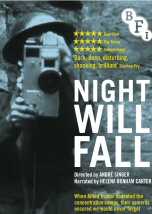
Researchers discover film footage from World War II that turns out to be a lost documentary shot by Alfred Hitchcock and Sidney Bernstein in 1945 about German concentration camps liberated by allied troops. When Allied forces liberated the Nazi concentration camps in 1944-45, their terrible discoveries were recorded by army and newsreel cameramen, revealing for the first time the full horror of what had happened. Making use of British, Soviet and American footage, the Ministry of Information’s Sidney Bernstein (later founder of Granada Television) aimed to create a documentary that would provide lasting, undeniable evidence of the Nazis’ unspeakable crimes. He commissioned a wealth of British talent, including editor Stewart McAllister, writer and future cabinet minister Richard Crossman – and, as treatment advisor, his friend Alfred Hitchcock. Yet, despite initial support from the British and US Governments, the film was shelved, and only now, 70 years on, has it been restored and completed by Imperial War Museums. This eloquent, lucid documentary by André Singer (executive producer of the award-winning The Act of Killing) tells the extraordinary story of the filming of the camps and the fate of Bernstein’s project, using original archive footage and eyewitness testimonies.

The Last Empire

   2016    History
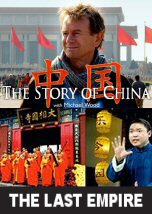
China's last empire, the Qing, lasted from 1644 to 1912. It began in violence and war as the Manchus swept down from the north, but invaders became emperors, with three generations of one family ruling the country. Among them, Michael Wood argues, was China's greatest emperor - Kangxi. Under the Qing, China doubled in size to include Xinjiang in the far west, as well as Mongolia and Tibet, creating the essential shape of China today. The new dynasty tolerated a diversity of cultures and religions, including Islam. In Kaifeng, Michael visits a women's mosque with a female imam, a delightful scene that ends with laughter and selfies! The Qing also undertook huge cultural enterprises. At a traditional printing house where the wood blocks are hand-carved, we see how the Complete Tang Poems were reproduced - all 48,000 of them. We travel through the wintry countryside to a remote village where a hardy audience watch open-air opera in the snow and visit a painter's studio, and 'storytelling' houses in Yangzhou. In the 18th century, China was arguably the greatest economy in the world, and we get a fabulous sense of the rich culture that came with prosperity. But then came the clash with the British, in the first Opium War, when a British expedition destroyed the Qing navy and extracted territory and trading rights. We leave with a glimpse of the future. 'Every dynasty has risen and declined,' says Michael, 'and has needed new life to regenerate, and this time the catalyst was the British.' Among the ports China ceded was an almost uninhabited island, Hong Kong, one of today's greatest financial centres, and Shanghai, a small town then but now one of the greatest cities in world.
Series: The Story of China

Escape to Europe and Cycle of Terror

   2015    Culture
This episode covers the European refugee crisis, the largest refugee migration since World War II. Following the refugees on their journey, Vice sets out to cover not only the trials of those seeking asylum from the Syrian conflict, but the reactions from the Western world and the countries that have sought to take them in. Unfortunately, but perhaps not surprisingly, the response in many regions has been oppositional, especially in the aftermath of the Paris and Brussels ISIS attacks. In addressing this modern world crisis, Vice depicts the severe trials and tribulations faced by the desperate refugees, and the consequences, noticed or unnoticed, of turning them away.
Series: Vice