








Last Watched

"Wildlife"  Sort by

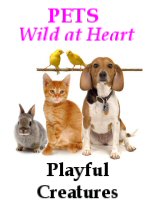
Playful Creatures

   2015    Nature
Spy in the Huddle use innovative techniques to reveal the incredible secrets of your pets' behaviour in ways never seen before. As astonishing photography explores the wild side of our playful pets, find out why hamsters love to run in a wheel, how dogs pick up the rules of the pack and how kittens learn to be solitary hunters. Featuring incredible views of plunge-diving dogs, babysitting cats, acrobatic hamsters and a playful cat outwitted by his prey" - you'll never look at your favourite companions in quite the same way again. The latest science also reveals why budgies talk, how a cat scales a vertical wall with the help of a special claw, why hamsters stuff their faces with more food than they can eat and the real meaning behind a rabbit's hop. Our pets are also given a chance to explore their wild side as we join the free-roaming pet dogs of Cusco Peru, pet rabbits living in a natural warren and the wild-living inhabitants of Cat Island, Japan. A range of innovative techniques such as moving X-rays, thermal imagery, minicam-carrying dogs and revelatory slow-motion photography shows why our pets play and how their true wild nature is just a whisker away.
Series: Pets: Wild at Heart
Growing Up

   2014    Nature
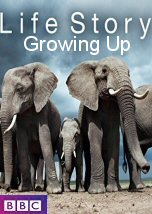
David Attenborough brings us the universal story that unites each of us with every animal on the planet, the story of the greatest of all adventures - the journey through life. For animals there is just one goal in life - to continue their bloodline in the form of offspring, the next best thing to immortality. The series shows how animals attempt to overcome the challenges that face them at each of the six crucial stages of life as they strive towards ultimate success." In the journey towards adulthood, a moment comes for all animals when they must strike out on their own. With their parents absent they must learn to survive in a dangerous world. At this stage of life every small success may mean the difference between life and death.
Series: Life Story

Orbit: Earth Extraordinary Journey July to December

   2012    Nature
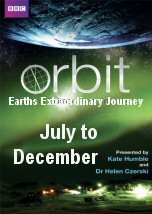
Right now, you're hurtling around the Sun at 64,000 miles an hour. In the next year, you'll travel 584 million miles, to end up back where you started. In this spectacular series, presenters Kate Humble and Dr Helen Czerski follow the Earth's voyage around the Sun for one complete orbit, to witness the astonishing consequences this journey has for us all. From seasonal extremes to destructive weather, they travel the world to experience the great events that are shaped by our journey around the Sun." They venture back in time to show how the Earths orbit has changed, and the astounding effect this has had on the planet. For the first time ever, this astonishing series charts the progress of the Earth as it undertakes its incredible annual orbit around the Sun. From stunning space imagery to in-your-face storm chasing, this series showcases the incredible power of our planets epic journey around the Sun. In this first episode they travel from July to the December solstice, experiencing spectacular weather and the largest tides on Earth. To show how the Earth's orbit affects our lives, Helen jumps out of an aeroplane and Kate briefly becomes the fastest driver on Earth.
Series: Orbit: Earth Extraordinary Journey

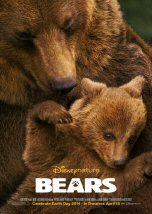
Bears

   2014    Nature
Enjoy this wonderful documentary from Disney Nature about a family of brown bears living in the coastal mountain ranges of Alaska." A brown bear mother named Sky gives birth to two cubs named Amber and Scout in her den on a mountain slope. When April comes the bears will be ready to leave the den. As the bears leave the oncoming summer brings with it a threat of avalanches. Fortunately the bears are able to avoid disaster. Upon reaching the lush valley below, the cubs meet the other bears, some of which pose a threat to the cubs; among these bears are Magnus, a big healthy male, and Chinook, an older male. The family works together to survive the spring, with Sky keeping the cubs safe from Tikaani, a pesky grey wolf...

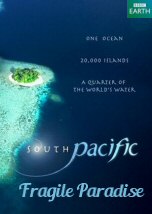
South Pacific Fragile Paradise

   2009    Nature
The extraordinary wildlife, culture and history of this immense, fascinating ocean and its myriad islands are revealed in stunning detail. With its coral reefs, turquoise lagoons and dramatic oceanic atolls, the South Pacific is the archetypal paradise. It is still relatively healthy and teeming with fish, but it is a fragile paradise. International fishing fleets are taking a serious toll on the sharks, albatross and tuna, and there are other insidious threats to these bountiful seas. We look at what is being done to preserve the ocean and its wildlife.

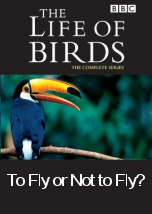
To Fly or Not to Fly

   1998    Nature
The first episode looks at how birds first took to the skies in the wake of the insects. It begins in Mexico, where Sir Attenborough observes bats being outmanoeuvred by a red-tailed hawk. Pterosaurs were the birds' forerunners, some 150 million years after dragonflies developed the means of flight, but eventually went extinct together with the dinosaurs. Birds had by then already evolved from early forms like archaeopteryx, the first creature to possess feathers. Its ancestry can be traced through reptiles, and some current species, such as the flying lizard, possibly show paths this evolution may have taken." One of the biggest birds to have ever existed was the terror bird, which proliferated after dinosaurs vanished and stood up to 2.5 metres tall. By comparison, the ostrich, while not closely related, is the largest and heaviest living bird. It was probably the evasion of predators that drove most birds into the air, so their flightless cousins evolved because they had few enemies. Accordingly, such species are more likely to be found on islands, and Sir Attenborough visits New Zealand to observe its great variety, most especially the kiwi. Also depicted is the moa, another huge creature that is now gone. The takahē is extremely rare, and high in the mountains of New Zealand, Sir Attenborough discovers one from a population of only 40 pairs. Finally, another example on the brink of extinction is the kakapo, which at one point numbered only 61 individuals. A male is heard calling — an immensely amplified deep note that can be heard at great distances from its nest.
Series: The Life of Birds
Neanderthal

Neanderthal

  History
Untold

Untold

2021  Culture
Building Giants

Building Giants

2019  Technology
The Gene Code

The Gene Code

2011  Science
High Score

High Score

2020  Technology
Secrets of the Universe

Secrets of the Universe

2021  Science
The Truth About

The Truth About

2018  Medicine