









Last Watched

"Ecosystems"  Sort by

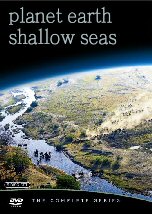
Shallow Seas

   2007    Nature
A humpback whale mother and calf embark on an epic journey from tropical coral paradises to storm ravaged polar seas. Newly discovered coral reefs in Indonesia reveal head-butting pygmy seahorses, flashing 'electric' clams and bands of sea kraits, 30-strong, which hunt in packs. Elsewhere plagues of sea urchins fell forests of giant kelp. Huge bull fur seals attack king penguins, who despite their weight disadvantage, put up a spirited defence.
Series: Planet Earth
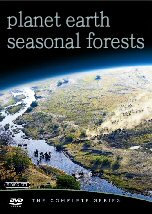
Seasonal Forests

   2007    Nature
The Taiga forest, on the edge of the Arctic, is a silent world of stunted conifers. The trees may be small but filming from the air reveals its true scale. A third of all trees on Earth grow here and during the short summer they produce enough oxygen to change the atmosphere. In California General Sherman, a giant sequoia, is the largest living thing on the planet, ten times the size of a blue whale. The oldest organisms alive are bristlecone pines. At more than 4,000 years old they pre-date the pyramids. But the baobab forests of Madagascar are perhaps the strangest of all.
Series: Planet Earth

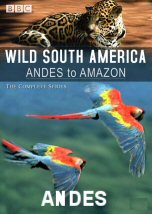
Andes

   2005    Nature
This edition features a spectacular journey along the Andes, the world's longest mountain range, stretching from the equator almost to Antarctica. In this harsh and unforgiving landscape, wildlife such as bears, pumas, condors and flamingos fight for survival in the numbing cold, ferocious winds and thin air.
Series: Wild South America

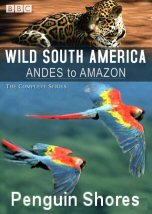
Penguin Shores

   2005    Nature
A dramatic journey along the coasts of South America, from the Falklands to the tropical Galapagos. The cold currents create rich fisheries, and support such diverse marine life as dolphins, killer whales, sea lions and albatross. But the most biquitous creatures are the penguins, which inhabit surprising locations - lush forest, arid desert and even equatorial areas.
Series: Wild South America

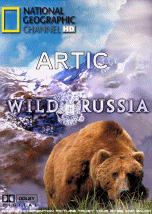
Artic

   2009    Nature
The Russian Arctic is one of the world’s most extreme habitats, yet it is a haven for polar bears, lemmings, arctic foxes and walruses. In late August, massive muskoxen bulls gather together to compete for mating dominance. Each bull can weigh 400 kilogram’s and charge at a speed of 40 kilometres an hour; a head-to-head impact can be heard more than a kilometre away
Series: Wild Russia

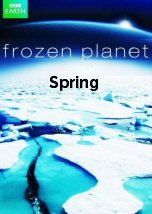
Frozen Planet: Spring

   2011    Nature
Spring arrives in the polar regions, and the sun appears after an absence of five months; warmth and life return to these magical ice worlds - the greatest seasonal transformation on our planet is underway. Male Adelie penguins arrive in Antarctica to build their nests - it takes a good property to attract the best mates and the males will stop at nothing to better their rivals! But these early birds face the fiercest storms on the planet. In the Arctic, a polar bear mother is hunting with her cubs. Inland, the frozen rivers start to break up and billions of tons of ice are swept downstream in the greatest of polar spectacles. This melt-water fertilizes the Arctic Ocean, feeding vast shoals of Arctic cod and narwhal. The influx of freshwater accelerates the breakup of the sea-ice - an area of ice the size of Australia will soon vanish from the Arctic. On land, a woolly bear caterpillar emerges from the snow having spent the winter frozen solid. Caterpillars normally become moths within months of hatching, but life is so harsh here that the woolly bear takes 14 years to reach adulthood. Once mature it has only days to find a mate before it dies! Alongside the caterpillars white Arctic wolves race to raise their adorable cubs before the cold returns.
Series: Frozen Planet
Motivation

Motivation

2017  Culture
The Planets

The Planets

2000  Science
Capitalism A Love Story

Capitalism A Love Story

2009  Culture
Natural World

Natural World

2017  Nature
The Universe Season 8

The Universe Season 8

2016  Science
X-Ray Earth

X-Ray Earth

2021  Science