


Last Watched

"Evolution"  Sort by

Evolution: Great Transformations

   2004    Science
What triggered the incredible diversity of life on Earth, and how have complex life forms, including humans, evolved? Is there direction to evolution? And is human intelligence inevitable? This program focuses on evolution's 'great transformations' —among them the development of a standard four-limbed body plan, the journey from water to land, the return of marine mammals to the sea, and the emergence of humans. Driven by a combination of opportunism and a genetic 'toolkit', these astounding leaps forward define the arc of evolution. And they suggest that every living creature on earth today, and every species that has ever existed, is a variation on a grand genetic theme—a member of one, and only one, tree of life
Series: Evolution
To Fly or Not to Fly

   1998    Nature
The first episode looks at how birds first took to the skies in the wake of the insects. It begins in Mexico, where Sir Attenborough observes bats being outmanoeuvred by a red-tailed hawk. Pterosaurs were the birds' forerunners, some 150 million years after dragonflies developed the means of flight, but eventually went extinct together with the dinosaurs. Birds had by then already evolved from early forms like archaeopteryx, the first creature to possess feathers. Its ancestry can be traced through reptiles, and some current species, such as the flying lizard, possibly show paths this evolution may have taken." One of the biggest birds to have ever existed was the terror bird, which proliferated after dinosaurs vanished and stood up to 2.5 metres tall. By comparison, the ostrich, while not closely related, is the largest and heaviest living bird. It was probably the evasion of predators that drove most birds into the air, so their flightless cousins evolved because they had few enemies. Accordingly, such species are more likely to be found on islands, and Sir Attenborough visits New Zealand to observe its great variety, most especially the kiwi. Also depicted is the moa, another huge creature that is now gone. The takahē is extremely rare, and high in the mountains of New Zealand, Sir Attenborough discovers one from a population of only 40 pairs. Finally, another example on the brink of extinction is the kakapo, which at one point numbered only 61 individuals. A male is heard calling — an immensely amplified deep note that can be heard at great distances from its nest.
Series: The Life of Birds

Wonders Of The Universe: Destiny

   2011    Science
Professor Brian Cox seeks to understand the nature of time and its role in creating both the universe and ourselves. From an extraordinary calendar built into the landscape of Peru to the beaches of Costa Rica, Brian explores the cycles of time which define our experience of life on Earth. But even the most epic cycles of life can't begin to compare to the vast expanse of cosmic time. Ultimately, Brian discovers that time is not characterised by repetition but by irreversible change. The vast universe is subject to these same laws of change. As we look out to the cosmos, we can see the story of its evolution unfold, from the death of the first stars to the birth of the youngest. This journey from birth to death will ultimately lead to the destruction not just of our planet, but also the entire universe, and with it the end of time itself. Yet without this inevitable destruction, the universe would be without what is perhaps the greatest wonder of all; the brief moment in time in which life can exist.
Series: Wonders Of The Universe

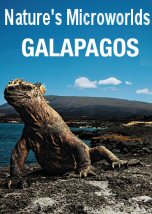
Nature Microworlds: Galapagos

   2012    Nature
A visit to arguably the most famous archipelago on Earth, the Galapagos. It's home to a myriad of bizarre and unique creatures, endemic to these islands - but how did they get here and what is the key to these extraordinary islands that allows them to thrive? The programme reveals that this key holds not just the secret to life here, but also to how Darwin was able to leave with the ideas that would revolutionise biology.

What Darwin Didnt Know

   2009    Science
Documentary which tells the story of the theory of evolution by natural selection which is now scientific orthodoxy, but when it was unveiled it caused a storm of controversy. Many people criticised it for being short on evidence and long on assertion and Darwin, being the honest scientist that he was, agreed with them. He entrusted future generations to complete his work and prove the essential truth of his vision. Evolutionary biologist Professor Armand Marie Leroi argues that, with the new science of evolutionary developmental biology (evo devo), it may be possible to take that theory to a new level - to do more than explain what has evolved in the past, and start to predict what might evolve in the future.

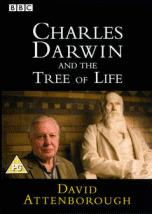
Charles Darwin and the Tree of Life

   2009    Science
David Attenborough asks three key questions: how and why did Darwin come up with his theory of evolution? Why do we think he was right? And why is it more important now than ever before? David starts his journey in Darwin's home at Down House in Kent, where Darwin worried and puzzled over the origins of life. David goes back to his roots in Leicestershire, where he hunted for fossils as a child, and where another schoolboy unearthed a significant find in the 1950s. And he revisits Cambridge University, where both he and Darwin studied, and where many years later the DNA double helix was discovered, providing the foundations for genetics. At the end of his journey in the Natural History Museum in London, David concludes that Darwin's great insight revolutionised the way in which we see the world. We now understand why there are so many different species, and why they are distributed in the way they are. But above all, Darwin has shown us that we are not set apart from the natural world, and do not have dominion over it. We are subject to its laws and processes, as are all other animals on earth to which, indeed, we are related.
Future Warfare

Future Warfare

2021  Technology
Leaving Neverland

Leaving Neverland

2019  Culture
The Future of Nature

The Future of Nature

2025  Nature
Chemistry

Chemistry

2010  Science
Human universe

Human universe

2014  Technology
The Sky at Night

The Sky at Night

2024  Science