















Last Watched

"Hunt"  Sort by

Meat-Eaters

   1998    Nature
This episode examines those birds whose sustenance comes from flesh and their methods of hunting. In New Zealand, Sir Attenborough observes Keas, parrots that do not eat meat exclusively, raiding a shearwater's burrow for a chick. However, it is the dedicated birds of prey, such as owls, buzzards, eagles, falcons and vultures, to which much of the programme is devoted. In order to spot and pursue their victims, senses of sight and hearing are very acute. Vultures are the exception, in that they eat what others have left, and once a carcass is found, so many birds descend on it that the carrion seems submerged beneath them. The Turkey Vulture is an anomaly within its group, as it also has a keen sense of smell. Eagles defend their territory vigorously, and a pair of sea eagles are shown engaging in an aerial battle. The Galápagos Hawk hunts Marine Iguanas, but can only do so when its quarry is vulnerable, during the breeding season. The African Harrier Hawk has adapted to extracting burrowing animals by virtue of an especially long, double-jointed pair of legs. By contrast, a shrike is not equipped with the requisite sharp beak and talons needed for butchery, and so dismembers its kill by impaling it on the thorns of acacias. The Lammergeier eats bones, and will drop them on to rocks from a great height in order to break them down to a digestible size. Also featured are the Eurasian Sparrowhawk, Goshawk and Peregrine Falcon.
Series: The Life of Birds
Chased by Sea Monsters 3of3

   2003    Nature
The Basilosaurus, the first of the large whale species, is not a harmless plankton eater but a fearsome high speed hunter. And most frightening of all is the Megalodon, a gargantuan ancestor of the great white that makes its modern day relative look like a tuna.
Series: Chased by Sea Monsters

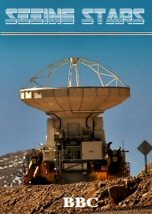
Seeing Stars

   2011    Science
Around the world, a new generation of astronomers are hunting for the most mysterious objects in the universe. Young stars, black holes, even other forms of life. They have created a dazzling new set of super-telescopes that promise to rewrite the story of the heavens. This film follows the men and women who are pushing the limits of science and engineering in some of the most extreme environments on earth. But most strikingly of all, no-one really knows what they will find out there.

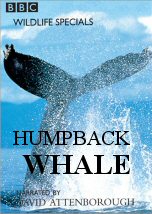
Humpback Whale

   2006    Nature
Few sounds are more beautiful or moving than the underwater songs of the humpback whale. Male whales compete with their songs, which often last for 10 minutes at a time, and can be repeated for hours on end. Whales separated by thousands of miles of sea will sing almost identical songs. Researchers have found that the songs change throughout the breeding months, following a mysterious pattern repeated across the waves. Whales also use sound to hunt. To catch herring, humpback whales release a stream of bubbles to form a shimmering, circular fishing net. Emitting a repetitive loud scream, they scare the fish into a tight ball, then lunge out of the water to swallow the shoal whole. Now it seems that the long-held image of the gentle giant must change to one of a ferocious and opportunistic hunter.

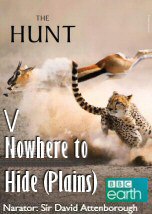
Nowhere to Hide

   2015    Nature
The open arenas of grassland and desert make up half of all land on our planet. In these exposed habitats, predators like cheetahs, bald eagles and lions can usually see their prey. But it works both ways: their prey can see them too. With nothing but open vistas, the element of surprise is hard-won, and predators must make their own opportunities.
Series: The Hunt

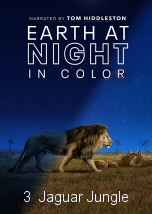
Jaguar Jungle

   2020    Nature
A jaguar fights to keep his river home in Brazil as the night brings both challenges and opportunities to hunt. Evening is falling in the world's greatest tropical wetland, Brazil's Pantanal. A stronghold for South America's most secretive big cat, the jaguar. And enjoying the last warmth of the day is a male known as Juru. At six years old and weighing over 100 kilos, he's amongst the largest, most powerful big cats in the Americas. This prime stretch of river has been his territory for two years. But tonight Juru's reign hangs in the balance. In a recent fight with a rival male, he badly injured his paw. It's left him weak and hungry. The coming days and nights will test him more than ever before. He'll need to summon the strength to defend his river.
Series: Earth at Night in Color
Leaving Neverland

Leaving Neverland

2019  Culture
Generation Iron

Generation Iron

2018  History
Unknown

Unknown

2023  Science
Get Gotti

Get Gotti

2023  History
Planet Earth III

Planet Earth III

2023  Nature
History of the Eagles

History of the Eagles

2013  History