






Last Watched

"Ocean"  Sort by

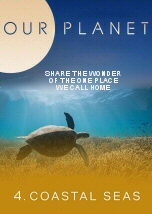
Coastal Seas

   2019    Nature    HD
Immense shoals of fish throng our shallow seas. Small fish, in turn, sustain bigger ones. The rich coastal seas are the fishing grounds of our planet and can provide an abundance of food for wildlife and humanity. The seas fringing land make up less than a tenth of the world's oceans but 90 percent of marine creatures live in coastal waters, from fearsome sharks to lowly urchins. Protecting these habitats is a battle humanity must win.
Series: Our Planet
Blue Marble

   2020    Nature
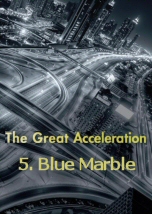
The Blue Marble is an image of Earth taken on 1972, from a distance of about 18,000 miles from the planet's surface. It was taken by the crew of the Apollo 17 spacecraft on its way to the Moon. Before it was photographed from space, our perspective of Earth was fragmented and disconnected. Recent discoveries have revealed a dynamic and rapidly changing planet, above the crust and below.
Series: The Great Acceleration

Life

   2020    Science
Genetic breakthroughs have shed light on how life evolves in real-time. From filling in the missing links to creating a new species, in the last 50 years scientists have solved some of the biggest mysteries of evolution. In this episode, we look at revolutionary discoveries that shook the world and may shape our future.
Series: The Great Acceleration

Terra

   2020    Science
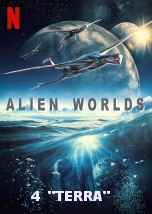
What sort of alien civilizations might exist in the vastness of space? Terra is the fictional world imagined in Episode 4, a planet nine billion years old, twice as old as Earth. Old enough that a truly advanced intelligence could evolve. It was once a fertile world, now it is barren. But life can still thrive here in artificial domes. Over time, they've evolved not to need their bodies. They exist only as neural tissue. They never age, they never die. They're monitored and maintained by robots.
If alien civilizations are statistically so likely, why haven't astronomers found any sign of them? Where is everyone? Every time we look at an individual star, that's like dropping a bucket in the ocean. We're going to have to look at a lot of stars and to search through a lot of data until we find the clue that leads us to another civilization.
Series: Alien Worlds

Out of the Darkness

       History
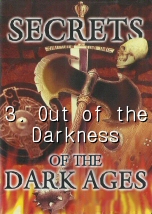
The third assault on the tattered remains of Roman civilization came from even further North, where the melting glacial ice had created immense sheltered fjords, leaving its inhabitants little choice but the sea. These fearless navigators understood that dominion over the oceans was the key to their ambitions.
Where the Romans expanded incrementally, the Vikings adopted a bolder, more aggressive approach. So was it the Dark Age which failed Europe, or the stifling uniformity of the great Roman experiment? Were the lost tribes more victim than failure? Richard Rudgley will hope to shed new light on the real secrets of the so-called Dark Age.
Series: Barbarians: Secrets of the Dark Ages

Monsters of the Milky Way

   2019    Science
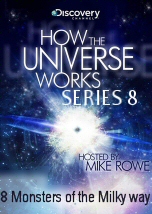
The center of our galaxy is one of the most nightmarish places in the cosmos. It's the home to some of the most incredible forces the universe has to offer. Gas streaming everywhere, stars are being born and dying and exploding, radiation blasting out. And at the very heart is the super massive black hole, 4 million times the mass of the sun. But also the Milky Way, is our safe harbour, our island in this vast, cosmic ocean. And so to understand the heart of our galaxy, is to understand our home in this cosmic void.
Series: How the Universe Works Series 8
Cooked

Cooked

2016  Culture
Power of Art

Power of Art

2006  Art
Wild Wild Country

Wild Wild Country

2018  Culture
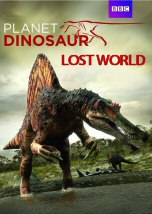
Planet Dinosaur

Planet Dinosaur

2011  Science
Ancient Apocalypse

Ancient Apocalypse

2024  History
Leaving Neverland

Leaving Neverland

2019  Culture