




Last Watched

"Orc"  Sort by

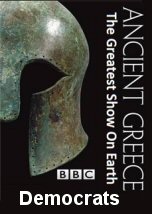
Ancient Greece: Democrats

   2013    History
Dr Michael Scott journeys to Athens to discover that from the very start the theatre was about more than just entertainment - it was a reaction to real events, it was a driving force in history and it was deeply connected to Athenian democracy. In fact, the story of theatre is the story of Athens.
Series: Ancient Greece
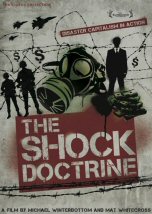
The Shock Doctrine

   2009    Economy
The Shock Doctrine is a devastating critique of the free market policies which have come to dominate the world. Using shock therapy as a metaphor, the film investigates Klein's central idea of disaster capitalism. Naomi Klein's explores how both natural and man-made disasters are used to force disadvantageous political and economic changes on unwilling governments is brought to the screen in this documentary. The Shock Doctrine explores how the United States, with the help of the C.I.A., became enamored of Milton Friedman's interpretation of free-market capitalism and attempted to persuade developing nations of its value.

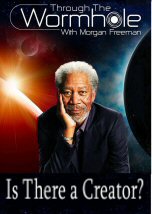
Through the Wormhole: Is There a Creator

   2011    Science
Morgan Freeman produces hosts and narrates this exploration of the greatest mysteries of the universe. The four forces governing our universe are phenomenally finely tuned, so finely that it had led many to the conclusion that someone, or something, must have calibrated them: an alien gameseter who's created our world as the ultimate SIM game for his own amusement.
Series: Through the Wormhole

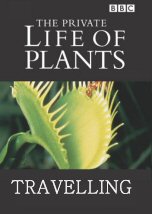
The Private Life of Plants: Travelling

   1994    Nature
Sir David Attenborough reveals plants as they have never been seen before - on the move and dangerously devious. About the major problems of life - growing, finding food, reproduction - and the varied ways plants have evolved to solve it. Filmed from the plant's point of view, using computer animations, fibre-optics and unique time-lapse photography. The first episode looks at how plants are able to move". The bramble is an aggressive example: it advances forcefully from side to side and, once settled on its course, there is little that can stand in its way. An altogether faster species is the birdcage plant, which inhabits Californian sand dunes. When its location becomes exposed, it shifts at great speed to another one with the assistance of wind — and it is this that allows many forms of vegetation to distribute their seeds. While not strictly a plant, the spores of fungi are also spread in a similar fashion. One of the most successful (and intricate) flowers to use the wind is the dandelion, whose seeds travel with the aid of 'parachutes'. They are needed to travel miles away from their parents, who are too densely packed to allow any new arrivals. Trees have the advantage of height to send their seeds further, and the cottonwood is shown as a specialist in this regard. The humidity of the tropical rainforest creates transportation problems, and the liana-species Alsomitra macrocarpa is one plant whose seeds are aerodynamic 'gliders'. Some, such as those of the sycamore, take the form of 'helicopters', while others, such as the squirting cucumber release their seeds by 'exploding'. Water is also a widely used method of propulsion. The tropical sea bean Entada gigas has one of the biggest fruits of all plants and is dispersed by water streams. However, most plants use living couriers, whether they be dogs, humans and other primates, ants or birds, etc., and to that end, they use colour and smell to signify when they are ripe for picking.
Series: The Private Life of Plants

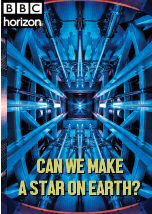
Can We Make a Star on Earth

   2009    Technology
Could nuclear fusion hold the answers to the energy crisis? It is the process that has forged all matter in the universe. It lights the stars and it is what transformed the lighter atoms that formed in the Big Bang into heavier atoms. In Can We Make a Star on Earth?, Brian Cox peers beyond the glare of our Sun to reveal the hidden forces that provide its power. He discovers how this fusion energy has kept our closest star burning for five billion years. Brian believes humanity must build a star on Earth to ensure survival. Will scientists be able to harness fusion power and achieve abundant, cheap, clean energy?

The Nazis, A Warning From History. Episode 2

   1997    History
The BBC's definitive television history of the rise and fall of the Nazis. The Nazis - A Warning From History exposes the popular myths surrounding the rise and fall of the Third Reich. The series explores how the Nazis came to power, how they ruled, how they treated their occupied territories and, above all, how a cultured nation could be responsible for such acts of inhumanity. How could a political party as fundamentally evil and overtly racist as the Nazis come to power? This remains one of the most enigmatic questions of the last century. Acclaimed historian Laurence Rees examines what led a cultured nation at the heart of Europe to commit the atrocities it did. In so doing, he exposes popular myths and encourages understanding of the real forces that led to one of the darkest chapters in modern history. Was it simply the hypnotic power of Hitler's rhetoric? Did the Gestapo really impose themselves by terror on an unwilling population? Through interviews with witnesses and perpetrators, along with archive film and records, this six-part series unveils a more chilling reality.
Series: The Nazis, A Warning From History
Prehistoric Planet

Prehistoric Planet

2022  Science
Most Wanted: Teen Hacker

Most Wanted: Teen Hacker

2025  Technology
Modern Masters

Modern Masters

2024  Art
Evolution

Evolution

2004  Science
The Green Planet

The Green Planet

2022  Nature
Leaving Neverland

Leaving Neverland

2019  Culture