Last Watched

"Pet"  Sort by

Roads to Revolution

   2009    Art
Andrew Graham-Dixon explores how Russia changed from a feudal nation of aristocratic excess to a hotbed of revolution at the beginning of the 20th century and how art moved from being a servant of the state to an agent of its destruction. From monuments that celebrate the absolutism of the tsars to the epic Russian landscape as inspiration; from the design and construction of gold and glittering palaces to the minutiae of diamond-encrusted Faberge eggs; and eventually to the stark and radical paintings of the avant-garde, the journey through Russian art history is one of extraordinary beauty and surprise.
Series: The Art of Russia
Deliver Us from Drought

   2014    Nature
'Deliver Us from Drought' - Over the past years, Texas has experienced the worst drought in its recorded history. 97% of the scientific community agrees that human activity has contributed to extreme weather patterns around the world. But many Texans--legislators, community leaders and citizens--don't attribute their drought to humans, and have taken few if any initiatives to limit the state's CO2 emissions, currently the highest in the country. "The Resource Curse" - As humanity's appetite for energy grows exponentially, the extraction industry scrambles to the most remote regions on Earth. In the undeveloped Melanesian country of Papua New Guinea, America's Exxon Mobil has staked its claim to a $19 billion liquid natural-gas project. While some see Exxon's mammoth presence as the catalyst that will usher the underdeveloped country into the 21st Century, others predict the initiative could plunge its people into civil war.
Series: Vice

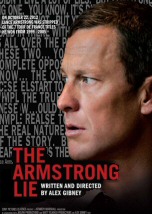
The Armstrong Lie

   2013    Culture
Academy Award-winning director Alex Gibney (Taxi to the Dark Side) masterfully explores the fall of the disgraced cycling champion following the 2009 Tour de France, making use of his extraordinary access to attain rare interviews with former teammates, alleged doping mastermind Dr. Michele Ferrari, and Armstrong himself. What was Lance Armstrong thinking? For years, after seizing international fame as the cancer survivor who won seven Tour de France titles, he fiercely denied accusations that he used performance-enhancing drugs. He used his power to aggressively litigate journalists and publicly humiliate former friends who claimed otherwise. His deceit finally cracked in January 2013, when he admitted guilt to Oprah Winfrey in a television interview that critics decried for only scratching the surface. Academy Award-winning director Alex Gibney approaches Armstrong with unique and extraordinary access. In 2009, Gibney was commissioned to make a film about Armstrong's return to the Tour de France, four years after the racing champion had declared retirement. That race would later stir up devastating evidence in the case against Armstrong. But Gibney came away from the experience unable to reconcile the discrepancy between doping allegations and Armstrong's emphatic denials. Then, post-Oprah, Gibney went back to Armstrong for new interviews to extract a more detailed account of his double life. In The Armstrong Lie, Gibney masterfully explores the complexities of the case, interweaving the dramatic action of the 2009 Tour de France, when Armstrong found himself unexpectedly competing against his own teammate Alberto Contador. Gibney attains rare interviews with Armstrong's former teammates and alleged doping mastermind Dr. Michele Ferrari. The film also raises troubling questions about the process of doping regulation. Recently, when asked to give advice to documentary filmmakers, Gibney responded with a motto exemplified by this film: "Embrace contradictions."

How Do I Decide

   2015    Medicine
The human brain is the most complex object we’ve discovered in the universe, and every day much of its neural circuitry is taken up with the tens of thousands of decisions we need to make. ‘How do I decide?’ is a journey through the unseen world of decisions, and how they get made. Decisión-making is what allows us to navigate a course through life. Discover how important emotions are in making decissions and, as we learn more about our own brains, we can break away from slavery to our impulses. Neuroscience shows that you're made up of multiple competing drives and by understanding how choices battle it out in the brain, we can learn how to make better decisions.
Series: The Brain with David Eagleman

Earthlings

   2005    Nature
A feature length documentary about humanity's absolute dependence on animals (for pets, food, clothing, entertainment, and scientific research) but also illustrates our complete disrespect for these so-called 'non-human providers'. With an in-depth study into pet stores, puppy mills and animals shelters, as well as factory farms, the leather and fur trades, sports and entertainment industries, and finally the medical and scientific profession, the film uses hidden cameras and never before seen footage to chronicle the day-to-day practices of some of the largest industries in the world, all of which rely entirely on animals for profit. Powerful, informative and thought-provoking, EARTHLINGS is by far the most comprehensive documentary ever produced on the correlation between nature, animals, and human economic interests. There are many worthy animal rights films available, but this one transcends the setting.

Growing

   1994    Nature
The second episode is about how plants gain their sustenance. Sunlight is one of the essential requirements if a seed is to germinate, and Attenborough highlights the cheese plant as an example whose young shoots head for the nearest tree trunk and then climb to the top of the forest canopy, developing its leaves en route. Using sunshine, air, water and a few minerals, the leaves are, in effect, the "factories" that produce food. However, some, such as the begonia, can thrive without much light. To gain moisture, plants typically use their roots to probe underground. Trees pump water up pipes that run inside their trunks, and Attenborough observes that a sycamore can do this at the rate of 450 litres an hour — in total silence. Too much rainfall can clog up a leaf's pores, and many have specially designed 'gutters' to cope with it. However, their biggest threat is from animals, and some require extreme methods of defence, such as spines, camouflage, or poison. Some can move quickly to deter predators: the mimosa can fold its leaves instantly when touched, and the Venus flytrap eats insects by closing its leaves around its prey when triggered. Another carnivorous plant is the trumpet pitcher that snares insects when they fall into its tubular leaves. Attenborough visits Borneo to see the largest pitcher of them all, Nepenthes rajah, whose traps contain up to two litres of water and have been known to kill small rodents.
Series: The Private Life of Plants
Planet Earth

Planet Earth

2007  Nature
How Earth Made Us

How Earth Made Us

2010  Science
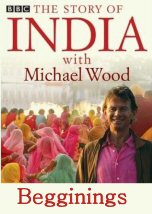
The Story of India

The Story of India

2007  History
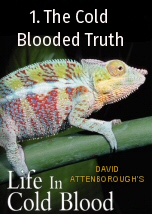
Life In Cold Blood

Life In Cold Blood

2008  Nature
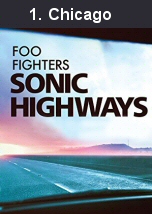
Sonic Highways

Sonic Highways

2014  Art
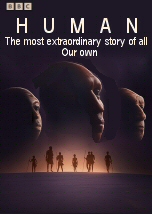
Human

Human

2025  History
Asia

Asia

2024  Nature