This award-winning series, Private Life of a Masterpiece, reveals the full and fascinating stories behind famous works of art, not just how they came to be created, but also how they influenced others and came to have a life of their own in the modern world. The works of art featured here are both instantly familiar and profoundly mysterious. Revolutionary in their conception, and iconic years after their execution, they each have their own compelling stories. For behind the beautiful canvases and sculptures are tales of political revolution, wartime escapes, massive ego clashes, social scandal, financial wrangling and shocking violence. In this fascinating series key works of art are investigated and the intricate details of their lives revealed - the history, contemporary reactions, and legacies of each are illustrated. A Sunday Afternoon on the Island of La Grande Jatte is a popular masterpiece and yet an enduring enigma. It seems to show a quiet scene in a Paris park but there are hints at the demi-monde, if you know where to look. The most remarkable aspect of this vast canvas however remains Seurat's technique his revolutionary pointillism.
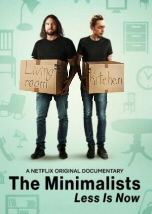
Longtime friends Joshua Fields Millburn and Ryan Nicodemus share how our lives can be better with less. The film's title was inspired by the popular maxim 'Less is more,' popularized by architect Ludwig Mies van der Rohe, who used this aphorism to describe his design aesthetic; his tactic was one of arranging the necessary components of a building to create an impression of extreme simplicity. The Minimalists have reworked this phrase to create a sense of urgency for today's consumer culture: now is the time for less.
How is the universe put together? How is it built? And how does it actually work? How the Universe Works Series 8 shows the inner workings of our planet, the solar system, the galaxies and the universe itself. In the first episode, if a massive asteroid collides with earth, it could end life on our planet as we know it. New discoveries and cutting-edge tech reveal just how close we are to apocalypse and what it would take for the world's leading space agencies to stop it.
When our species first arrived in Europe, the peak of the Ice Age was approaching and the continent was already crawling with a rival: stronger, at home in the cold and even (contrary to their popular image) brainier than us. So how did the European pioneers survive first the Neanderthals and then the deep freeze as they pushed across the continent? Alice Roberts reconstructs the head of the 'first European' to come face to face with one of our ancestors; she discovers how art became crucial for survival in the face of Neanderthal competition; and what happened to change the skin colour of these European pioneers from black to white.
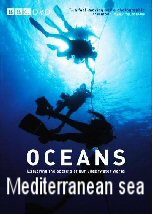
The sparkling blue waters of the Mediterranean Sea are home to over 700 varieties of fish and almost 10 per cent of the world's marine species. Its coastline is one of the most densely populated in the world and the human pressure on this sea is magnified each summer with the influx of holiday makers. Western civilisation developed around these shores but now human activity is having a profound effect on this endangered sea.
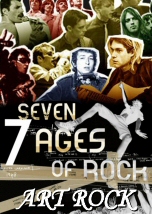
Rock became a vehicle for artistic ideas and theatrical performance. From the pop-art multi-media experiments of Andy Warhol and the Velvet Underground to the sinister gentility of Peter Gabriel's Genesis. We follow Pink Floyd from the fated art school genius of Syd Barrett through the global success of Dark Side of the Moon. The film explores the retro-futurism of Roxy Music and the protean world of David Bowie.








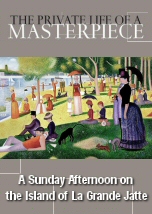
A Sunday Afternoon on the Island of La Grande Jatte is a popular masterpiece and yet an enduring enigma. It seems to show a quiet scene in a Paris park but there are hints at the demi-monde, if you know where to look. The most remarkable aspect of this vast canvas however remains Seurat's technique his revolutionary pointillism.