





Last Watched

"UN"  Sort by

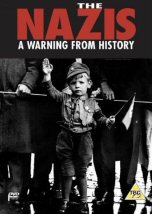
The Nazis, A Warning From History. Episode 6

   1997    History
The BBC's definitive television history of the rise and fall of the Nazis. The Nazis - A Warning From History exposes the popular myths surrounding the rise and fall of the Third Reich. The series explores how the Nazis came to power, how they ruled, how they treated their occupied territories and, above all, how a cultured nation could be responsible for such acts of inhumanity. How could a political party as fundamentally evil and overtly racist as the Nazis come to power? This remains one of the most enigmatic questions of the last century. Acclaimed historian Laurence Rees examines what led a cultured nation at the heart of Europe to commit the atrocities it did. In so doing, he exposes popular myths and encourages understanding of the real forces that led to one of the darkest chapters in modern history. Was it simply the hypnotic power of Hitler's rhetoric? Did the Gestapo really impose themselves by terror on an unwilling population? Through interviews with witnesses and perpetrators, along with archive film and records, this six-part series unveils a more chilling reality.
Series: The Nazis, A Warning From History
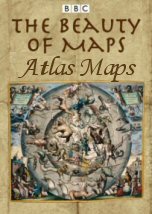
Atlas Maps

   2010    History
The Dutch Golden Age saw map-making reach a fever pitch of creative and commercial ambition. This was the era of the first ever Atlases - elaborate, lavish and beautiful. This was the great age of discovery and marked an unprecedented opportunity for mapmakers who sought to record and categorise the newly acquired knowledge of the world. Rising above the many mapmakers in this period was Gerard Mercator, inventor of the Mercator projection, who changed mapmaking forever when he published his collection of world maps in 1598 and coined the term 'Atlas'. The programme looks at some of the largest and most elaborate maps ever produced, from the vast maps on the floor of the Royal Palace in Amsterdam, to the 24 volume atlas covering just the Netherlands, to the largest Atlas in the world, The Klencke Atlas. It was made for Charles II to mark his restoration in 1660. But whilst being one of the British Libraries most important items, it is also one of its most fragile so hardly ever opened. This is a unique opportunity to see inside this enormous and lavish work, and see the world through the eyes of a King.
Series: The Beauty of Maps

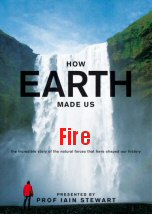
Fire

   2010    Culture
Iain explores man's relationship with fire. He begins by embarking on an extraordinary encounter with this terrifying force of nature - a walk right through the heart of a raging fire. Fire has long been our main source of energy and Iain shows how this meant that the planet played a crucial role in Britain's industrial revolution, whilst holding China's development back. Along the way he dives in a mysterious lake in Oregon, climbs a glacier of salt, crawls through an extraordinary cave in Iran and takes a therapeutic bath in crude oil.
Series: How Earth Made Us

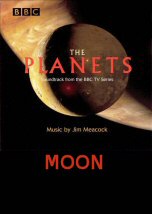
Moon

   2000    Science
The little known story of our quest to understand the origins of the Moon. Neil Armstrong's "giant leap for mankind" began a scientific journey of discovery that lead to one of the most startling conclusions in the history of astronomy. The Moon was born from Earth.
Series: The Planets

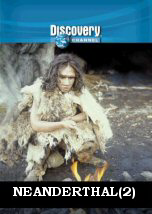
Neanderthal 2

       History
Long ago, two species of human beings coexisted on Earth until competition drove one of them to extinction. This program, set in the southwest of France 35,000 years ago, reconstructs the life in the Neanderthal world at the time Cro-Magnons first entered the scene. All aspects of Neanderthal clan life are examined, including tool- and weapon-making, hunting and gathering, health and healing, childbirth, rituals, and making fire. Footage of skeletal remains and the scholarly research of eminent paleontologist Chris Stringer and Oxford University's Paul Pettitt support the documentary.
Series: Neanderthal

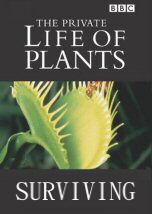
Surviving

   1995    Nature
the final episode deals with plants that live in hostile environments. Attenborough visits Ellesmere Island, north of the Arctic Circle, to demonstrate that even in a place that is unconducive to life, it can be found. Algae and lichens grow in or on rock, and during summer, when the ice melts, flowers are much more apparent. However, they must remain close to the ground to stay out of the chilling wind. In the Tasmanian mountains, plants conserve heat by growing into 'cushions' that act as solar panels, with as many as a million individual shoots grouped together as one. Others, such as the lobelia in Mount Kenya, have a 'fur coat' of dense hairs on their leaves. The saguaro cactus in the Sonoran Desert flourishes because of its ability to retain vast amounts of water, which can't be lost through leaves because it has none. Many desert dwellers benefit from an accelerated life cycle, blooming rapidly within weeks after rainfall. Conversely, Mount Roraima is one of the wettest places on Earth. It is a huge sandstone plateau with high waterfalls and nutrients are continuously washed away, so plants have to adapt their diet if they are to survive. A bladderwort is shown invading a bromeliad. Inhabitants of lakes have other problems to contend with: those that dominate the surface will proliferate, and the Amazon water lily provides an apt illustration. Attenborough ends the series with an entreaty for the conservation of plant species.
Series: The Private Life of Plants
Human: The World Within

Human: The World Within

2021  Medicine
Motivation

Motivation

2017  Culture
Latino Americans

Latino Americans

2013  History
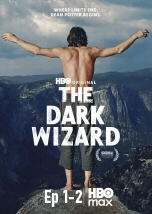
The Dark Wizard

The Dark Wizard

2026  History
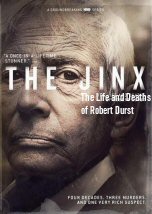
The Jinx

The Jinx

2015  History
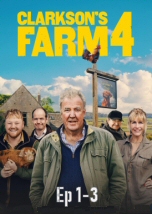
Clarkson Farm 4

Clarkson Farm 4

2025  Nature
Clarkson Farm

Clarkson Farm

2021  Nature
Rise of Empires: Ottoman

Rise of Empires: Ottoman

2020  History