







Last Watched

" Fish"  Sort by

Africa Fishing Leopards

   2015    Nature
David Attenborough narrates the intimate story of a leopard mother and her two cubs. This very special family must survive in the wilds of Botswana alongside some less-than-friendly neighbours: lions, wild dogs and hyenas. The competition for food is tough, and if they are going to make it they must learn a new skill - they must learn to fish. This is an epic family drama. With them every step of the way is local cameraman Brad Bestelink. Brad's 18-month journey following the lives of these secretive big cats offers a rare glimpse into an otherwise hidden world.
Series: Natural World
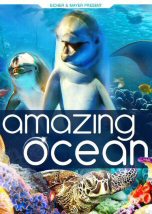
Amazing Ocean

   2013    Nature    3D    HD
Amazing Ocean is a fantastic journey through the magic of the deep blue sea. Let yourself be amazed by little schools of fish that swim right into your living room. See squids and the elusive octopus up close, along with the magnificent manta ray, and experience dolphins and turtles that visit you in your sofa. Shot in stereoscopic 3D, the film is a breathtakingly beautiful experience. Directed by Benjamin Eicher and Timo Joh. Mayer.

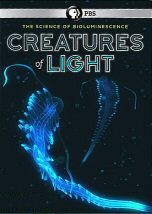
Creatures Of Light

   2016    Nature
In the dark depths of the oceans, nearly 90% of all species light up the darkness from within. These creatures flash, sparkle, shimmer, or simply glow. Whether it’s to scare off predators, fish for prey, or lure a mate, the language of light is everywhere in the ocean depths, and scientists are finally starting to decode it. Discover surprising ways to harness nature’s light—from tracking cancer cells to detecting pollution, lighting up cities, and even illuminating the inner workings of our brains.

South Pacific Fragile Paradise

   2009    Nature
The extraordinary wildlife, culture and history of this immense, fascinating ocean and its myriad islands are revealed in stunning detail. With its coral reefs, turquoise lagoons and dramatic oceanic atolls, the South Pacific is the archetypal paradise. It is still relatively healthy and teeming with fish, but it is a fragile paradise. International fishing fleets are taking a serious toll on the sharks, albatross and tuna, and there are other insidious threats to these bountiful seas. We look at what is being done to preserve the ocean and its wildlife.

Human Planet: The Oceans

   2011    Culture
Human Planet is a majestic portrait of humankind and the power of nature in extraordinary symbiosis, struggle and strife. For the first time, the camera has turned on ourselves. In doing so, we see how amazing human beings can be and how we adapt to any habitat, anywhere. Human Planet is epic in ambition, extreme in content, intimate in effect. It explores how we have devised ways of surviving in every corner of Earth – from the remotest deserts to the busiest urban metropolis. Each episode focuses on an iconic environment and reveals how we have adapted to the challenges of the landscape and the endless diversity of animals and plants we live with. Discover how our remarkable intelligence, tool use, and close-knit social lives have enabled us to cope with just about anything nature can throw at us". As an air-breathing animal, the human is not built to survive in water. But people have found ways to live an almost aquatic life so they can exploit the sea's riches. From a 'shark-whisperer' in the Pacific to Brazilian fishermen collaborating with dolphins to catch mullet, this journey into the blue reveals astonishing tales of ingenuity and bravery. Daredevil Galician barnacle-collectors defy death on the rocks for a catch worth 200 pounds per kilo. In Indonesia an epic whale-hunt, using traditional hand-made boats and harpoons, brings in a sperm whale. The Bajau 'sea gypsies' of the Sulu Sea spend so much time on water they get 'land sick' when they set foot on the land! We dive 40 metres down to the dangerous world of the Pa-aling fishermen, where dozens of young men, breathing air through a tangled web of pipes attached to a diesel engine, capture thousands of fish in a vast net. We see how surfing has its origins in the ancient beliefs of the ocean-loving Polynesians, and we join a Borneo free-diving spear-fisherman on a breath-taking journey 20 metres down in search of supper.
Series: Human Planet

Living Together

   2006    Nature
The documentary deals with the future of conservation. It begins by looking at previous efforts. The 'Save The Whales' campaign, which started in the 1960s, is seen to have had a limited effect, as whaling continues and fish stocks also decline. In the 1990s, as head of the Kenya Wildlife Service, Richard Leakey took on the poachers by employing armed units. Although it was successful in saving elephants, the policy was detrimental to the Maasai people, who were forced from their land. The need for "fortress" areas is questioned, and the recently highlighted Raja Ampat coral reef in Indonesia is an example. The more tourism it generates, the greater the potential for damage — and inevitable coastal construction. Sustainable development is viewed as controversial, and one contributor perceives it to currently be a "contradiction in terms". Trophy hunting is also contentious. Those that support it argue that it generates wealth for local economies, while its opponents point to the reducing numbers of species such as the markhor. Ecotourism is shown to be beneficial, as it is in the interests of its providers to protect their environments. However, in some areas, such as the Borneo rainforests, the great diversity of species is being replaced by monocultures. The role of both religion and the media in conservation is argued to be extremely important. Contributors to the programme admit a degree of worry about the future, but also optimism.
The Hunt

The Hunt

2015  Nature
Human: The World Within

Human: The World Within

2021  Medicine
Chased by Sea Monsters

Chased by Sea Monsters

2003  Nature
Leaving Neverland

Leaving Neverland

2019  Culture
Planet Earth

Planet Earth

2007  Nature
Life in the Undergrowth

Life in the Undergrowth

2005  Nature