












Last Watched

" Hitler"  Sort by

The Nazis, A Warning From History. Episode 4

   1997    History
The BBC's definitive television history of the rise and fall of the Nazis. The Nazis - A Warning From History exposes the popular myths surrounding the rise and fall of the Third Reich. The series explores how the Nazis came to power, how they ruled, how they treated their occupied territories and, above all, how a cultured nation could be responsible for such acts of inhumanity. How could a political party as fundamentally evil and overtly racist as the Nazis come to power? This remains one of the most enigmatic questions of the last century. Acclaimed historian Laurence Rees examines what led a cultured nation at the heart of Europe to commit the atrocities it did. In so doing, he exposes popular myths and encourages understanding of the real forces that led to one of the darkest chapters in modern history. Was it simply the hypnotic power of Hitler's rhetoric? Did the Gestapo really impose themselves by terror on an unwilling population? Through interviews with witnesses and perpetrators, along with archive film and records, this six-part series unveils a more chilling reality.
Series: The Nazis, A Warning From History
Blitzkrieg

   2020    History
This illuminating ten-part series tells the story of World War ll through the ten most pivotal turning points in the conflict. Gripping story-telling illustrated with exquisitely restored and colourised archived films and supported by a global cast of stellar historians bring this crucially important era in history to life.
In the first chapter, Britain and France declare war when Hitler invades Poland. In May 1940 the Germans attack Holland and Belgium as a decoy. As the Wehrmacht comes through the Ardennes and the Luftwaffe strikes in force, French leaders are caught like rabbits in headlights. The Germans are on a drug called Pervitin, which beats off fatigue, and reach the Atlantic coast. There is a danger that the Germans will encircle the Allies and cut them off from the sea. But Hitler issues his Halt Order and some 340,000 Allies are evacuated.
Series: Greatest Events of WWII in Colour

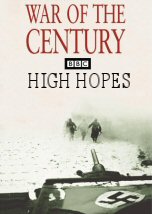
War of the Century: High Hopes

   2005    History
It was the bloodiest war in history, yet Hitler's brutal invasion of the Soviet Union and Stalin's subsequent fight back is surprisingly little known in the West. More than 30 million people died during Hitler and Stalin's terrible war in the East - more than in any other single war in history. With direct testimony from people who perpetrated atrocities and the victims who suffered on both sides, we bring the unspeakable to the screen and allowing victims and aggressors to tell the truth as they see it. In the first episode, we will look at Hitler's plans to invade the Soviet Union and the horror of the first months of conflict.
Series: War of the Century

The Crimes

   2007    History
Soldiers and officers continually came into conflict with their consciences. How much freedom did individuals have? Were they executing Hitler's criminal plans, or was it the Wehrmacht's war? There were crimes against humanity, against civilians, prisoners of war, and there was the Holocaust itself. The Trent Park records discovered and analysed by historian Sönke Neitzel, author of Tapping Hitler's Generals, show that the 84 German generals who were interned at Trent Park were aware of the severity of the war crimes they had been involved in and that some discussed them almost compulsively. They included the Commissar Order, to kill any Soviet commissar, and Rathenau's order to kill the Jews, including children.
Series: The Wehrmacht

The Turning Point

   2007    History
The German army launched Operation Barbarossa, the invasion of the East, with supreme confidence in its own superiority. High Command was sure that victory would come as quickly and as easily as in France. At the onset, the troops advanced rapidly and the Panzer forces under General Guderian were unbeatable. There were, however, far more casualties and more wear-and-tear on equipment than anticipated. The invading force got bogged down short of Moscow and the withdrawal from there was a severe psychological blow to the men. When an extremely severe winter set in, morale sank further. The soldiers were not equipped for such low temperatures and their guns and machinery could not cope. Hitler ordered his troops to stand firm.
Series: The Wehrmacht

Resistance

   2007    History
Among the ranks of the Wehrmacht there was limited opposition to Hitler. Most officers initially felt enthusiastic about the prospect of war and were grateful to Hitler whose war-mongering had furthered their personal careers. Furthermore all soldiers had to make an oath of allegiance to the Führer and, up until the very end, there were many who felt unable to break this pledge. There were, however, some officers who opposed Hitler. For some it was on moral grounds and for others because they thought that his military tactics would lose them the war. There were plots against Hitler and attempted coups, the best known being the July bomb plot led by Claus von Stauffenberg. Some soldiers refused to bear arms and were shot, others deserted, others still carried out quiet acts of sabotage and subversion. By and large, however, the Wehrmacht carried out the orders Hitler issued, even if it involved perpetrating acts of atrocity.
Series: The Wehrmacht