







Last Watched

"Carbon"  Sort by

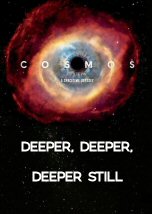
Deeper, Deeper, Deeper Still

   2014    Science
This episodes the nature of the cosmos on the micro and atomic scales, using the Ship of the Imagination to explore these realms. Tyson describes some of the micro-organism that live within a dew drop, demonstrating parameciums and tardigrades. He proceeds to discuss how plants use photosynthesis via their chloroplasts to convert sunlight into chemical reactions that convert carbon dioxide and water into oxygen and energy-rich sugars. Tyson then discusses the nature of molecules and atoms and how they relate to the evolution of species. He uses the example set forth by Charles Darwin postulating the existence of the long-tongued Morgan's sphinx moth based on the nature of the comet orchid with pollen far within the flower. He further demonstrates that scents from flowers are used to trigger olfactory centers in the brain, stimulating the mind to threats as to aid in the survival of the species. Tyson narrates how Greek philosophers Thales and Democritus postulated that all matter was made up of combinations of atoms in a large number of configurations, and describes how carbon forms the basic building block for life on earth due to its unique chemical nature. Tyson explains on the basic atomic structure of protons, neutrons, and electrons, and the nature of nuclear fusion that occurs in most stars. He then discusses the existence of neutrinos that are created by these nuclear processes in stars, and that detecting such sub-atomic particles which normally pass through matter require subterranean facilities like the Super-Kamiokande that were used to detect neutrinos from the supernova SN 1987A in the Large Magellanic Cloud before light from the explosion were observed due to their ability to pass through matter of the dying sun. Tyson compares how neutrinos were postulated by Wolfgang Pauli to account for the conservation of energy from nuclear reactions in the same manner as Darwin's postulate on the long-tongued moth. Tyson concludes by noting that there are neutrinos from the Big Bang still existing in the universe but due to the nature of light, there is a "wall of infinity" that cannot be observed beyond.
Series: Cosmos: A Spacetime Odyssey

The Lost Worlds of Planet Earth

   2014    Science
This episode explores the palaeogeography of Earth over millions of years, and its impact on the development of life on the planet. Tyson starts by explaining that the lignin-rich trees evolved in the Carboniferous era about 300 million ago, then explains on the nature of plate tectonics that would shape the landmasses of the world and the asteroid impact that initiated the Cretaceous–Paleogene extinction event, leaving small mammals as the dominate species on earth. Earth's landmasses are expected to change in the future and postulates what may be the next great extinction event.
Series: Cosmos: A Spacetime Odyssey
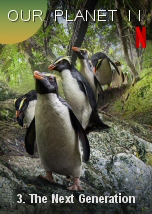
Forests

   2019    Nature    HD
The last episode examines the fragile interdependence that exists between forests' wide variety of residents, including bald eagles, hunting dogs and Siberian tigers.
Over half of all the world's trees, evergreen and deciduous, stand in great assemblies. For many of us, they are places of mystery and darkness. They are key to our climate, and home to countless unique species. The boreal forest contains 750 billion trees, and it stores over 40 percent of the world's carbon, making it a vital element in the fight against climate change. In the past, we have destroyed them without hesitation. Yet, forests do have an astonishing ability to recover. If we choose to give forests time and space, they could reclothe the earth with much of the rich and varied communities of animals and plants of which we have, so recently, robbed it. A future with more forests is key to the resilience of our planet.
Series: Our Planet

Peru

   2020    Culture
Ewan and Charley make their way to Peru from Bolivia, and the scenery is just beautiful. Ewan wanted to visit Machu Picchu since he was a kid and decides to show the world the Incan citadel set high in the Andes Mountains. Next up, they make their way to the Cutivireni, a community of Ashaninka people in the Amazon rainforest, with its carbon program to limit the magnitude or rate of global warming and its related effects.
Series: Long Way Up

Humans

   2021    Nature
A new force threatens our perfect planet. In the past, five mass extinction events were caused by cataclysmic volcanic eruptions. It was not the lava or ash that wiped out life, but an invisible gas released by volcanoes: carbon dioxide. Almost every part of modern life depends on energy created by burning fossil fuels, and this produces CO2 in huge amounts. Humans are changing our planet so rapidly, it’s affecting earth’s life support systems: our weather, our oceans and the living world. The greatest change to be made is in how we create energy, and the planet is brimming with natural power that can help us do just that. It’s these forces of nature - the wind, the sun, waves and geothermal energy - that hold the key to our future.
Through compelling animal-led stories and expert interviews, we discover how CO2 is destabilising our planet. We meet rescued orphaned elephants in Kenya, victims of ever worsening droughts, and join ocean patrols off the coast of Gabon fighting to save endangered sharks. In the Amazon, we witness wildlife teams saving animals in the shrinking forests, and in San Diego we enter a cryogenic zoo preserving the DNA of endangered species before they become extinct.
Series: A Perfect Planet

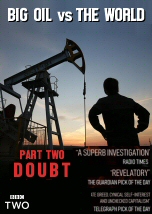
Doubt

   2022    Nature
Even as the science grew more certain, the oil industry continued to block action to tackle climate change in the new millennium. In a revelatory interview, Christine Todd Whitman, George W. Bush's former environment chief, tells the story of how the industry successfully lobbied President Bush to reverse course on his campaign promise to regulate carbon emissions.
Tensions grew between two of the world's biggest oil companies, ExxonMobil and BP, after the latter publicly called for action to tackle climate change. The election of Barack Obama provided hope for supporters of climate action, but the billionaire Koch brothers made an effort to block the new president's attempts to pass climate change legislation, and climate denialism became the mainstream position of the Republican Party. A lawyer who worked for Koch brothers through this period speaks on camera for the first time.
Series: Big Oil vs The World
Clarkson Farm Season 2

Clarkson Farm Season 2

2023  Nature
The Hunt

The Hunt

2015  Nature
Life in a Day

Life in a Day

2021  Culture
Walking with Dinosaurs

Walking with Dinosaurs

2025  Science
The Sky at Night

The Sky at Night

2024  Science
Top Gear

Top Gear

2012  Technology