




Last Watched

"Conservation"  Sort by

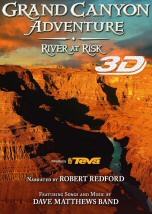
Grand Canyon Adventure

   2008    Nature    3D    HD
Anthropologist Wade Davis and river advocate Robert F. Kennedy Jr journey down the Colorado River on a two-week expedition to highlight water conservation issues. Traveling by rafts, kayaks and wooden dories, they are accompanied by their daughters and guided by Shana Watahomigie, a Native American National Park ranger. Filmed with a 350-pound 3D camera, it involved the cooperation of three Indian nations, the National Park Service, film sponsor Teva’s team of kayakers and more than a dozen experienced river guides. The film explores America's drought and freshwater shortages, the impact on the river of damming, and human water supply needs. Grand Canyon Adventure: River at Risk was directed by Greg MacGillivray and narrated by Robert Redford.
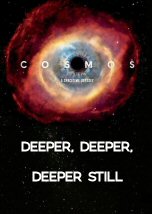
Deeper, Deeper, Deeper Still

   2014    Science
This episodes the nature of the cosmos on the micro and atomic scales, using the Ship of the Imagination to explore these realms. Tyson describes some of the micro-organism that live within a dew drop, demonstrating parameciums and tardigrades. He proceeds to discuss how plants use photosynthesis via their chloroplasts to convert sunlight into chemical reactions that convert carbon dioxide and water into oxygen and energy-rich sugars. Tyson then discusses the nature of molecules and atoms and how they relate to the evolution of species. He uses the example set forth by Charles Darwin postulating the existence of the long-tongued Morgan's sphinx moth based on the nature of the comet orchid with pollen far within the flower. He further demonstrates that scents from flowers are used to trigger olfactory centers in the brain, stimulating the mind to threats as to aid in the survival of the species. Tyson narrates how Greek philosophers Thales and Democritus postulated that all matter was made up of combinations of atoms in a large number of configurations, and describes how carbon forms the basic building block for life on earth due to its unique chemical nature. Tyson explains on the basic atomic structure of protons, neutrons, and electrons, and the nature of nuclear fusion that occurs in most stars. He then discusses the existence of neutrinos that are created by these nuclear processes in stars, and that detecting such sub-atomic particles which normally pass through matter require subterranean facilities like the Super-Kamiokande that were used to detect neutrinos from the supernova SN 1987A in the Large Magellanic Cloud before light from the explosion were observed due to their ability to pass through matter of the dying sun. Tyson compares how neutrinos were postulated by Wolfgang Pauli to account for the conservation of energy from nuclear reactions in the same manner as Darwin's postulate on the long-tongued moth. Tyson concludes by noting that there are neutrinos from the Big Bang still existing in the universe but due to the nature of light, there is a "wall of infinity" that cannot be observed beyond.
Series: Cosmos: A Spacetime Odyssey

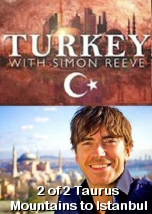
Taurus Mountains to Istanbul

   2017    Culture
In the Taurus Mountains Simon stays with descendants of the original Turks, nomads known as Yoruks, whose lifestyle is under threat from the modern world and an increasingly religious government. They're not the only minority at odds with the authorities in Turkey; Simon sees first-hand the devastating effects of fighting in the country's Kurdish region. In an area where the government has detained foreign journalists, Simon gathers unique footage in the aftermath of a crackdown on Kurdish militants - the wholesale destruction of the historic centre of one of Turkey's oldest cities.
Away from the conflict in the south, Simon heads towards the Black Sea coast. He meets a wildlife conservationist protecting Turkey's population of brown bears, and villagers who still communicate over long distances using an ancient bird language. In the country's capital he meets a victim of President Erdogan's authoritarian purge of people accused of complicity in the failed coup against him.
Finally Simon's journey comes full circle when he returns to Istanbul - home to the new craze of 'Ottomania', a celebration of the vast empire that preceded modern Turkey. Simon visits the set of one of the world's most popular TV dramas - even getting a speaking role - based in the court of an Ottoman sultan
Series: Turkey with Simon Reeve

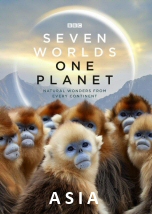
II Asia

   2019    Nature
Asia, the largest and most extreme continent on Earth, is home to animals that inhabit the world's hottest deserts, tallest jungles, and highest mountains. Explore the enchanting world of Asia's wildlife in a captivating film that showcases its extraordinary creatures, from the intriguing vocalizations of the Sumatran rhinoceros to the majestic whale shark. However, it also sheds light on the pressing issues of deforestation, particularly due to the palm oil industry, which threatens the survival of countless species, including the iconic orangutan. Witness the efforts of researchers and conservationists dedicated to protecting these endangered animals in reserves like Gunung Palung National Park.
This documentary serves as a poignant reminder of our shared responsibility to safeguard our planet's remarkable biodiversity. Don't miss this visually stunning and informative journey through Asia's diverse landscapes and the urgent call for conservation.
Series: Seven Worlds One Planet

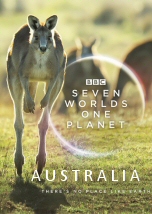
IV Australia

   2019    Nature
The fourth episode of the series takes viewers on a fascinating journey through the unique and diverse landscapes of Australia, a continent that drifted apart during the time of the dinosaurs. Isolated for millions of years, the weird and wonderful animals marooned here are like nowhere else on Earth. From the vast deserts to lush rainforests, this episode showcases the incredible wildlife that calls this continent home. The film highlights the fascinating behaviors and adaptations of Australia's native animals, including the elusive dingo, kangaroos, and the iconic Tasmanian devil. It also sheds light on the challenges these creatures face in a rapidly changing world, emphasizing the impact of human activities on their survival and underscoring the importance of preserving these environments and the incredible creatures that inhabit them.
The stunning cinematography and intimate footage capture the beauty and struggles of Australia's wildlife, making this documentary a visual treat and a must-watch for anyone interested in wildlife and conservation.
Series: Seven Worlds One Planet

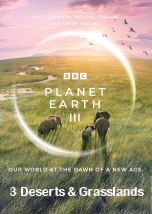
Planet Earth III: Deserts and Grasslands

   2023    Nature
The third episode takes viewers on a riveting journey to some of the world's most extreme and breathtaking deserts and grasslands, where nature puts on its most dramatic show. It begins in the arid landscapes of Central Africa's Guelta d'Archei and the Namib Desert in Southwest Africa, places where water is scarce, and survival is a daily battle. The focus then shifts to the remarkable adaptability of creatures like ostriches, who brave the scorching heat and predators to raise their young and a handful of leopards who learned to hunt from trees on the African plains.
In Australia, viewers witness the intricate courtship rituals of the spotted bowerbird, a species facing challenges due to climate change. The narrative then takes us to the vast Eurasian Steppe, home to the unique Saiga antelope, and to Brazil's Cerrado, a biodiverse grassland where the elusive maned wolf plays a crucial role in maintaining the ecosystem.
The episode highlights not only the resilience and beauty of these creatures but also the fragility of their habitats, emphasizing the urgent need for conservation efforts.
Series: Planet Earth III
The Hunt

The Hunt

2015  Nature
Leaving Neverland

Leaving Neverland

2019  Culture
Latino Americans

Latino Americans

2013  History
Life

Life

2009  Nature
The Beauty of Maps

The Beauty of Maps

2010  History
Ancient Rome

Ancient Rome

2006  History
Future Warfare

Future Warfare

2021  Technology