





Last Watched

"Extinction"  Sort by

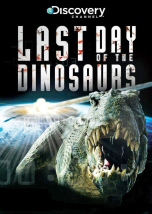
Last Day of the Dinosaurs

       Science
Dinosaurs ruled the earth for 150 million years, then suddenly they were gone. Their disappearance is one of the planet’s greatest mysteries – unimaginable, until now. The film proposes a minute-by-minute chronology of the Chicxulub impact and its effect on the dinosaurs and other animals around the world. A blow-by-blow account of the cataclysm that ended the reign of the dinosaurs, and forever changed the course of life on Earth.
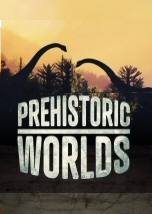
Prehistoric Worlds

   2020    Science    HD
Five times, the Earth has faced apocalyptic events. Cataclysms that have swept away all life forms, or almost. Each time, a handful of species has survived, establishing a new world. What did these prehistoric worlds look like? What catastrophes led to their disappearance? How did our distant ancestors manage to survive the five mass extinctions that the Earth has suffered, finally giving rise to the world we know today?
Combining CGI of ancient animal and plant life, VFX and filming, 'Prehistoric Worlds' looks back at the five mass extinctions of life on Earth that allowed the advent of the human race. On the brink of a sixth mass extinction that the scientific community considers imminent – this time caused by mankind – this film gives us an interesting and powerful look at Man's existence on the scale of the history of our planet.

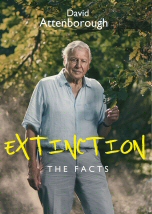
Extinction: The Facts

   2020    Nature
With a million species at risk of extinction, Sir David Attenborough explores how this crisis of biodiversity has consequences for us all, threatening food and water security, undermining our ability to control our climate and even putting us at greater risk of pandemic diseases.
Everything in the natural world is connected in networks that support the whole of life on earth, and we are losing many of the benefits that nature provides to us. The loss of insects is threatening the pollination of crops, while the loss of biodiversity in the soil also threatens plants growth.
Last year, a UN report identified the key drivers of biodiversity loss, including overfishing, climate change and pollution. But the single biggest driver of biodiversity loss is the destruction of natural habitats. Seventy-five per cent of Earth's land surface (where not covered by ice) has been changed by humans, much of it for agriculture, and as consumers we may unwittingly be contributing towards the loss of species through what we buy in the supermarket. Human activities like the trade in animals and the destruction of habitats drive the emergence of diseases. Disease ecologists believe that if we continue on this pathway, this year’s pandemic will not be a one-off event.

Neanderthal Apocalypse

   2015    History
40,000 years ago the steppes of Eurasia were home to our closest human relative, the Neanderthals. Recent genetic and archaeological discoveries have proven that they were not the dim-witted cave dwellers we long thought they were. In fact, they were cultured, technologically savvy and more like us than we ever imagined! So why did they disappear? We accompany scientists on an exciting search for an answer to this question and come to a startling conclusion... A climate change due to a cataclysmic event.

Humpback Whales

   2015    Nature    3D    HD
Narrated by Ewan McGregor, Humpback Whales is an extraordinary journey into the mysterious world of one of nature's most awe-inspiring marine mammals. Set in the spectacular waters of Alaska, Hawaii and the remote islands of Tonga, this ocean adventure offers audiences an up-close look at how these whales communicate, sing, feed, play and take care of their young. Humpbacks were nearly driven to extinction 50 years ago, but today are making a slow but remarkable recovery. Join a team of researchers as they unlock the secrets of the humpback and find out why humpbacks are the most acrobatic of all whales, why they sing their haunting songs, and why these intelligent 55-foot, 50-ton animals migrate up to 10,000 miles round-trip every year.

New Dawn

       Science
The series takes place after the extinction of the dinosaurs 65 million years ago and recreates animals of the Cenozoic with computer-generated imagery and animatronics. The first episode starts 49 million years ago, when Earth has fully recovered from the dinosaur extinction and is covered in a mysterious forest. This is a time that the world has almost forgotten - Germany was a hot sweaty jungle, birds ruled the earth and preyed on miniature horses and whales walked on land.
Series: Walking with Prehistoric Beast
Knights

Knights

2015  History
Meet the Romans

Meet the Romans

2012  History
Nature Great Events

Nature Great Events

2009  Nature
Rafa

Rafa

2026  History
Walking with Cavemen

Walking with Cavemen

2003  History
Top Gear

Top Gear

2012  Technology