A filmmaker forges an unusual friendship with an octopus living in a South African kelp forest, learning as the animal shares the mysteries of her world. After years of swimming every day in the freezing ocean at the tip of Africa, Craig Foster meets an unlikely teacher: a young octopus who displays remarkable curiosity. Visiting her den and tracking her movements for months on end he eventually wins the animal's trust and they develop a never before seen bond between human and wild animal.
Mind reading might sound like pseudoscientific, but its scientific counterpart, thought identification, is very much a real thing. It's based in neuroimaging and machine learning, and what's really cool is that experiments in mind reading aren't just about spying on what someone is thinking. They're about figuring out what thoughts are even made of. When you think of something, what does that mental picture actually look like? What resolution is it in? How high fidelity is a memory, and how do they change over time? In this episode, we are going to look at how
reading people's minds can help us answer these questions.
Zachary Quinto embarks on a journey to understand how artificial intelligence may already be a threat to humanity. He visits Facebook headquarters where he learns about a failed AI experiment where two chat boxes created a language that only they could understand. Zach also gets a firsthand look at the world's latest technology, including life-like dolls programmed with advanced AI, robots that learn and communicate telepathically, highly intelligent drones of war, and Uber self-driving cars.
Artificially intelligent machines are taking over. They’re influencing our everyday lives in profound and often invisible ways. They can read handwriting, interpret emotions, play games, and even act as personal assistants. They are in our phones, our cars, our doctors’ offices, our banks, our web searches... the list goes on and is rapidly growing ever longer. But how does today’s A.I. actually work—and is it truly intelligent? And for that matter, what is intelligence? The world’s brightest computer programmers are trying to build brighter machines by reverse-engineering the brain and by inventing completely new kinds of computers, with exponentially greater speed and processing power. The documentary looks at how far we’ve come and where machines are headed as their software becomes ever more... cerebral. How close are we from a world in which computers take over—from diagnosing cancer to driving our cars to targeting weapons? If we place more and more of our lives under the control of these artificial brains, what are we putting at risk?
Professor Jim Al-Khalili looks at how we have created machines that can simulate, augment, and even outperform the human mind - and why we shouldn't let this spook us. He reveals the story of the pursuit of AI, the emergence of machine learning and the recent breakthroughs brought about by artificial neural networks. He shows how AI is not only changing our world but also challenging our very ideas of intelligence and consciousness.
Along the way, we'll investigate spam filters, meet a cutting-edge chatbot, look at why a few altered pixels makes a computer think it's looking at a trombone rather than a dog and talk to Demis Hassabis, who heads DeepMind and whose stated mission is to 'solve intelligence, and then use that to solve everything else'. Stephen Hawking remarked 'AI could be the biggest event in the history of our civilisation. Or the worst'. Jim argues that AI is a potent new tool that should enhance our lives, not replace us.
Science fiction has long anticipated the rise of machine intelligence. Today, a new generation of self-learning computers is reshaping every aspect of our lives. Incomprehensible amounts of data are being collected, interpreted, and fed back to us in a tsunami of apps, smart devices, and targeted advertisements. Virtually every industry on earth is feeling this transformation, from job automation to medical diagnostics, from elections to battlefield weapons. Do You Trust This Computer? explores the promises and perils of this developing era. Will A.I. usher in an age of unprecedented potential, or prove to be our final invention?








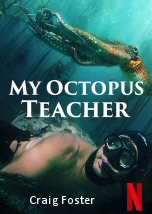




After years of swimming every day in the freezing ocean at the tip of Africa, Craig Foster meets an unlikely teacher: a young octopus who displays remarkable curiosity. Visiting her den and tracking her movements for months on end he eventually wins the animal's trust and they develop a never before seen bond between human and wild animal.