



Last Watched

"Map"  Sort by

Is Seeing Believing

   2010    Medicine
Horizon explores the strange and wonderful world of illusions – and reveals the tricks they play on our senses and why they fool us. We show how easy it is to trick your sense of taste by changing the colours of food and drink, explain how what you see can change what you hear, and see just how unreliable our sense of colour can be. But all this trickery has a serious purpose. It’s helping scientists to create a new understanding of how our senses work – not as individual senses, but connected together. It holds the intriguing possibility that one sense could be mapped into another.
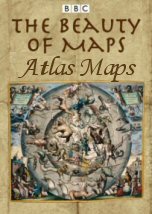
Atlas Maps

   2010    History
The Dutch Golden Age saw map-making reach a fever pitch of creative and commercial ambition. This was the era of the first ever Atlases - elaborate, lavish and beautiful. This was the great age of discovery and marked an unprecedented opportunity for mapmakers who sought to record and categorise the newly acquired knowledge of the world. Rising above the many mapmakers in this period was Gerard Mercator, inventor of the Mercator projection, who changed mapmaking forever when he published his collection of world maps in 1598 and coined the term 'Atlas'. The programme looks at some of the largest and most elaborate maps ever produced, from the vast maps on the floor of the Royal Palace in Amsterdam, to the 24 volume atlas covering just the Netherlands, to the largest Atlas in the world, The Klencke Atlas. It was made for Charles II to mark his restoration in 1660. But whilst being one of the British Libraries most important items, it is also one of its most fragile so hardly ever opened. This is a unique opportunity to see inside this enormous and lavish work, and see the world through the eyes of a King.
Series: The Beauty of Maps

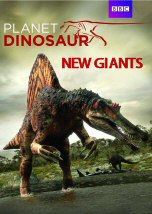
New Giants

   2011    History
This episode of the documentary series focuses on the new giants, the heavyweights of the dinosaur world. It is only in recent years that experts have unearthed the biggest dinosaurs that ever lived. One monster eclipsed all others; more than seven times as heavy as diplodocus was the immense argentinosaurus - a single backbone was bigger than a human. For years, these giants were considered immune to attack from any predator - until the discovery of mapusaurus, a new giant killer whose fate appeared to be inextricably linked to argentinosaurus
Series: Planet Dinosaur

Cocaine Cowboys

   2006    History
In the 1980s, ruthless Colombian cocaine barons invaded Miami with a brand of violence unseen in this country since Prohibition-era Chicago - and it put the city on the map. The film is the true story of how Miami became the drug, murder and cash capital of the United States, told by the people who made it all happen.

City Maps

   2010    Culture
This is the story of three maps, three 'visions' of London over three centuries. The Morgan Map of 1682 was the first to show the whole of the City of London after the Great Fire of London. In 1746 John Rocque produced at the time the most detailed map ever made of London. Like Morgan's, Rocque's map is all neo-Classical beauty and clinical precision, but the London it represented had become the opposite. In engravings of the time, such as Night, the artist William Hogarth shows a city boiling with vice and corruption. Stephen Walter's contemporary image, The Island, plays with notions of cartographic order and respectability. His extraordinary London map looks at first glance to be just as precise and ordered as his hero Rocque's but, looking closer, it includes 21st century markings such as 'favourite kebab vans' and sites of 'personal heartbreak'.
Series: The Beauty of Maps

Cartoon Maps

   2010    Culture
The series concludes by delving into the world of satirical maps. How did maps take on a new form, not as geographical tools, but as devices for humour, satire or storytelling? Graphic Artist Fred Rose perfectly captured the public mood in 1880 with his General Election maps featuring Gladstone and Disraeli, using the maps to comment upon crucial election issues still familiar to us today. Technology was on the satirist's side with the advent of high-speed printing allowing for larger runs at lower cost. In 1877, when Rose produced his 'Serio Comic Map of Europe at War', maps began to take on a new direction and form, reflecting a changing world. Rose's map exploited these possibilities to the full using a combination of creatures and human figures to represent each European nation. The personification of Russia as a grotesque-looking octopus, extending its tentacles around the surrounding nations, perfectly symbolised the threat the country posed to its neighbours.
Series: The Beauty of Maps
Racism: A History

Racism: A History

2007  Culture
The Great Acceleration

The Great Acceleration

2020  Technology
The Sky at Night

The Sky at Night

2025  Science
Natural World

Natural World

2009  Nature
History of the Eagles

History of the Eagles

2013  History
Wild South America

Wild South America

2005  Nature
The Art of Russia

The Art of Russia

2009  Art
Planet Earth

Planet Earth

2007  Nature