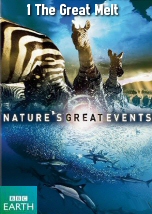







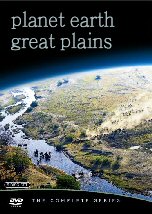
Every year, around the world, seasonal changes transform entire landscapes and draw in millions of creatures as these great events unfold. This fantastic series combines the epic scale of Planet Earth and the intimate, emotional stories of charismatic animals as they struggle to survive. Using state of the art technology, these programmes capture the Earth's most dramatic and epic wildlife spectacles and the intimate stories of the animals caught up in them. The Great Melt: The summer melt of Arctic ice, opening up nearly three million square miles of ocean and land, provides opportunities for millions of animals, including beluga whales, families of Arctic foxes, vast colonies of seabirds, and the fabled Arctic unicorn, the narwhal. For polar bears, however, it is the toughest time of year. Why? How will they survive? A mother polar bear and her cub make their first journey together onto the sea ice. They are looking for ringed seals, their favourite prey. It is a serious business but the cub just wants to play. The melting ice makes it harder for them to hunt and threatens their survival. In a unique aerial sequence, the migration of narwhal with their distinctive unicorn-like tusks is filmed for the first time. The whales' journey is risky as they travel along giant cracks in the ice. If the ice were to close above them, they would drown. Hundreds of beluga whales gather in the river shallows. They rub themselves on smooth pebbles in one of the most bizarre summer spectacles. Guillemot chicks take their first flights from precipitous sea cliff nests to the sea 300 metres below. They attempt to glide to safety but many miss their target. Their loss is a bonus for the hungry Arctic fox family waiting below. As the melt comes to an end the bears gather, waiting for the sea to freeze again. Two 400kg males square up to each other to spar.
Until World War II, Latino immigration to the United States was overwhelmingly Mexican-American. Now three new waves bring large-scale immigration from Puerto Rico, Cuba, and the Dominican Republic. As the Puerto Rican government implements a historic overhaul over a million Puerto Ricans are encouraged to leave for the US mainland, to alleviate the economic pressure. A young Juanita Sanabria arrives in New York, works hard in the garment district, but encounters hostility and discrimination. Ethnic tensions explode in youth gang warfare depicted in films like West Side Story, etching the stereotype of the knife wielding Puerto Rican in the American consciousness.
Are the wealthy just born in the right place at the right time? Are the poor victims of a system designed to keep them down? Or do physics and biology determine who is rich and who is poor? Throughout history, distribution of wealth is governed by hidden forces: DNA, environmental stress, patterns of human migration and even the laws of thermodynamics! Nature seems to demand winners and losers in life. But does this mean greed is king, and the rich can take what they want? Or is cooperation – between microorganisms, monkeys, and humans – more essential to survival of a species?
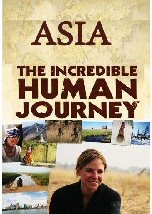
The journey continues into Asia, the world's greatest land mass, in a quest to discover how early hunter-gatherers managed to survive in one of the most inhospitable places on earth - the Arctic region of Northern Siberia. Alice also explores what may have occurred during human migration to produce Chinese physical characteristics, and considers a controversial claim about Chinese evolution: that the Chinese do not share the same African ancestry as other peoples.
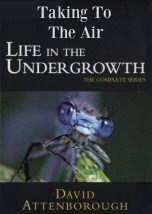
As the early June sun begins to set over a calm river in Central Hungary, masses of ghostly shapes emerge from their larval cases to take to the air for the first time. They are mayflies and in a spectacular display, thousands of them demonstrate how the very first wings were used.
From the stunning aerobatics of hoverflies in an English garden to the mass migration of purple crow butterflies in the valleys of Taiwan, this episode tells the tale of the first animals ever to take to the air. Unique footage reveals the lightning fast reactions of bluebottles and hoverflies, filmed with one of the world's fastest cameras, and Sir David Attenborough handles the world's largest (and perhaps most ferocious) insect - the Titan beetle.
Widespread immigration to the U.S. from Latin countries begins – first with a small group from Cuba, then a larger one from Mexico. Both flee chaos and violence in their home country and are attracted by opportunities in the United States. In 1898, the U.S. helps liberate Cuba and Puerto Rico from Spain but then seizes Puerto Rico as its colony. The first Puerto Rican arrivals (now U.S. citizens) establish a network in New York.
The Great Melt: The summer melt of Arctic ice, opening up nearly three million square miles of ocean and land, provides opportunities for millions of animals, including beluga whales, families of Arctic foxes, vast colonies of seabirds, and the fabled Arctic unicorn, the narwhal. For polar bears, however, it is the toughest time of year. Why? How will they survive? A mother polar bear and her cub make their first journey together onto the sea ice. They are looking for ringed seals, their favourite prey. It is a serious business but the cub just wants to play. The melting ice makes it harder for them to hunt and threatens their survival. In a unique aerial sequence, the migration of narwhal with their distinctive unicorn-like tusks is filmed for the first time. The whales' journey is risky as they travel along giant cracks in the ice. If the ice were to close above them, they would drown. Hundreds of beluga whales gather in the river shallows. They rub themselves on smooth pebbles in one of the most bizarre summer spectacles. Guillemot chicks take their first flights from precipitous sea cliff nests to the sea 300 metres below. They attempt to glide to safety but many miss their target. Their loss is a bonus for the hungry Arctic fox family waiting below. As the melt comes to an end the bears gather, waiting for the sea to freeze again. Two 400kg males square up to each other to spar.