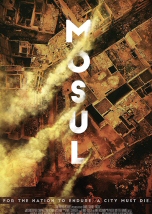
In the fall of 2016, an army of over 100,000 Iraqi soldiers and militiamen mobilize to liberate Mosul, Iraq's second largest city, from the clutches of the Islamic State. Ali Mula, an Iraqi journalist, joins this army of uneasy allies--including Sunnis, Shiites, Christians and Kurds--to find out if they can put aside their sectarian differences and finally free their country from the scourge of ISIS. Along the way to Mosul, Ali encounters an unforgettable group of characters including a Sunni tribal leader who calls himself 'the Crocodile', a female militia leader avenging the death of her husband, a canny, Iranian-backed militia leader, a lawyer-turned-warrior, an elite band of ISIS killers, and refugees who survived the brutality of ISIS occupation. As he nears the end of his journey, Ali meets face-to-face with a die-hard ISIS prisoner who reveals the truth behind his nefarious organization.
Dial in to the fascinating history of the smartphone, from its roots in Morse Code to the latest models. Discover how the next generation of Smartphones will allow us to communicate through them just by thinking. For most of history, we were isolated from the rest of humankind, but the urge to communicate with one another was so powerful that it changed how we interact and gave us a new interface with the world. The story of how we got here is full of the most astonishing twists and unlikely turns to create a device that put the whole world in our hands, the smartphone.
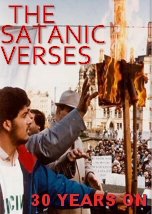
The publication of Salman Rushdie's novel The Satanic Verses in 1988 sparked a culture war in Britain between those in the Muslim community, who considered the book blasphemous and called for the book to be banned, and those defending it as an expression of freedom of speech. Protests, which began in the north of England, soon spread across the UK and to the rest of the Islamic world, culminating in February 1989 with Iran's Ayatollah Khomeini issuing a fatwa - a death sentence on the writer. Now, 30 years on, broadcaster and journalist Mobeen Azhar embarks on a journey, starting in his native Yorkshire where the protest first began, to examine the lasting effect the book has had on the Muslim community and how the events of 1989 continue to have an impact today.
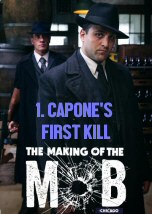
The story of America's most notorious gangster, Al Capone, starts on the streets of Brooklyn. In 1913, at the age of 14, Capone starts running errands for local gangsters - just one of many immigrants struggling to survive. One day, young Al Capone gets caught in a police raid. He quickly grabs what money he can, evades police, and runs to the headquarters of mob boss Johnny Torrio. Torrio rewards Capone for his quick-thinking. When Torrio recognizes Capone's intelligence and drive, he takes him under his wing.
In 1927, Prohibition agent Eliot Ness narrowly escapes a hit ordered by Al Capone. Determined to prove to Capone that he's not intimidated, Ness and his team of Untouchables execute a series of high-profile raids on Capone's breweries. Over the course of a few months, they destroy more than 200,000 gallons of beer, worth a modern-day equivalent of $134 million - and the newspapers cover it all. Capone lashes out against Ness in the press. What Capone doesn't realize is that Ness and the Prohibition agents aren't the only ones trying to take him down. For the past four years, another government agency with more manpower and resources than Ness has been going after the infamous kingpin: the Internal Revenue Service.
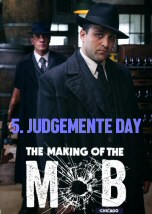
Tony Accardo receives a phone call from Joseph P. Kennedy, asking the mob kingpins to use their pull with the Illinois union vote to help his son, John F. Kennedy, win the upcoming presidential election. In return, he offers to put an end to his son Robert F. Kennedy's investigation into Giancana and the Outfit. As election day nears, Kennedy's fight against Richard Nixon tightens, turning Illinois into a key battleground. Giancana delivers the union votes. After a close race, Kennedy is declared the victor. Just weeks after Kennedy takes office, his brother Robert is named Attorney General. To the Chicago mob's surprise, when Robert takes office as the new U.S. Attorney General in 1961, he makes his top priority going after organized crime ó and one of his primary targets is the Outfit. Weeks after, John F. Kennedy is shot and killed in Dallas. After his brother is assassinated, Robert steps down from his post as Attorney General and the investigation into organized crime is virtually dropped. The government begins an investigation into the assassination, with rumors already circulating that the mafia could have been involved.










Along the way to Mosul, Ali encounters an unforgettable group of characters including a Sunni tribal leader who calls himself 'the Crocodile', a female militia leader avenging the death of her husband, a canny, Iranian-backed militia leader, a lawyer-turned-warrior, an elite band of ISIS killers, and refugees who survived the brutality of ISIS occupation. As he nears the end of his journey, Ali meets face-to-face with a die-hard ISIS prisoner who reveals the truth behind his nefarious organization.