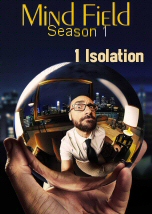
Your brain is like a hungry sponge. It's constantly absorbing information. It thrives when stimulated. Between smartphones and books, and movies, and friends and family, thousands of sensations are constantly going into our heads. But what if it all got cut off?. Imagine being confined to a 10-by-10-foot room in complete isolation. No timekeeping devices, no phones, no books, nothing to write on, no windows. Psychologists say that fewer than three days in a room like this can lead to brain damage. I will be staying in this room for three days. Michael explores the effects of isolation on the human mind by subjecting himself to a very interesting experiment.
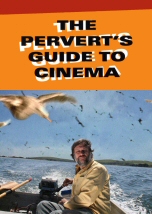
The film takes the viewer on an exhilarating ride through some of the greatest movies ever made. Serving as presenter and guide is the charismatic Slavoj Zizek, the Slovenian philosopher and psychoanalyst. With his engaging and passionate approach to thinking, Zizek delves into the hidden language of cinema, uncovering what movies can tell us about ourselves. The Pervert's Guide To Cinema offers an introduction into some of Zizek's most exciting ideas on fantasy, reality, sexuality, subjectivity, desire, materiality and cinematic form. Whether he is untangling the famously baffling films of David Lynch, or overturning everything you thought you knew about Hitchcock, Zizek illuminates the screen with his passion, intellect, and unfailing sense of humour. The film applies Zizek's ideas to the cinematic canon, in what The Times calls 'an extraordinary reassessment of cinema.'
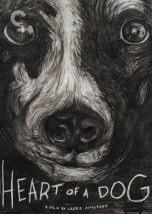
Laurie Anderson embarks on a cinematic journey through love, death and language. Cantering on Anderson's beloved rat terrier Lolabelle, who died in 2011, the film is a personal essay that weaves together childhood memories, video diaries, philosophical musings on data collection, surveillance culture and the Buddhist conception of the afterlife, and heartfelt tributes to the artists, writers, musicians and thinkers who inspire her. Fusing her own witty, inquisitive narration with original violin compositions, hand-drawn animation, 8mm home movies and artwork culled from exhibitions past and present, Anderson creates a hypnotic, collage-like visual language out of the raw materials of her life and art, examining how stories are constructed and told - and how we use them to make sense of our lives.
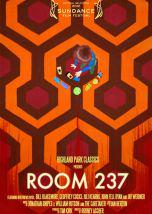
Many movies lend themselves to dramatic interpretations, but none are as rich and far ranging as Stanley Kubrick's The Shining. In LA filmmaker Rodney Ascher's ROOM 237, we hear from people who have developed far-reaching theories and believe they have decoded the hidden symbols and messages buried in the late director's film. Carefully examining The Shining inside out, and forwards and backwards, and backwards and forwards, ROOM 237 as captivating, provocative as it is pure pleasure". It gives voice to the fans and scholars who espouse these theories, reworking the film to match their ideas and intercutting it with layers of dreamlike imagery to illustrate their streams of consciousness. Sometimes outrageous, always engaging, the words of those who were interviewed are given full force by Ascher's compelling vision. Also featured at the 2012 Sundance, Cannes and Toronto film festivals.
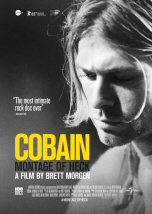
Kurt Cobain, lead singer, guitarist, and songwriter of Nirvana, remains an icon 20 years after his death. Here, we take a journey through Cobain's life and his career with Nirvana through the lens of his home movies, recordings, artwork, photography, and journals. An authorized documentary from director Brett Morgen, from Cobain’s early days in Aberdeen, Washington to his success and later downfall with the grunge band Nirvana, this documentary received an award at the 2015 Sundance FilmFestival.
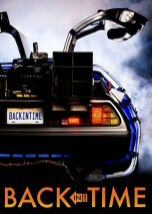
A look at the very real impact the Back to the Future movies have had on our culture. What was once a little idea that spawned a tightly-focused documentary has grown into something truly amazing over two years of filming. Back in Time is a cinematic monument to the vastness of the trilogy's fandom. In addition to the footage and interviews revolving around the time machine itself, the crew found that simply by delving into the impact of the trilogy an epic journey began to unfold before them. The crew captured countless hours of footage during filming. From Steven Spielberg to Robert Zemeckis and Bob Gale, to the Sheas and Hollers, and from James Tolkan and Lea Thompson to Christopher Lloyd and Michael J. Fox, Back in Time features interview after interview that simply must be seen.












Michael explores the effects of isolation on the human mind by subjecting himself to a very interesting experiment.