










Last Watched

"NATO"  Sort by

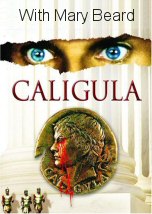
Caligula

   2013    History
Two thousand years ago one of history's most notorious individuals was born. Professor Mary Beard embarks on an investigative journey to explore the life and times of Gaius Julius Caesar Augustus Germanicus - better known to us as Caligula. Caligula has now become known as Rome's most capricious tyrant, and the stories told about him are some of the most extraordinary told about any Roman emperor. He was said to have made his horse a consul, proclaimed himself a living God, and indulged in scandalous orgies - even with his own three sisters - and that's before you mention building vast bridges across land and sea, prostituting senators' wives and killing half the Roman elite seemingly on a whim. All that in just four short years in power before a violent and speedy assassination in a back alley of his own palace at just 28-years-old." But how much of his story is true? Travelling across the Roman world - from Germany and Capri in the bay of Naples to the astonishing luxury of his life in imperial Rome - Mary attempts to peel away the myths. Some stories are difficult to get to the bottom of as they were written by hacks long after his death, but there is plenty of surviving evidence where the 'real' Caligula can be glimpsed. Such as in the extraordinary luxury of his private yachts outside Rome; in the designs he chose for his coins when he became Emperor; in an eye-witness account of Caligula's withering humour written in 41AD; the trial documents covering the mysterious death of his father when he was just seven-years-old; and even in a record of his imperial slaves - from the palace spy to his personal trainer. Piecing together the evidence, Mary puts Caligula back into the context of his times to reveal an astonishing story of murder, intrigue and dynastic family power. Above all, she explains why Caligula has ended up with such a seemingly unredeemable reputation. In the process, she reveals a more intriguing portrait of not just the monster, but the man.
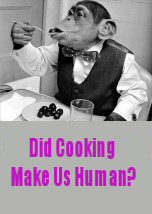

Did Cooking Make Us Human

   2010    Culture
We are the only species on earth that cooks its food - and we are also the cleverest species on the planet. The question is: do we cook because we're clever and imaginative, or are we clever and imaginative because our ancestors discovered cooking? Horizon examines the evidence that our ancestors' changing diet and their mastery of fire prompted anatomical and neurological changes that resulted in taking us out of the trees and into the kitchen.

Dirty Wars

   2013    Culture
Investigative journalist Jeremy Scahill travels to Afghanistan, Yemen, Somalia, and other countries where the United States has taken military action in the War on Terror. In Afghanistan, he investigates the United States military and government cover-up of the deaths of five civilians, including two pregnant women killed by US soldiers from the Joint Special Operations Command. After investigating the attack, Scahill travels to other sites of JSOC intervention, interviewing both proponents and opponents, and the survivors, of such raids,including U.S. Senator Ron Wyden. Scahill also investigates the assassinations of American citizens Anwar al-Awlaki and his son Abdulrahman al-Awlaki, meeting with their family at their home in Yemen. Scahill suggests that the War on Terror is in fact a "self-fulfilling prophecy" and causes the radicalization of Muslims. He also discusses the case of Yemeni investigative journalist Abdulelah Haider Shaye who was detained, tried and sentenced on terrorism-related charges after reporting on American drone strikes.

The Survival

   2012    Nature    3D    HD
David Attenborough discovers the plants that have evolved to shed their dependency on water enabling them to survive in the driest environments. The story begins at midnight in midsummer as David steps into the Princess of Wales Conservatory to witness the extraordinary nocturnal blooming of a cactus. The queen of the night, with its giant flowers, is the centre piece of a stunning symphony of cacti blooms that burst open in the desert (and at Kew) at night. In a mesmerizing 3D slow motion sequence, we discover the extraordinary connections between cacti and their natural pollinators: bats. As the sun rises, David meets other amazing plants. Species like the century plant, the Agave franzosini, which grows steadily for over 50 years, only to then flower itself to death with one mighty telegraph pole sized bloom which literally bursts out of the roof of Kew’s green house.
Series: Kingdom of Plants

Solving the Secrets

   2012    Nature    3D    HD
Bladderwort utricularia is a pond-dweller that is among the fastest known, its traps snapping shut in less than a millisecond. As the seasons change, David demonstrates how plants operate on a different time scale to us; how they modify their lives according to the time of year. We discover insects’ hidden links with plants, both as pests and pollinators. UV-sensitive 3D cameras reveal the invisible alter-ego of plants and their flowers’ mesmerizing patterns; a parallel-dimension of strange colours and stunning patterns through which plants communicate with them. With the aid of visual effects, David steps among the swirling vortices of plant scent; communication signals with which plants are inextricably plugged in to the natural world. And using a tuning fork, he demonstrates how plants and insects can even communicate with music. As autumn envelopes the Gardens, fungi reveal themselves not as the enemies of plants but their vital allies. In Kew’s atmospheric Fungarium, David discovers a specimen that has the power of mind control and another that lives underground where it has grown to be so big it can be counted as the largest single organism on the planet. It is 6 times bigger than Kew Gardens itself.
Series: Kingdom of Plants

Who are We

   2010    Medicine
We now know that the brain - the organ that more than any other makes us human - is one of the wonders of the universe, and yet until the 17th century it was barely studied. The twin sciences of brain anatomy and psychology have offered different visions of who we are. Now these sciences are coming together and in the process have revealed some surprising and uncomfortable truths about what really shapes our thoughts, feelings and desires. And the search to understand how our brains work has also revealed that we are all - whether we realise it or not - carrying out science from the moment we are born.
Series: The Story of Science
Heavens Gate

Heavens Gate

2020  Culture
The Cell

The Cell

  Science
The Art of Russia

The Art of Russia

2009  Art
The Art of Germany

The Art of Germany

2010  Art
The Sky at Night

The Sky at Night

2023  Science
Top Gear

Top Gear

2012  Technology