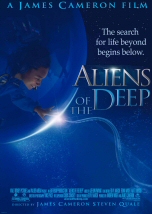
James Cameron journeys to some of the Earth's deepest, most extreme and unknown environments in search of the strange and alien creatures that live there. Joining him is a team of young NASA scientists and marine biologists who consider how these life forms represent life we may one day find in outer space not only on distant planets orbiting distant stars, but also within our own solar system. Aliens of the Deep is the result of expeditions to several hydrothermal vent sites in the Atlantic and the Pacific. These are violent volcanic regions where new planet is literally being born and where the interaction between ocean and molten rock creates plumes of super-heated, chemically-charged water that serve as oases for animals unlike anything ever discovered. Six-foot tall worms with blood-red plumes and no stomach, blind white crabs, and a biomass of shrimp capable of 'seeing' heat all compete to find just the right location in the flow of the super-heated, life-giving water or to fry.
Japan's role in World War II gets a whole new perspective in this consisting entirely of full colour footage, including colour films from Japan that were recently discovered. As the visuals of the world war take on a new vivid immediateness, the story of the rise of the militarists in Japan is told through the personal writings of the Japanese themselves. From the first overconfident tastes of victory, to the devastating losses that led to an unthinkable defeat amidst the ruins, the Pacific Theater of World War II is told through the Japanese's eyes.
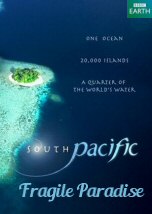
The extraordinary wildlife, culture and history of this immense, fascinating ocean and its myriad islands are revealed in stunning detail. With its coral reefs, turquoise lagoons and dramatic oceanic atolls, the South Pacific is the archetypal paradise. It is still relatively healthy and teeming with fish, but it is a fragile paradise. International fishing fleets are taking a serious toll on the sharks, albatross and tuna, and there are other insidious threats to these bountiful seas. We look at what is being done to preserve the ocean and its wildlife.
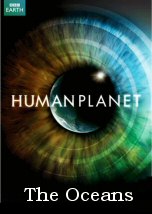
Human Planet is a majestic portrait of humankind and the power of nature in extraordinary symbiosis, struggle and strife. For the first time, the camera has turned on ourselves. In doing so, we see how amazing human beings can be and how we adapt to any habitat, anywhere. Human Planet is epic in ambition, extreme in content, intimate in effect. It explores how we have devised ways of surviving in every corner of Earth – from the remotest deserts to the busiest urban metropolis. Each episode focuses on an iconic environment and reveals how we have adapted to the challenges of the landscape and the endless diversity of animals and plants we live with. Discover how our remarkable intelligence, tool use, and close-knit social lives have enabled us to cope with just about anything nature can throw at us". As an air-breathing animal, the human is not built to survive in water. But people have found ways to live an almost aquatic life so they can exploit the sea's riches. From a 'shark-whisperer' in the Pacific to Brazilian fishermen collaborating with dolphins to catch mullet, this journey into the blue reveals astonishing tales of ingenuity and bravery. Daredevil Galician barnacle-collectors defy death on the rocks for a catch worth 200 pounds per kilo. In Indonesia an epic whale-hunt, using traditional hand-made boats and harpoons, brings in a sperm whale. The Bajau 'sea gypsies' of the Sulu Sea spend so much time on water they get 'land sick' when they set foot on the land! We dive 40 metres down to the dangerous world of the Pa-aling fishermen, where dozens of young men, breathing air through a tangled web of pipes attached to a diesel engine, capture thousands of fish in a vast net. We see how surfing has its origins in the ancient beliefs of the ocean-loving Polynesians, and we join a Borneo free-diving spear-fisherman on a breath-taking journey 20 metres down in search of supper.
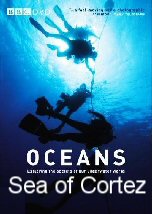
The Sea of Cortez, also known as the Gulf of California, is a unique corner of the Pacific Ocean. This remarkable young sea is thought to be around five million years old and home to nearly 900 species of fish and the widest variety of whales and dolphins found anywhere on Earth. Some of the greatest changes threatening the world's oceans today can be seen in this stretch of water.
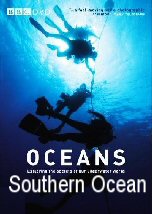
The Southern Ocean, which circles the globe without being blocked by land, is home to the Antarctic Circumpolar Current (ACC), the longest of the world's ocean currents. Also known as the "channel", it connects the Indian, Atlantic and Pacific Ocean basins and exerts a powerful influence over the Earth's climate. The ACC carries 150 times more water around Antarctica than the flow of all the world's rivers combined.





















Aliens of the Deep is the result of expeditions to several hydrothermal vent sites in the Atlantic and the Pacific. These are violent volcanic regions where new planet is literally being born and where the interaction between ocean and molten rock creates plumes of super-heated, chemically-charged water that serve as oases for animals unlike anything ever discovered. Six-foot tall worms with blood-red plumes and no stomach, blind white crabs, and a biomass of shrimp capable of 'seeing' heat all compete to find just the right location in the flow of the super-heated, life-giving water or to fry.