





Last Watched

"Volcano"  Sort by

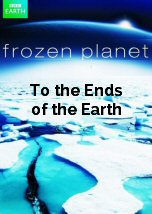
Frozen Planet: To the Ends of the Earth

   2011    Nature
Our journey begins with David Attenborough at the North Pole, as the sun returns after six months of darkness. We follow a pair of courting polar bears, which reveal a surprisingly tender side. Next stop is the giant Greenland ice cap, where waterfalls plunge into the heart of the ice and a colossal iceberg carves into the sea. Humpback whales join the largest gathering of seabirds on earth to feast in rich Alaskan waters. Further south, the tree line marks the start of the Taiga forest, containing one third of all trees on earth. Here, 25 of the world's largest wolves take on formidable bison prey. At the other end of our planet, the Antarctic begins in the Southern Ocean where surfing penguins struggle to escape a hungry sea-lion and teams of orcas create giant waves to wash seals from ice floes -a filming first. Diving below the ice, we discover prehistoric giants, including terrifying sea spiders and woodlice the size of dinner plates. Above ground, crystal caverns ring the summit of Erebus, the most southerly volcano on earth. From here we retrace the routes of early explorers across the formidable Antarctic ice-cap - the largest expanse of ice on our planet. Finally, we rejoin David at the South Pole, exactly one hundred years after Amundsen then Scott were the first humans to stand there
Series: Frozen Planet
Wild Russia: Siberia

   2009    Nature
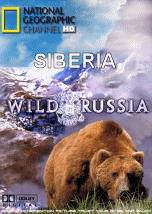
From east to west, via mountains, volcanoes, deserts, lakes and Arctic ice, this breathtaking series uses stunning cinematography to chart the dazzling natural wonders of this vast country. Accounting for around 10 per cent of the world’s dry land, Siberia is famous as a brutally cold place. Yet it is home to a diverse range of habitats and animal life – including musk deer, camels, gazelles and the extraordinary Siberian salamander, which can spend years encased in -40°C ice and still survive.
Series: Wild Russia

Biggest Things in Space

   2008    Science
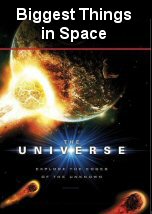
We can't compare anything on earth to the biggest things known in space. The Cosmic Web may connect objects in the universe with threads of Dark Matter. The Lyman-alpha blob is a bubble like structure containing countless galaxies--perhaps the biggest object in the entire universe. Regions of radio-emitting gas called "radio lobes" could be even bigger. Then there are super galaxy clusters which are hundreds of galaxies merged together due to cosmic collisions. Discover which is the largest planet, star, star cluster, constellation, black hole, volcano, galaxy, explosions, moon, storm, impact crater and "void" in space.
Series: The Universe

Volcano

   2007    Nature
Volcanoes are one of nature’s most awesome and destructive forces, but they are also the life force and architect of our planet. They can raise up great mountains and create new land, or they can level cities and destroy entire civilizations. They provide a glimpse of the power of Earth’s internal heat source, without which it would have become a dead planet millions of years ago. In this episode, Iain takes us on a journey to some of the most dramatic places on Earth, starting in Ethiopia.
Series: Earth, The Power of the Planet

Frozen Planet: The Last Frontier

   2011    Culture
The documentary series reveals the extraordinary riches and wonders of the Polar Regions that have kept people visiting them for thousands of years. Today, their survival relies on a combination of ancient wisdom and cutting-edge science. Most Arctic people live in Siberia, either in cities like Norilsk - the coldest city on earth - or out on the tundra, where tribes like the Dogan survive by herding reindeer, using them to drag their homes behind them. On the coast, traditional people still hunt walrus from open boats - it is dangerous work, but one big walrus will feed a family for weeks. Settlers are drawn to the Arctic by its abundant minerals; the Danish Armed Forces maintain their claim to Greenland's mineral wealth with an epic dog sled patrol, covering 2,000 miles through the winter. Above, the spectacular northern lights can disrupt power supplies so scientists monitor it constantly, firing rockets into it to release a cloud of glowing smoke 100 kilometres high. In contrast, Antarctica is so remote and cold that it was only a century ago that the first people explored the continent. Captain Scott's hut still stands as a memorial to these men. Science is now the only significant human activity allowed; robot submarines are sent deep beneath the ice in search of new life-forms, which may also be found in a labyrinth of ice caves high up on an active volcano. Above, colossal balloons are launched into the purest air on earth to detect cosmic rays. At the South Pole there is a research base designed to withstand the world's most extreme winters. Cut off from the outside world for six months, the base is totally self-sufficient, even boasting a greenhouse.
Series: Frozen Planet

Terra Firma

   2000    Science
Do other worlds tremble and heave with geological life? On Mars, we found a volcano to dwarf Mount Everest. On the moons of the giants our understanding of volcanoes was changed forever.
Series: The Planets
Kingdom

Kingdom

2025  Nature
Evolution

Evolution

2004  Science
The Jinx

The Jinx

2015  History
Leaving Neverland

Leaving Neverland

2019  Culture
Planet Earth

Planet Earth

2007  Nature