This illuminating ten-part series tells the story of World War ll through the ten most pivotal turning points in the conflict. Gripping story-telling illustrated with exquisitely restored and colourised archived films and supported by a global cast of stellar historians bring this crucially important era in history to life. In the first chapter, Britain and France declare war when Hitler invades Poland. In May 1940 the Germans attack Holland and Belgium as a decoy. As the Wehrmacht comes through the Ardennes and the Luftwaffe strikes in force, French leaders are caught like rabbits in headlights. The Germans are on a drug called Pervitin, which beats off fatigue, and reach the Atlantic coast. There is a danger that the Germans will encircle the Allies and cut them off from the sea. But Hitler issues his Halt Order and some 340,000 Allies are evacuated.
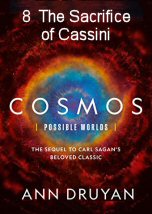
The 8th episode reviews Giovanni Cassini's life. His observations of Saturn and its moons would have an enduring effect on the scientific world. Neil deGrasse Tyson also narrates the mysterious untold story of the scientist who figured out how to go the Moon while fighting for his life in a WWI trench. Aleksandr Shargei changed his name to Yuri Kondratyuk out of fear for his life and wrote a manuscript on rocket motion and space colonization. This letter would end up capturing the attention of an engineer working on the Apollo program, John Houbolt, and would made the Apollo Mission possible. We will also know the saga of the twenty-year long odyssey of Cassini-Huygens spacecraft, a robotic explorer ordered to commit suicide on another world.
In 1940, France has fallen and Hitler orders Operation Sealion, the invasion of Great Britain. But first the Luftwaffe must defeat the RAF for seaborne landings to succeed. In July 1940 an epic struggle in the skies above England begins. Only a brilliant defensive system and the bravery of young pilots stand in the Luftwaffe’s way. Wave after wave of German bombers are attacked by British planes. Featuring the last interview with the youngest Spitfire-pilot in the battle, Geoffrey Wellum.
When Japan’s military expansion in the Pacific reaches its fever pitch, Roosevelt is forced to act. By cutting off oil supplies, he hopes to force Japan to back down. But far from sedating their imperial expansions, he pushes them to take one of the greatest gambles in military history – taking their entire striking fleet 4000 miles across the Ocean to attack the American Pacific fleet in Pearl Harbor. It’s a huge gamble, and if it goes wrong, it will spell suicide for Japan.
For the past century, Russian history has also been the history of its security services. They were used by the Soviet state to crush dissent. Millions suffered at their hands. Mass executions, secret wars, spies capable of stealing the atomic bomb, poisoning scandals all add up to the most extraordinary and dangerous security network the world has ever known. But even today, the security network is arguably stronger than ever. This is the History of the KGB, told through its veterans and its victims. Founded in 1917, Cheka was the predecessor organization of the KGB. Set up as a 'temporary' measure by Lenin, unknown number of Soviet citizens would die at the hands of the secret services as internal dissents in the 1920s. An inglorious chapter is the "Great Terror" phase, when millions of Soviet citizens were convicted and executed in mock trials under Stalin's rule in the 1930s. Outside the Soviet Union, during the WWII they were busy infiltrating German High Command, British Intelligence and America's Manhattan Project. The Cold War had begun in earnest.
In the aftermath of Japan’s devastating attack on the US Pacific fleet at Pearl Harbor, the Japanese Imperial Navy moves in for a knockout blow. A surprise attack against the island of Midway is planned to draw the remaining American aircraft carriers out for a decisive battle. Admiral Yamamoto devises a meticulous plan. But the attack is in the hands of his by-the-book Admiral, Nogumo. When a genius American code-breaker unearths their plans – the Japanese attack is thrown into chaos.










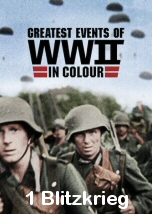
In the first chapter, Britain and France declare war when Hitler invades Poland. In May 1940 the Germans attack Holland and Belgium as a decoy. As the Wehrmacht comes through the Ardennes and the Luftwaffe strikes in force, French leaders are caught like rabbits in headlights. The Germans are on a drug called Pervitin, which beats off fatigue, and reach the Atlantic coast. There is a danger that the Germans will encircle the Allies and cut them off from the sea. But Hitler issues his Halt Order and some 340,000 Allies are evacuated.