











Last Watched

"Worker"  Sort by

Prejudice and Pride

   2013    History
In the 1960s and 1970s a generation of Mexican Americans, frustrated by persistent discrimination and poverty, find a new way forward, through social action and the building of a new "Chicano" identity. The movement is ignited when farm workers in the fields of California, led by Cesar Chavez and Dolores Huerta, march on Sacramento for equal pay and humane working conditions. Through plays, poetry and film, Luis Valdez and activist Corky Gonzalez create a new appreciation of the long history of Mexicans in the South West and the Mestizo roots of Mexican Americans. In Los Angeles, Sal Castro, a schoolteacher, leads the largest high school student walkout in American history, demanding that Chicano students be given the same educational opportunities as Anglos. In Texas, activists such as Jose Angel Gutierrez, create a new political party and change the rules of the electoral game. By the end of the 1970s Chicanos activism and identity have transformed what it means to be an American. Chicano and Latino studies are incorporated into school curriculum; Latinos are included in the political process.
Series: Latino Americans


Free for All

   2013    Art
Part 2 examines how the freewheeling modernism that had shocked audiences in the first two decades of the century came under state control. Initially, many practitioners thought the totalitarian regimes would be good for music and the arts. What followed in Germany was a ban on music written by Jews, African-Americans and communists, while in the Soviet Union there was a prohibition on music the workers were unable to hum. After the cataclysm of the 1940s, a new generation of composers - Boulez, Stockhausen, Xenakis, Nono, Ligeti - turned their back on what they saw as the discredited music of the past and tried to reinvent it from scratch. Or, at least, from serialism, which became as much of a straitjacket as totalitarianism's strictures had been. But from this period of avant-garde experimentation, which many listeners found baffling and terrifying, came some of the most influential and radical musical innovations of the century.
Series: The Sound and the Fury

Peril and Promise

   2013    History
In the 80s the nature of the Latino Diaspora changes again. From Cuba a second wave of refugees to United States – the Mariel exodus – floods Miami . The same decade sees the sudden arrival of hundreds of thousands of Central Americans (Salvadorans, Guatemalans, and Nicaraguans) fleeing death squads and mass murders at home like activist, Carlos Vaquerano. By the early 1990s, a political debate over illegal immigration – has begun. Globalization, empowered by NAFTA, means that as U.S. manufacturers move south, Mexican workers head north in record numbers. A backlash ensues: tightened borders, anti-bilingualism, state laws to declare all illegal immigrants felons. But a sea change is underway: the coalescence of a new phenomenon called Latino American culture-as Latinos spread geographically and make their mark in music, sports, politics, business, and education.
Series: Latino Americans

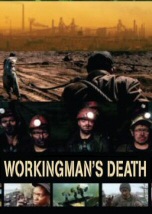
Workingman Death

   2005    Culture
Austrian director Michael Glawogger travels to five countries to focus on some of the worst jobs imaginable: Ukrainian miners crawl into tiny cracks in old coal pits to scratch out a few bags of winter fuel; Indonesian workers trudge long distances carrying baskets with hundreds of pounds of sulfur chunks extracted from a steaming mountain; Pakistanis risk explosions and burial under tons of scrap iron as they dismantle huge carrier ships. The visuals are everything here. Despite the hardships depicted, many sequences have a dreamlike beauty. In addition, the director has a bone-dry sense of irony; during the Ukraine scenes, he frequently cuts away to a statue of Stakhanov, the "hero" lauded by the Soviets for his superhuman work habits. He also shows us an old German smelting works that's been converted into a theme park.

Pan(dem)icking

   2021    Nature
As Covid-19 puts Britain on lockdown, Jeremy Clarkson suddenly finds that his biggest worries aren’t all related to the upcoming lambing season. 'If you're involved in food production, you are key worker. We're gonna save the nation!... I've smoked a million cigarettes and I've had pneumonia. If I get it , there's not a lot of hope... Am I panic buying? I bought five tins of sardines the other day'.
Series: Clarkson Farm

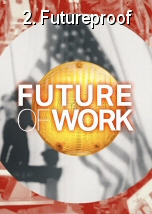
Futureproof

   2021    Technology
Frontline and service workers have borne the health consequences of the pandemic, increasing racial and economic disparities. Certain robotic and AI applications are accelerating as the value of human workers is further questioned. Determining the likely areas of job growth and training needs is difficult. Post-secondary education has become more virtual and its costs, more controversial. How can we predict job growth, training needs and the role of education in order to prepare for the work of the future?
Series: Future of Work
Clash of the Gods

Clash of the Gods

2009  History
Senna

Senna

2010  Culture
Frozen Planet

Frozen Planet

2011  Nature
Reel Rock

Reel Rock

2014  Culture
In the Age of AI

In the Age of AI

2019  Technology
Rise of Empires: Ottoman

Rise of Empires: Ottoman

2020  History