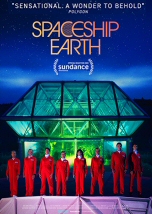
The true, stranger-than-fiction, adventure of eight visionaries who in 1991 spent two years quarantined inside of a self-engineered replica of Earth's ecosystem called Biosphere 2. The experiment was a worldwide phenomenon, chronicling daily existence in the face of life threatening ecological disaster and a growing criticism that it was nothing more than a cult. The bizarre story is both a cautionary tale and a hopeful lesson of how a small group of dreamers can potentially re-imagine a new world.
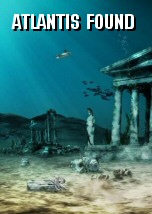
This documentary attempts to make history by finding the lost city of Atlantis once and for all. Adventurer-geologist Dr. Martin Pepper sets out to prove his theory – that the true Atlantis existed on the Greek island of Santorini, and was destroyed in the biggest volcanic eruption in human history". In order to achieve his goal, Pepper will use new scientific evidence gathered using state-of-the-art sonar scans of the sea bed and microscopic analysis of the ancient landscape. One of the challenges he faces is that he must also match Santorini to a series of key clues embedded in the first ever description of Atlantis by the Greek philosopher Plato – from the lost city’s strange ring-shaped design, to the role Egyptian priests played in recording the legend in the first place. His journey will take him across the Mediterranean and out into the Atlantic Ocean. By the end of the program, he reveals the stunning findings which may pinpoint the city and show exactly what it looked like.
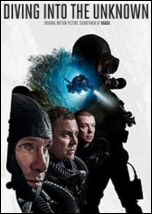
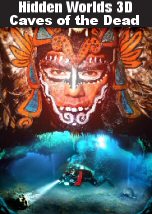
In the days of the Mayas, cenotes – deep, natural pits on the Yucatan peninsula - provided the only means of obtaining drinking water. But in the mythology of this advanced civilisation, these waterholes and caves were also the entrance to Xibalba – the underworld. All deceased were obliged to pass through Xibalba and wait there until they were called into heaven. It was a place in which one made sacrifices to the gods – objects of daily life, as well as bloody, human sacrifices. To this day, the relics of these acts are still in place preserved underwater for more than a thousand years. The entrance to the underworld begins at a dirty waterhole in the middle of the Mexican jungle overgrown and barely recognisable. But immediately after entry, a hall of breath-taking dimensions and beauty is revealed. As if they were sculptures, stalactites and stalagmites lend the underwater cave an almost sacred ambience. By now, one has succumbed to the fascination emanated by the world’s largest underwater cave system. We accompany four professional research divers to Yucatan – a team of specialists, able to squeeze their bodies through crevices and holes, barely larger than their bodies and who master dives that would push even the most experienced divers to their limits. With them, we penetrate worlds only a few people have ever ventured into. We encounter the remains of human victims, prehistoric fireplaces and primeval animal skeletons and undertake a dive, which takes us from the primeval forest to the open sea. We then enter Xibalba – the place of myths and the dead. In the days of the Mayas - a voyage of no return. Today, this is one of the greatest challenges one can face as a diver – the hidden world of the underwater caves of Yucatan – all filmed in 3D.
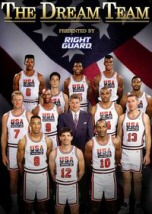
Many consider it the greatest team ever assembled, in any sport. Yet even that description fails to give it proper credit for its impact. The original the Dream Team, the first U.S. Olympic team to include NBA stars was a phenomenon on and off the court. It mattered not that it dominated the Olympic competition. It won the gold medal at the 1992 Olympics in Barcelona, beating its eight opponents by an average of 44 points. What was important was that the Dream Team, gave fans a glimpse of basketball at its finest, and an entire world responded. The film is the definitive documentary of the historic 1992 USA Basketball team, featuring recent interviews with all 12 members, including Michael Jordan, Magic Johnson, Larry Bird, and Charles Barkley. Includes rare footage from USA Basketball's film library, and the untold story behind what has become part of basketball legend. Since 1992, basketball has exploded in popularity around the globe, rising to a place where it truly challenges soccer's status as the world's most popular sport. Much of that is due to the impact of the Dream Team, which attracted fans and followers wherever it went. "It was," said Coach Chuck Daly, "like Elvis and the Beatles put together. Traveling with the Dream Team was like traveling with 12 rock stars. That's all I can compare it to." And what a band it was. Start with three of the game's all-time greats: Michael Jordan, Magic Johnson and Larry Bird. Add the irrepressible Charles Barkley for a little spice, as well as seven more NBA All-Stars: centers David Robinson and Patrick Ewing, power forward Karl Malone, swingmen Scottie Pippen, Chris Mullin and Clyde Drexler and point guard John Stockton. Complete the roster with Christian Laettner, the best college player of 1991-92 and a future NBA All-Star. Opponents didn't have a chance, but they didn't care.
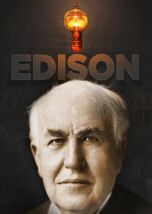
By the time he died in 1931, Thomas Alva Edison was one of the most famous men in the world. The holder of more patents than any other inventor in history, Edison had achieved glory as the genius behind such revolutionary inventions as sound recording, motion pictures, and electric light. Edison's curiosity led him to its cutting edge. With just three months of formal schooling, he took on one seemingly impossible technical challenge after another, and through intuition, persistence, and a unique team approach to innovation, invariably solved it." Driven and intensely competitive, Edison was often neglectful in his private life and could be ruthless in business. Challenged by competition in the industry he'd founded, Edison launched an ugly propaganda campaign against his rivals, and used his credibility as an electrical expert to help ensure that high-voltage electrocution became a form of capital punishment. Edison explores the complex alchemy that accounts for the enduring celebrity of America's most famous inventor, offering new perspectives on the man and his milieu, and illuminating not only the true nature of invention, but its role in turn-of-the-century America's rush into the future.
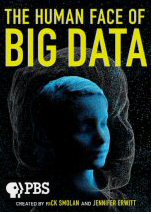
With the rapid emergence of digital devices, an unstoppable, invisible force is changing human lives: Big Data, a word that was barely used a few years ago but now governs the day for many of us. The real time visualization of data streaming in from satellites, billions of sensors and GPS enabled cameras and smart phones is beginning to enable us to sense, measure and understand aspects of our existence in ways never possible before". This massive gathering and analysing of data in real time is also allowing us to address to some of humanity biggest challenges, including pollution, world hunger and illness, and it is also helping create a new kind of planetary nervous system. But as Edward Snowden and the release of the NSA documents have shown, the accessibility of all this data comes at a steep price. The Human Face of Big Data captures the promise and peril of this extraordinary knowledge revolution.
















The experiment was a worldwide phenomenon, chronicling daily existence in the face of life threatening ecological disaster and a growing criticism that it was nothing more than a cult. The bizarre story is both a cautionary tale and a hopeful lesson of how a small group of dreamers can potentially re-imagine a new world.