Explore the hottest area of bioscience, genomics with stunning live image, quality CGI, the forefront research, and real human stories. Previously it was thought that only 2% of our DNA is meaningful and the remaining 98% is non-coding 'junk'. But today we are beginning to know how the junk part of our DNA works to decide our personal characteristics and tendencies.
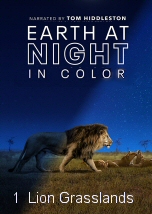
Filmed across six continents, this docuseries uses cutting-edge camera technology to capture animal's nocturnal lives revealing new behaviours filmed in full color like never before. In the first episode, we will see how after dark on Kenya's Maasai Mara grasslands, a lioness won't rest until she finds the young cubs she's lost.
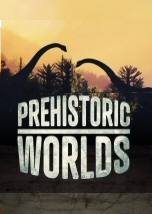
Five times, the Earth has faced apocalyptic events. Cataclysms that have swept away all life forms, or almost. Each time, a handful of species has survived, establishing a new world. What did these prehistoric worlds look like? What catastrophes led to their disappearance? How did our distant ancestors manage to survive the five mass extinctions that the Earth has suffered, finally giving rise to the world we know today? Combining CGI of ancient animal and plant life, VFX and filming, 'Prehistoric Worlds' looks back at the five mass extinctions of life on Earth that allowed the advent of the human race. On the brink of a sixth mass extinction that the scientific community considers imminent – this time caused by mankind – this film gives us an interesting and powerful look at Man's existence on the scale of the history of our planet.
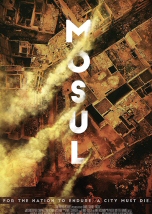
In the fall of 2016, an army of over 100,000 Iraqi soldiers and militiamen mobilize to liberate Mosul, Iraq's second largest city, from the clutches of the Islamic State. Ali Mula, an Iraqi journalist, joins this army of uneasy allies--including Sunnis, Shiites, Christians and Kurds--to find out if they can put aside their sectarian differences and finally free their country from the scourge of ISIS. Along the way to Mosul, Ali encounters an unforgettable group of characters including a Sunni tribal leader who calls himself 'the Crocodile', a female militia leader avenging the death of her husband, a canny, Iranian-backed militia leader, a lawyer-turned-warrior, an elite band of ISIS killers, and refugees who survived the brutality of ISIS occupation. As he nears the end of his journey, Ali meets face-to-face with a die-hard ISIS prisoner who reveals the truth behind his nefarious organization.
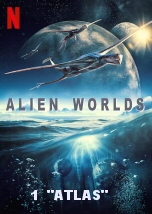
The series, depicted by state of the art CGI techniques, and applying the laws of life on Earth to the rest of the galaxy, blends fact with science fiction and conceptualizes what alien life might be like on other planets. In the prologue, astronomer Didier Queloz makes an appearance to discuss the discoveries of exoplanets and how they are analyzed in the real world. In Episode 1, the fictional world imagined is Atlas, a world with higher gravity than Earth and a thicker atmosphere leading to airborne creatures. In explaining the aliens of Atlas, the episode also explores the handicap principle in insects, and shows a rehabilitative form of falconry as captive falcons are trained to live in the wild.
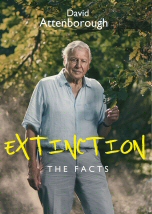
With a million species at risk of extinction, Sir David Attenborough explores how this crisis of biodiversity has consequences for us all, threatening food and water security, undermining our ability to control our climate and even putting us at greater risk of pandemic diseases. Everything in the natural world is connected in networks that support the whole of life on earth, and we are losing many of the benefits that nature provides to us. The loss of insects is threatening the pollination of crops, while the loss of biodiversity in the soil also threatens plants growth. Last year, a UN report identified the key drivers of biodiversity loss, including overfishing, climate change and pollution. But the single biggest driver of biodiversity loss is the destruction of natural habitats. Seventy-five per cent of Earth's land surface (where not covered by ice) has been changed by humans, much of it for agriculture, and as consumers we may unwittingly be contributing towards the loss of species through what we buy in the supermarket. Human activities like the trade in animals and the destruction of habitats drive the emergence of diseases. Disease ecologists believe that if we continue on this pathway, this year’s pandemic will not be a one-off event.




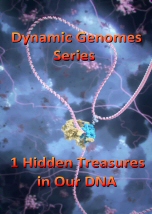

Previously it was thought that only 2% of our DNA is meaningful and the remaining 98% is non-coding 'junk'. But today we are beginning to know how the junk part of our DNA works to decide our personal characteristics and tendencies.